

What Makes Concealer Look Natural on Men
TL;DR:
- Seamless concealer blends into the skin when shade matching, skin preparation, and application techniques are correct. Proper matching of shade and undertone prevents visible patches, while tapping application avoids creasing for natural coverage. Good skin prep and targeted, thin layers make concealer look almost invisible and last longer.
Seamless concealer is defined as a product that melts into the skin to cover blemishes, redness, and dark circles without any visible trace. What makes concealer seamless comes down to four factors: shade accuracy, skin preparation, application technique, and the right formula. Get any one of these wrong and the product sits on top of your skin instead of blending into it. Norml4men was built specifically around these principles, delivering a lightweight, matte formula that works with your skin rather than against it.
How does shade selection impact concealer seamlessness?
Shade matching is the single biggest factor in whether concealer looks natural or obvious. A shade that is too light creates a pale patch. A shade that is too dark makes a blemish look like a bruise. Neither outcome is what you want.
The rule for blemish coverage is to match your concealer as closely as possible to your actual skin tone. The goal is to neutralize the imperfection, not to highlight the area around it. For under-eye coverage, choosing a shade half to one full tone lighter than your skin tone adds brightness without looking chalky.
Undertones matter just as much as depth. Skin undertones fall into three categories: warm (yellow or golden), cool (pink or bluish), and neutral. Choosing a concealer that matches your undertone prevents the product from looking gray or orange against your skin. A warm-toned concealer on cool-toned skin creates an obvious mismatch that no blending technique can fix.
Here is what to check before you commit to a shade:
- Test on your jawline or cheek, not your wrist. Wrist skin is a different tone.
- Check in natural light. Indoor lighting distorts color and makes matching unreliable.
- Match blemish coverage to your exact skin tone. Go one shade lighter only for under-eye areas.
- Identify your undertone first. Look at the veins on your inner wrist. Blue or purple veins indicate cool undertones. Green veins indicate warm undertones.
- Avoid shades with heavy gray or orange casts. These are the most common mistakes for men buying concealer for the first time.
What are the best application techniques for achieving seamless concealer?
The technique you use to apply concealer matters as much as the product itself. Most men apply too much product and spread it too aggressively. Both habits produce a cakey, unnatural result.
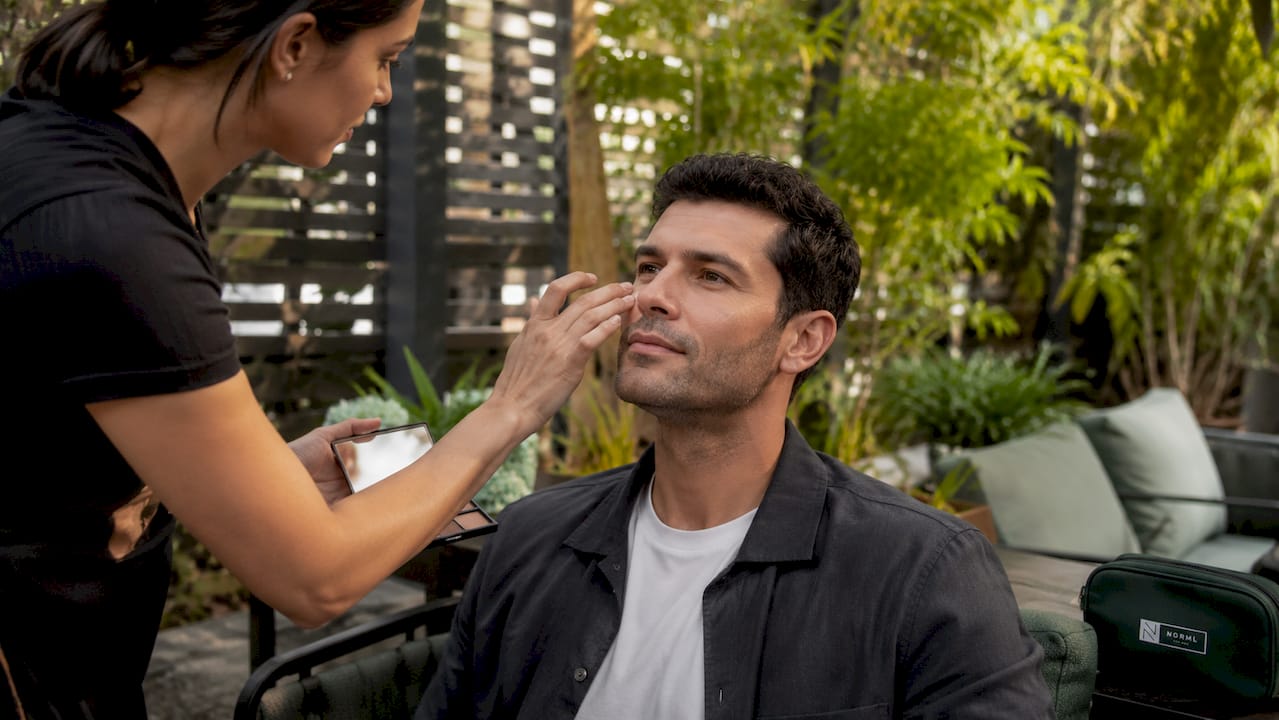
Industry standards in 2026 recommend applying concealer in thin, targeted layers using a micro-dot technique. This means placing tiny dots of product directly on the imperfection rather than smearing a large amount across a wide area. Less product means less build-up, less creasing, and a finish that actually looks like skin.
Follow these steps for the best result:
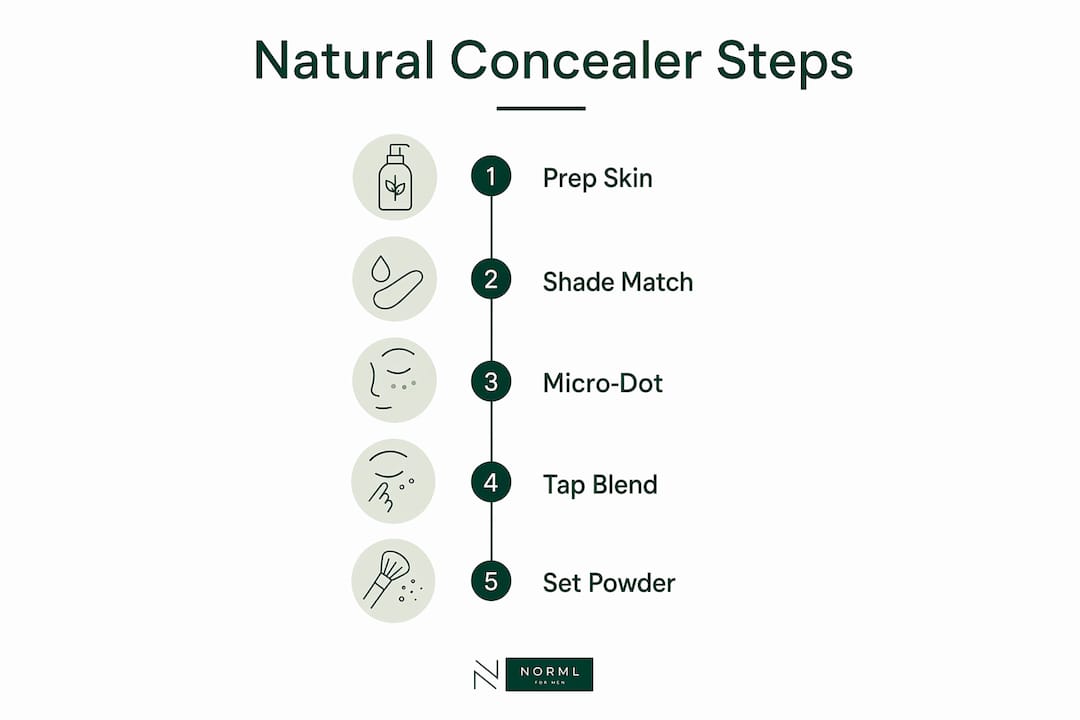
- Dot the product directly on the area. Use the tip of your finger or a small brush to place 3–5 small dots of concealer on the blemish or dark circle.
- Wait 30–60 seconds before blending. Allowing concealer to set on the skin slightly increases its opacity and adhesion. You get better coverage with less product.
- Tap, never rub. The pat-and-tap method uses gentle tapping motions to press the concealer into the skin. Rubbing drags the product away from the target area and disrupts the finish.
- Blend the edges outward. After tapping the center, use light tapping strokes to feather the edges into the surrounding skin. This removes any visible border.
- Use the right tool for the job. Fingertips work well for small blemishes. A damp makeup sponge covers larger areas like under-eye circles. A dense, flat brush gives the most precise application for individual spots.
Pro Tip: Warm your fingertip by rubbing it against your palm for a few seconds before blending. The warmth helps concealer melt into the skin more naturally, creating a finish that is genuinely hard to detect.
How does skin preparation affect concealer application?
Skin prep is the foundation that every other step depends on. Concealer applied to dry, flaky, or oily skin will not blend well regardless of the technique you use. High-quality skin prep relies on hydration and a smooth surface before any product touches your face.
A step-by-step concealer routine always starts with clean, moisturized skin. Moisturizer fills in dry patches and gives the concealer a smooth surface to grip. Without it, the product settles into texture and cracks throughout the day.
Key prep steps to build into your routine:
- Cleanse your face first. Excess oil and dirt prevent concealer from bonding to the skin properly.
- Moisturize while your skin is still slightly damp. This locks in hydration and reduces dryness that causes creasing.
- Avoid silicone-based eye creams. Silicone-based formulas cause product pilling, where the concealer balls up instead of blending. Non-silicone eye creams give a cleaner finish.
- Use a primer if you need longer wear. A thin layer of primer helps concealer grip the skin and extends how long it stays in place.
- Pat, do not rub, your moisturizer in. Aggressive rubbing can irritate skin and increase redness before you even start.
Pro Tip: If you have oily skin, use a mattifying moisturizer rather than skipping hydration entirely. Skipping moisture causes your skin to produce more oil, which breaks down concealer faster.
Hydrating formulas outperform heavy matte products for a natural look because they adapt to your skin texture rather than sitting on top of it. This is especially true around the eyes, where the skin is thinner and more prone to showing texture.
What common mistakes prevent concealer from looking natural?
Most concealer failures come from a short list of repeatable errors. Knowing what they are makes them easy to avoid.
Using too much product is the most common mistake. Excess concealer causes creasing and creates obvious patches that draw attention instead of hiding imperfections. One thin layer, built up only where needed, always looks better than a thick coat applied all at once.
Rubbing instead of tapping is the second most common error. Rubbing moves the product away from the area you are trying to cover. It also disrupts the skin surface and creates an uneven texture. Tapping presses the product in and keeps it exactly where you placed it.
Skipping the setting step shortens how long your concealer lasts. Setting concealer with a lightweight translucent powder locks the product in place and prevents it from creasing or sliding throughout the day. You only need a small amount, applied with a soft brush or sponge.
Choosing the wrong placement also undermines the result. Applying concealer too far outside the blemish area creates a visible ring of product. Keep the application targeted. Cover the imperfection and blend only the edges, not the entire surrounding area.
Ignoring skin type leads to products that separate or cake. Oily skin breaks down concealer faster. Dry skin makes it crack. Matching your formula to your skin type is just as important as matching the shade. A natural-look concealer built for men accounts for these differences in skin behavior.
Key Takeaways
Concealer looks natural when thin layers, accurate shade matching, and a tapping technique work together on well-prepped skin.
| Point | Details |
|---|---|
| Shade accuracy is non-negotiable | Match blemish coverage to your exact skin tone; go one shade lighter only for under-eye areas. |
| Thin layers beat thick coverage | Use the micro-dot technique and build coverage gradually to avoid creasing and cakey patches. |
| Tap, never rub | Tapping presses concealer into the skin; rubbing moves it away and disrupts the finish. |
| Skin prep determines the result | Cleanse, moisturize, and avoid silicone-based products before applying any concealer. |
| Set it to make it last | A light translucent powder locks concealer in place and maintains a natural finish all day. |
Why I think most men overcomplicate this
Most men I talk to assume concealer is complicated because it belongs to a world they were never taught about. The truth is the opposite. Concealer is one of the simplest tools you can add to a morning routine, and it works best when you use less of it.
The mistake I see most often is treating concealer like paint. Men apply it in thick strokes and expect it to cover everything at once. What actually works is restraint. A single dot of product, tapped in with a warm fingertip, covers a blemish better than three layers rubbed on with a finger. The skin does most of the work once you stop fighting it.
Skin prep changed everything for me personally. I used to skip moisturizer and wonder why concealer looked patchy by noon. Once I started treating skincare as the foundation and concealer as the finishing step, the results were night and day. Your skin has to be ready to receive the product. If it is dry, oily, or rough, no technique will save the application.
The other thing worth saying: concealer is not a mask. The goal is not to look like you are wearing anything. The goal is to look like yourself, just without the blemish or the dark circle. That mindset shift changes how you apply it. You stop trying to cover everything and start targeting specific problems. That precision is exactly what makes the finish look real. For more on how this connects to daily confidence, the payoff is bigger than most men expect.
— Ford
Norml4men: built for exactly this
Norml4men makes a single product designed around everything covered in this article. The Norml All-In-One Concealer comes in shades matched for men’s skin tones, with a lightweight matte formula that blends with a tap rather than requiring heavy layering or special tools.

The formula is built to work with the micro-dot technique and tapping method described above. It grips skin without pilling, stays in place without a heavy setting routine, and covers blemishes, redness, and dark circles without looking like makeup. If you want to put these techniques to work immediately, the Norml All-In-One Concealer is the product built for it.
FAQ
What makes concealer look natural instead of cakey?
Thin application using the micro-dot technique prevents build-up and creasing. Tapping the product into the skin rather than rubbing it creates a finish that looks like skin.
How do I pick the right concealer shade as a man?
Match the shade to your exact skin tone for blemishes. For under-eye coverage, go half to one full shade lighter. Always test in natural light on your jawline, not your wrist.
Why does my concealer crease throughout the day?
Creasing usually comes from too much product, skipping moisturizer, or not setting with a light powder. Prep your skin, apply thin layers, and finish with a translucent setting powder.
Should I use my finger or a brush to apply concealer?
Fingertips work well for small blemishes because the warmth helps the product blend into skin. A damp sponge covers larger areas like under-eye circles more evenly.
Does skin prep really affect how concealer blends?
Proper skin prep with moisturizing and priming creates a smooth surface that helps concealer blend without patchiness. Skipping this step is the most common reason concealer looks uneven.


