

Men's Beauty Industry 2026: What's Next for You
TL;DR:
- The men’s grooming market is projected to reach $322.24 billion in 2026, driven by a cultural shift toward skincare as self-care. Adoption rates are rising with performance-enhanced, clean, and simplified products, heavily influenced by Korean beauty innovations. Building a manageable routine with targeted products and minimal steps is the key to lasting grooming habits in 2026.
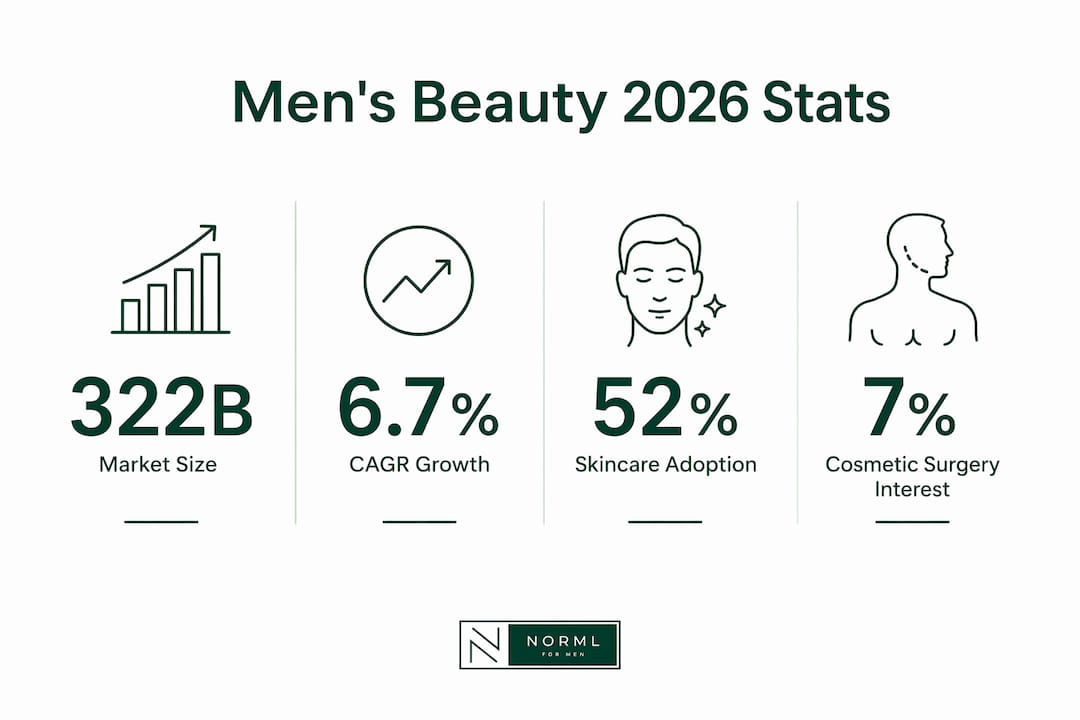
The future of men’s beauty industry 2026 is defined by a single fact: the global men’s grooming market is projected to reach $322.24 billion this year, growing at 6.7% annually through 2033. That number reflects a cultural shift, not just a commercial one. Men aged 18 to 35 are driving this expansion by treating skincare, grooming, and appearance as standard parts of their daily lives. The old stigma around men caring about their skin is gone. What’s replacing it is a market built on performance, simplicity, and real results.
What market trends are driving growth in the men’s beauty industry?
The men’s beauty market is not growing slowly. The male cosmetic products market is valued at $63.8 billion in 2026 and is forecast to reach $135.17 billion by 2035 at an 8.7% CAGR. That trajectory means product innovation, brand investment, and consumer education are all accelerating at the same time.
The most telling data point is adoption. 52% of US men used facial skincare products in 2024, up from 31% in 2022. That is a 21-point jump in two years, which tells you this is not a niche trend. It is a mainstream behavioral shift among Gen Z and Millennial men who grew up watching skincare content on YouTube, TikTok, and Reddit.
Several forces are converging to push this growth:
- Performance-driven products. Men want grooming products that do something specific: reduce redness after a workout, protect skin during outdoor activity, or control oil through a long workday.
- Clean and functional ingredients. Demand for microbiome-balancing formulations and transparent ingredient lists is rising, especially among younger buyers.
- Premium and online retail. E-commerce commands 42.3% of the men’s grooming market share, making it the dominant channel for discovery and purchase.
- Multi-step routines. Gen Z men in particular are adopting two to four step routines rather than the single bar-of-soap approach of previous generations.
Pro Tip: If you are building a grooming routine from scratch, start with the products that solve your most visible problem first, whether that is oily skin, redness, or uneven tone. Fix one thing well before adding more steps.
| Trend | What it means for you |
|---|---|
| Skincare adoption surge | More products are now formulated specifically for men, not repurposed from women’s lines. |
| E-commerce dominance | You can find and compare niche men’s grooming brands online without going to a department store. |
| Performance-driven care | Products now target post-workout recovery, oil control, and skin barrier repair. |
| Clean formulations | Ingredient transparency is standard. You can read labels and know what you are putting on your skin. |
How is Korean grooming culture influencing men’s beauty in 2026?
Korea is the most important external force shaping men’s grooming trends in 2026. Korean men’s grooming products are built on a foundational insight that most Western brands ignored for decades: male skin is physiologically different. It has a 25% thicker dermis, larger pores, and higher sebum production. Products formulated for women’s skin do not perform the same way on men’s skin. Korean brands built their men’s lines around this biology from the start.
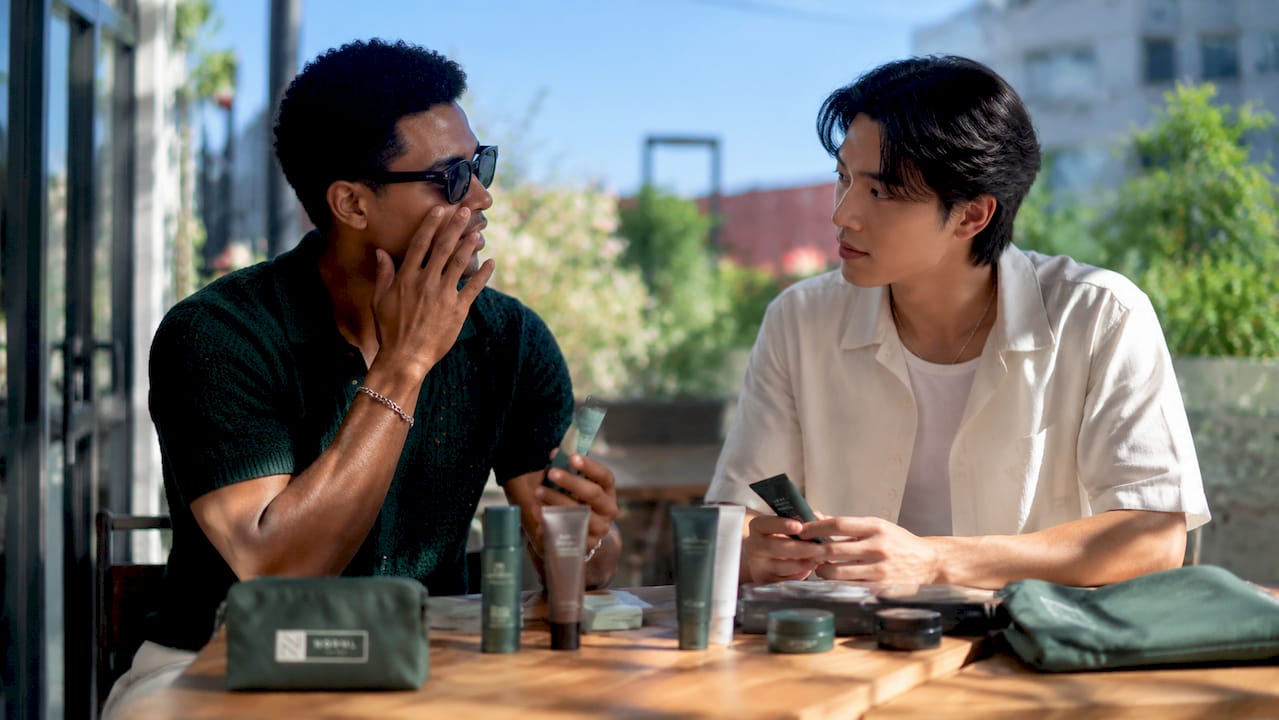
The result is a category of products that are non-greasy, fast-absorbing, and genuinely effective for male skin types. K-beauty for men popularized all-in-one products that combine moisturizer, SPF, and light coverage in a single step. That format is now spreading globally because it solves the core problem most men have with grooming: they want results without complexity.
Korean marketing frames skincare as enhancing self-awareness and presence rather than vanity. That framing matters. It removes the psychological barrier that kept a lot of Western men from trying products in the first place. When grooming is positioned as self-improvement rather than cosmetics, adoption rates climb.
Key K-beauty contributions to men’s grooming in 2026:
- All-in-one tinted moisturizers with SPF built in
- Lightweight essences that absorb in seconds
- Oil-control formulations that work with male sebum levels
- Viral styling products for textured and structured hair looks
- Simplified two to three step routines that take under five minutes
Pro Tip: Look for products labeled “for men” that list niacinamide or centella asiatica in the first five ingredients. Both are proven for oil control and redness reduction, and both are staples in Korean men’s formulations.
What product categories and innovations define men’s grooming in 2026?
The future of men’s skincare products in 2026 is not about adding more steps. It is about smarter categories that do more with less. The market has moved away from shaving as the centerpiece of men’s grooming and toward skin health as the foundation.
Here are the standout product categories defining this year:
- Post-workout and recovery skincare. Performance-driven grooming products like beast mode body care and workout recovery skincare are leading trends in 2026. These products address the specific damage that sweat, friction, and sun exposure cause during physical activity.
- Solid colognes. Solid colognes are gaining popularity for their portability and subtle scent control. They fit gym bags, travel kits, and desk drawers without the bulk of a glass bottle.
- Anti-grey serums. A new category of topical treatments targets melanin support in hair follicles. These are not dyes. They work at the scalp level to slow the graying process.
- All-in-one concealers and tinted products. Products that cover blemishes, redness, and dark circles without looking like makeup are the fastest-growing subcategory in men’s cosmetics. They meet the demand for results without the social risk of visible product use.
- Microbiome-focused cleansers. These replace harsh stripping cleansers with pH-balanced formulas that protect the skin barrier rather than destroy it.
The shift from shaving-centric to skincare-first routines is the structural change underneath all of these categories. Shaving products are still a large market, but they are no longer the entry point for men’s grooming. Moisturizers and cleansers are.
Pro Tip: If you are curious about men’s makeup alternatives in 2026, start with a tinted moisturizer or an all-in-one concealer. These products are specifically designed to look like skin, not product, and they solve real problems without requiring any application skill.
How can men aged 18-35 build effective yet manageable grooming routines in 2026?
Building a simple everyday skincare routine does not require a shelf full of products. The most effective approach in 2026 is the middle ground: not bare minimum, not a 10-step program. Three to four targeted products used consistently outperform a complicated routine used inconsistently.
Here is how to structure your routine by time investment:
- Minimal (under 2 minutes). Cleanser plus SPF moisturizer. This covers the two biggest skin health factors: removing debris and blocking UV damage. Add a concealer if you have visible blemishes or redness before work or a social event.
- Standard (3 to 5 minutes). Cleanser, serum targeting your main concern (oil control, dark spots, or texture), and SPF moisturizer. This is the routine that daily skincare benefits research consistently points to as the sweet spot for visible improvement.
- Complete (5 to 10 minutes). Add an eye cream, a weekly exfoliant, and a targeted treatment like a retinol or niacinamide serum. This level is for men who want to address aging, hyperpigmentation, or persistent skin texture issues.
The holistic wellness approach to men’s grooming means your routine should also account for your lifestyle. If you train five days a week, your post-workout cleanse is as important as your morning routine. If you work outdoors, SPF reapplication mid-day is not optional.
Pro Tip: Lay your products out in order the night before. The biggest barrier to routine consistency is decision fatigue in the morning. Remove the friction and you will actually use what you bought.
What challenges and opportunities lie ahead for the men’s beauty industry?
Growth at this scale creates friction. The men’s beauty industry in 2026 faces real structural challenges alongside its opportunities.
On the regulatory side, EU REACH chemical safety regulations are driving reformulation pressures and raising compliance costs for brands selling in Europe. This is pushing manufacturers to rebuild preservative systems from scratch, which affects shelf life and ingredient profiles across entire product lines. For consumers, this is mostly positive. Safer formulations are the outcome. For smaller brands, the compliance cost is a genuine barrier.
Private label competition is intensifying. Retailers like Amazon, Target, and Walmart are launching their own men’s grooming lines at lower price points, which squeezes mid-tier branded products. The brands winning in this environment are the ones with a specific, defensible point of view, whether that is ingredient philosophy, skin-type specificity, or a cultural identity like K-beauty.
The opportunities are significant:
- Direct-to-consumer digital channels give niche brands access to the 18 to 35 male demographic without retail shelf space.
- Personalized formulations based on skin type, climate, and lifestyle are moving from luxury to mainstream.
- Professional service integration is growing, with barbershops and men’s spas adding skincare protocols to their service menus.
- Inclusivity in marketing is expanding the addressable market. Brands that speak to men across skin tones, ages, and backgrounds are capturing audiences that generic “men’s grooming” messaging ignores.
Only 7% of men are very open to cosmetic surgery, which confirms that the market’s future is in non-invasive, topical, and accessible products. That is where the volume is, and that is where the innovation is focused.
Key takeaways
Men’s grooming in 2026 is a $322.24 billion market driven by younger men adopting skincare-first routines, performance-oriented products, and K-beauty-influenced formulations that work with male skin biology.
| Point | Details |
|---|---|
| Market size is record-breaking | The global men’s grooming market hits $322.24 billion in 2026, signaling mainstream adoption. |
| Skincare adoption doubled | 52% of US men now use facial skincare, up from 31% in 2022, showing rapid behavioral change. |
| K-beauty leads formulation innovation | Korean brands build products around male skin biology, setting the standard for non-greasy, effective formulas. |
| Performance products dominate | Post-workout skincare and solid colognes reflect the alignment of grooming with active lifestyles. |
| Simple routines win | Three to four targeted products used consistently outperform complex routines used sporadically. |
Why I think the “less is more” argument is finally winning
I have watched men’s grooming content for years, and the conversation has shifted in a way that feels permanent. The men asking questions about skincare in 2026 are not asking whether they should care about their skin. They are asking which products actually work and how to fit them into a real schedule.
What strikes me most is how the men’s grooming trends for 2026 are converging around one principle: do less, but do it right. The K-beauty influence is the clearest example. Korean men’s routines are not 10 steps. They are three steps with products that are genuinely formulated for male skin. That is a better model than what most Western brands were selling for the past decade.
The wellness integration piece is also real. When a man thinks of his post-workout routine as part of his grooming, he is not adding complexity. He is connecting two things he already does. That mental reframe is what makes habits stick.
My honest recommendation: do not wait until you have the “perfect” routine figured out. Pick one problem, find one product that addresses it, and use it for 30 days. The men who build lasting grooming habits start with a single win, not a complete overhaul. The industry will keep producing better tools. Your job is to find the ones that fit your life.
— Ford
Norml4men: the simplest upgrade to your 2026 routine
If you want one product that delivers visible results without looking like you are wearing anything, Norml4men’s all-in-one concealer is built for exactly that.
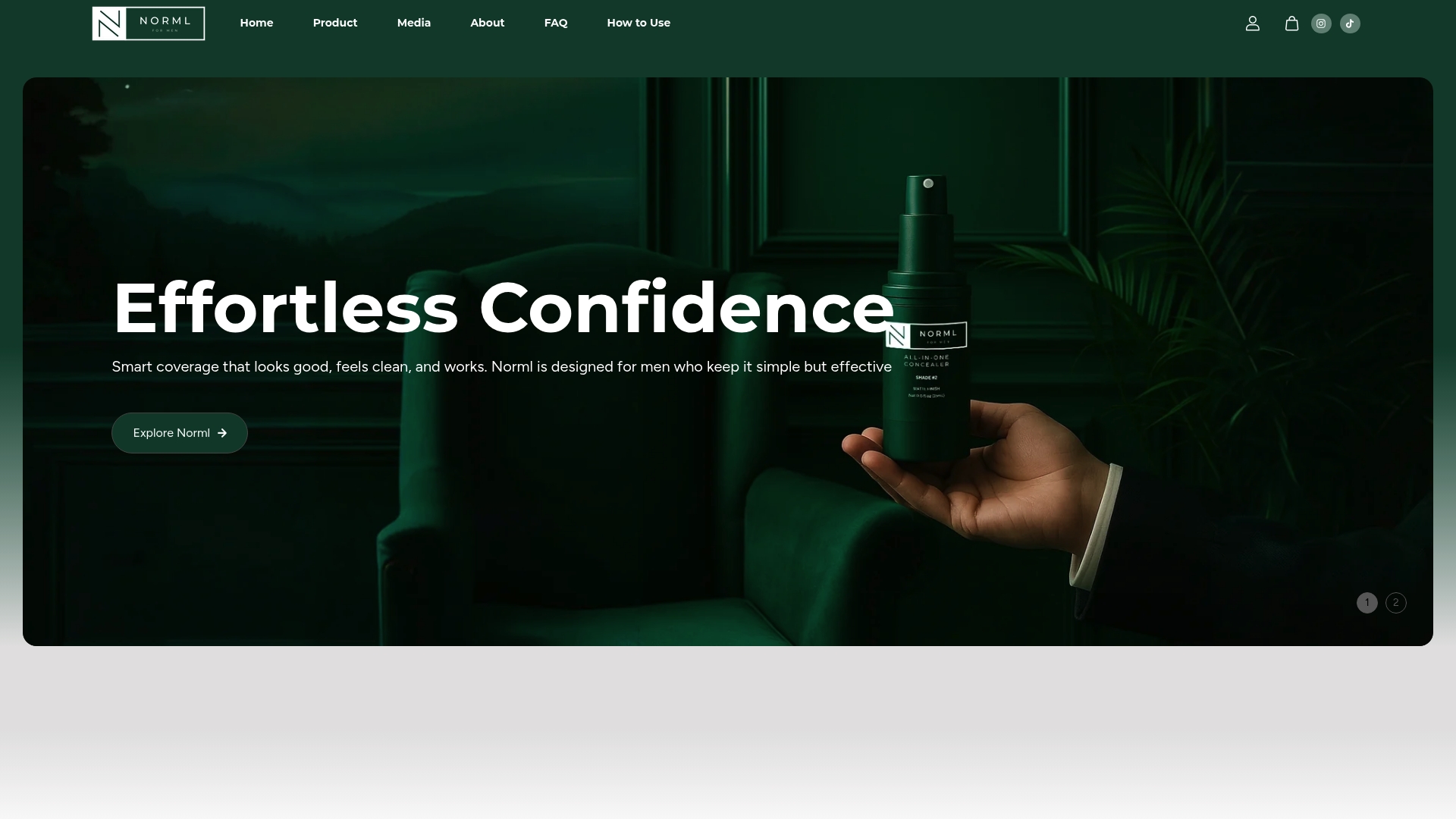
The Norml All-In-One Concealer covers blemishes, redness, and dark circles in seconds. It is matte, lightweight, and formulated to blend into male skin tones without the cakey finish or obvious product look that keeps most men away from coverage products. It fits the 2026 grooming trend perfectly: one product, real results, zero effort to learn. Whether you are heading into a job interview, a first date, or a long workday, Norml4men gives you a sharper, more even appearance without anyone knowing you did anything at all. That is the standard men’s grooming is moving toward, and Norml4men is already there.
FAQ
How big is the men’s beauty market in 2026?
The global men’s grooming market is projected to reach $322.24 billion in 2026, growing at a 6.7% CAGR through 2033. The male cosmetic products segment alone is valued at $63.8 billion this year.
Why are men’s skincare trends growing so fast in 2026?
Skincare adoption among US men jumped from 31% in 2022 to 52% in 2024, driven by Gen Z and Millennial men normalizing grooming as part of daily self-care. Cultural influences like K-beauty and performance-driven product innovation have accelerated this shift.
What are the best men’s makeup alternatives in 2026?
All-in-one tinted moisturizers and concealers formulated specifically for men are the leading alternatives. Products like the Norml All-In-One Concealer are designed to cover imperfections without looking like makeup, making them the practical choice for men who want results without visible product use.
How does Korean grooming influence men’s routines?
Korean men’s grooming focuses on products built for male skin physiology, using non-greasy, fast-absorbing formulas that combine multiple functions in one step. This approach has popularized simplified two to three step routines that take under five minutes and deliver consistent results.
What is the easiest grooming routine for men in 2026?
A minimal routine of cleanser plus SPF moisturizer covers the two most impactful skin health factors and takes under two minutes. Adding a targeted product like a concealer or serum based on your specific concern moves you into a standard routine with visible results.


