

Natural finish makeup for men: look great effortlessly
TL;DR:
- Natural finish makeup for men aims to enhance skin subtly, creating an even, skin-like appearance without shine or flatness. Achieving this requires targeted, minimal application, proper blending, and products suited for your skin type, always prioritizing restraint. When done correctly, it boosts confidence by making makeup invisible, allowing focus on your expression and presence rather than the product.
Most guys assume that wearing makeup means looking like you’re wearing makeup. That’s the fear that keeps a lot of men from ever trying it in the first place. But natural finish makeup solutions for men are specifically built around spot-correction, blending, and shine control, so the result looks like skin, not product. This guide breaks down what natural finish really means, how to achieve it with the right techniques, and why keeping it simple is actually the smartest move you can make.
Table of Contents
- What does natural finish makeup actually mean for men?
- Key techniques for achieving a true natural finish
- Choosing and using products for your skin type
- Why the “less is more” philosophy boosts confidence
- Why most men’s makeup advice gets “natural finish” wrong
- How to get started with natural finish makeup for men
- Frequently asked questions
Key Takeaways
| Point | Details |
|---|---|
| Skin-like effect | Natural finish makeup is blended to be invisible and mimic healthy skin. |
| Less is more | Applying small amounts of product and careful blending create truly undetectable results. |
| The right products matter | Choose formulas and shades that match your skin type for best results. |
| Build skills gradually | Practice restraint with one product at a time to gain confidence and avoid obvious makeup. |
What does natural finish makeup actually mean for men?
The phrase “natural finish” gets thrown around a lot, but most guides never actually define it clearly. For men, especially those just exploring subtle enhancement, it means one thing: your skin looks better, but nobody can point to why.
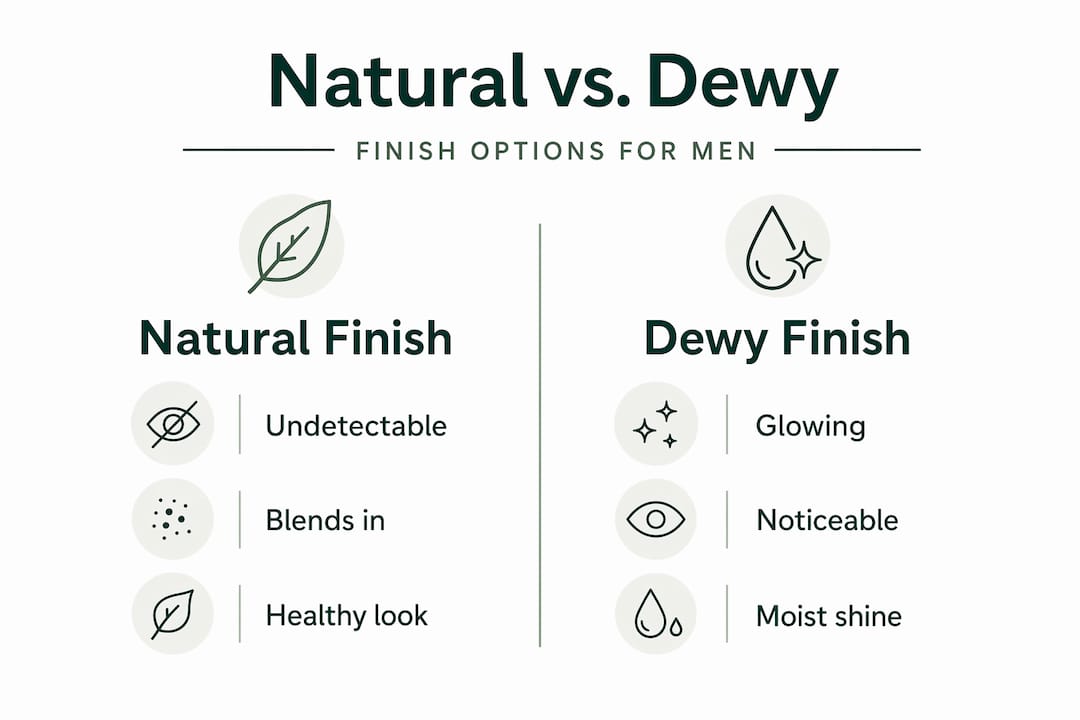
Natural finish sits between two extremes. A dewy finish adds visible moisture and glow, which can look great in photos but reads as shiny in real life. A matte finish eliminates all shine and can look flat, even cakey, especially under certain lighting. Natural or satin finish hits the middle ground: even tone, controlled texture, no noticeable product.
Here’s a quick breakdown of how finish types compare:
| Finish type | Appearance | Best suited for | Risk factor |
|---|---|---|---|
| Dewy | Shiny, luminous | Dry skin, photography | Looks oily in daily life |
| Matte | Flat, shine-free | Oily skin | Can look heavy or unnatural |
| Natural/satin | Balanced, skin-like | Most skin types | Very low when applied correctly |
| Full coverage | Polished, opaque | Stage, events | Clearly visible makeup look |
As Lipstick Queen explains, a natural finish aims for a balanced, skin-like result, not overly shiny or matte. That balance is exactly what makes it work for men who want to look good without drawing attention to what they’re doing.
A few common misconceptions are worth clearing up right now:
- “All makeup looks fake” — Only heavy or poorly blended makeup looks fake. Light, targeted product disappears.
- “Men’s skin is too textured for makeup” — Texture is actually easier to work with using lightweight formulas that fill in without sitting on top.
- “You have to know a lot to start” — The beginner makeup steps for a natural finish are genuinely minimal, often just one or two products.
“Natural finish makeup is not about transformation. It’s about refinement. The goal is to look like a better version of yourself on your best day, without anyone knowing you had help.”
The reason why subtle makeup works so well for men comes down to one principle: people notice faces, not products. When your skin tone is even and your blemishes aren’t the first thing someone sees, the focus shifts to your eyes, your expression, your energy. That’s the real outcome of a natural finish done right.

Key techniques for achieving a true natural finish
Knowing what natural finish means is one thing. Actually pulling it off requires a specific set of habits that most guides skip entirely. The method matters as much as the product.
Here’s a practical, step-by-step approach that keeps things undetectable:
- Start with clean, moisturized skin. Dry skin grabs product and creates patchy spots. A light moisturizer gives the base a smooth surface to sit on.
- Spot-conceal first. Don’t spread product everywhere from the start. Identify the specific areas: a blemish, redness around the nose, dark circles under the eyes. Target those zones only.
- Use a thin layer of tinted moisturizer or BB product if needed. Only go here if you want a more even base beyond spot coverage. Apply with fingers or a damp sponge for a truly skin-like base.
- Blend outward from the center. This technique feathers the product into the surrounding skin so there’s no visible edge.
- Set only the shiny zones. The T-zone (forehead, nose, chin) is where oil collects. A tiny amount of translucent powder on these areas controls shine without flattening the rest of your face.
- Check in natural daylight. Bathroom lighting lies. Step outside or near a window to check your work before you leave.
The minimal approach tips that actually work share one thing in common: restraint. As the research on the “no-makeup” look confirms, targeted placement and restraint are the real keys to coverage that reads as skin.
Pro Tip: Use your ring finger to blend concealer under your eyes. It naturally applies the lightest pressure of any finger, which reduces the risk of dragging the delicate skin in that area and keeps coverage even.
One thing worth noting: studies on consumer behavior in grooming show that men who wear undetectable makeup consistently rate their appearance confidence higher in social settings than those who wear visible product. The “less is more” principle isn’t just aesthetic, it’s psychological. When you can’t see it, you stop worrying about it.
Blending tools matter too. Your fingers work well for most concealers and tinted formulas because body heat warms the product and helps it meld into the skin. A damp makeup sponge is your best option for a slightly more polished result, especially for BB products that need to be pressed into the skin rather than rubbed across it.
Choosing and using products for your skin type
The biggest single reason a natural finish fails is using the wrong product for your skin type. A formula that works perfectly on oily skin can look chalky and dry on someone with drier skin, and vice versa. Getting this right is straightforward once you know what to look for.
Here’s how common skin types map to smart product choices:
| Skin type | What to look for | What to avoid |
|---|---|---|
| Oily | Matte or natural finish, lightweight formula | Heavy coverage, dewy finish |
| Dry | Hydrating tint, satin finish | Powder-heavy formulas, matte concealers |
| Combination | Natural/satin, spot-treat oily zones | Full-face powder, full-coverage base |
| Normal | Most lightweight formulas work | Heavy layering (unnecessary) |
Dry skin reacts poorly to excessive powder, while oily skin genuinely requires targeted setting to control shine without caking. These aren’t minor details, they’re the difference between looking polished and looking patchy.
For guys just starting out, the best products for skin type are usually the simplest. A tinted moisturizer or an all-in-one concealer covers most needs without requiring you to layer multiple products.
Common mistakes to watch out for:
- Powdering the entire face instead of just the oily zones makes the skin look flat and noticeably made-up.
- Using a matte-finish product on dry skin creates a dusty, aged appearance instead of a clean one.
- Skipping shine control on oily skin means your work breaks down within a few hours, and the result ends up looking worse than no product at all.
- Applying too much in one sitting — it’s always easier to add a tiny bit more than to remove excess and start over.
Pro Tip: Before committing to a product for your whole face, do a 30-minute patch test on your jawline. If it blends naturally into your neck and doesn’t look or feel heavy by the end of the test, it’s a solid fit for your skin.
One more thing that doesn’t get enough attention: skin tone matching. The formula needs to match your actual skin tone, not a slightly lighter shade. Many men make the mistake of going lighter to “cover” things, which creates a visible mask effect. Match your jawline, not your hand, since the jawline transitions naturally into the neck and is the most accurate reference point.
Why the “less is more” philosophy boosts confidence
There’s a real psychological reason why minimal, targeted application works better for confidence than full coverage. When makeup is detectable, it creates a secondary concern: Do people know I’m wearing this? That question runs in the background and undermines the whole point of wearing it in the first place.
When it’s undetectable, that concern disappears entirely. You’re just a guy who looks like he’s having a great skin day.
The “no-makeup” approach, which focuses on restraint and targeted use, leads to more authentic and confident results. “Authentic” is the key word here. Confidence rooted in authenticity is more durable than confidence built on concealment.
Here are the specific ways “less is more” pays off for men:
- Lower risk of visible mistakes. Fewer products and thinner layers mean fewer opportunities for patchiness, uneven color, or obvious edges.
- Faster application. A spot-treatment routine takes under two minutes. A full routine with multiple products takes five to ten, and adds complexity that can go wrong.
- Better long-term results. Light application doesn’t build up in pores or shift throughout the day the way heavy coverage does.
- Stronger self-perception. When you know your routine is undetectable, you stop second-guessing how you look and start focusing on the people and situations around you.
“The goal of natural-finish makeup for men isn’t to hide who you are. It’s to make sure the things you don’t love about your skin aren’t the first thing people notice when they look at you.”
The connection between confidence and makeup isn’t about vanity. It’s about removing friction from your self-presentation. There’s also a useful comparison worth making between skincare vs. makeup approaches. Skincare improves your skin over time. Makeup handles the gap between where your skin is now and where you want it to look. Used together, with restraint, the result is the best version of your face on any given day.
The relationship between subtlety and self-esteem is real and documented. When men use products that genuinely look like nothing, they report feeling more comfortable in professional settings, social situations, and on camera.
Why most men’s makeup advice gets “natural finish” wrong
Here’s the thing that most guides won’t say out loud: the majority of men’s makeup content is adapted from women’s beauty content, and the adaptations are usually surface-level. Swap the language, change the packaging, keep the same techniques. That approach almost always produces results that look wrong on male faces.
Men’s skin is generally thicker, oilier, and more textured than women’s skin. The techniques built for thin, smooth skin with fine features don’t translate automatically. Products formulated for maximum coverage and long-wear finish are built for full makeup looks, not natural ones. When men follow those guides, they end up with product that sits on top of the skin rather than melding into it, and the result looks theatrical rather than natural.
There’s also a tendency in mainstream advice to define “natural finish” as wearing less product, when it’s actually about using the right product in the right places with the right amount of blending. Those are three separate skills, and conflating them leads to confusion.
The other thing worth calling out directly: if your routine looks fine under warm bathroom lighting but falls apart in natural daylight or close conversation, it’s not a natural finish. It’s a lighting-dependent finish. Discreet results for men have to hold up in real-world conditions, not just in mirrors.
The real standard for a natural finish is simple: if someone who knows your face well can’t tell you’re wearing anything, you’ve nailed it. That’s the benchmark to build toward, and it’s achievable much faster than most guides suggest.
How to get started with natural finish makeup for men
If this article has made one thing clear, it’s that starting simple is the right move. One well-chosen product, applied with restraint and blended properly, will do more for your appearance than a complicated five-step routine used incorrectly.
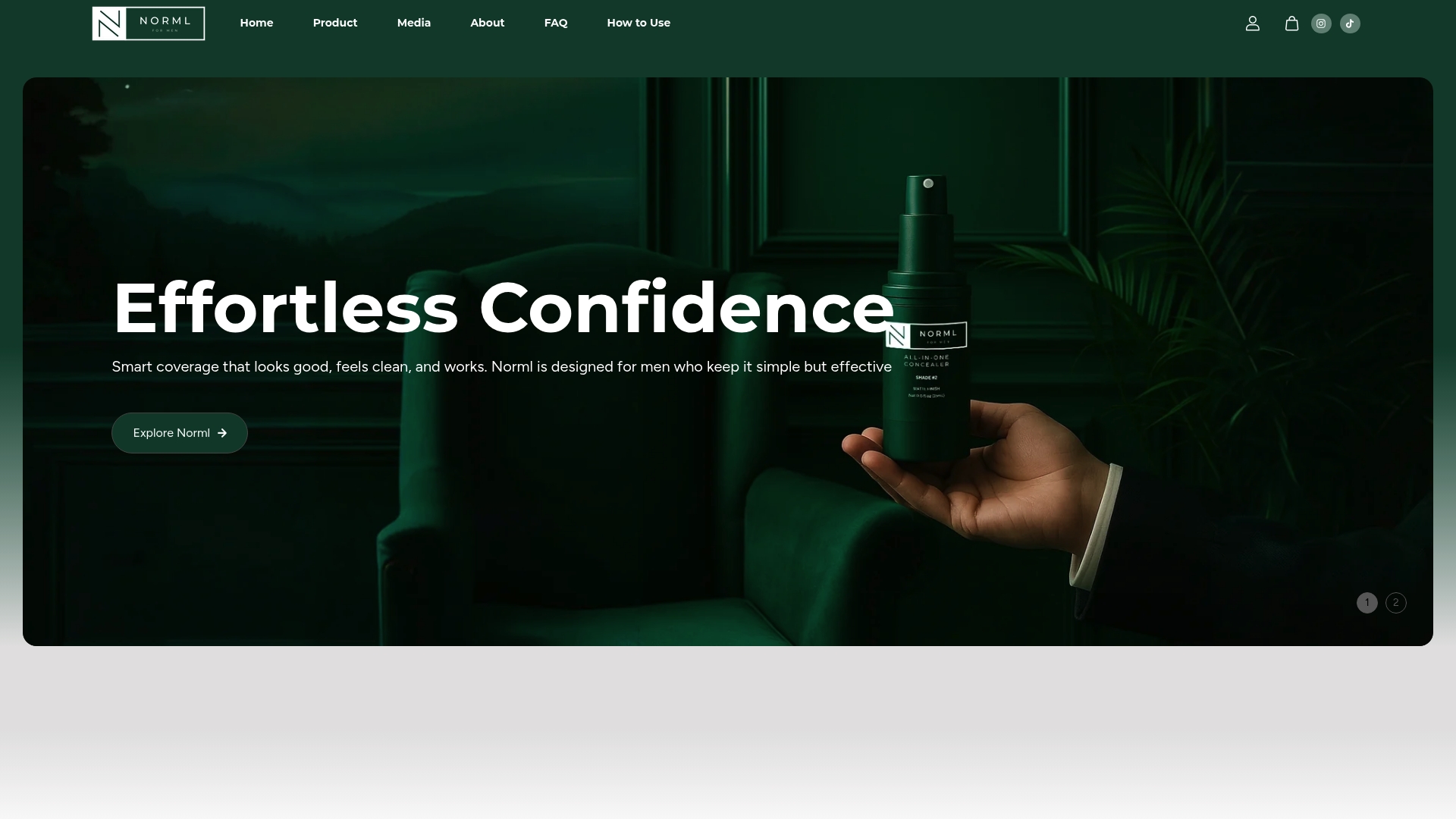
Norml is built exactly for this starting point. The all-in-one concealer for men covers blemishes, redness, and dark circles with a lightweight, matte formula that blends seamlessly into the skin. No obvious product. No complicated technique. Just a more even, sharper version of your face in under two minutes. When you’re ready to go deeper, more men’s makeup tips and guides are available to help you build on the basics at your own pace.
Frequently asked questions
Is natural finish makeup suitable for men with facial hair?
Yes, natural finish formulas blend easily around beards and stubble without creating visible patches. A well-blended base stays undetectable even with significant facial hair.
Which product should I buy first for a natural look?
Start with a lightweight concealer for targeted spot coverage. Beginner-friendly options like tinted moisturizers or all-in-one concealers applied thinly are the easiest entry point.
How do I keep my face from looking shiny without caking powder?
Apply a small amount of translucent powder only to oily areas like your forehead and nose. Over-powdering the full face is what creates the cakey look men want to avoid.
Will people be able to tell I’m wearing makeup?
Not if it’s applied correctly. Natural finish makeup, when well-blended, looks like healthy skin with no visible signs of product.
What’s the biggest mistake men make with natural finish makeup?
Using too much product or skipping the blending step. Heavy layers and insufficient blending are the two things that most obviously betray that someone is wearing makeup.


