

Non-Cakey Concealer for Men: Get a Natural Look
TL;DR:
- Non-cakey concealer is a lightweight formula that blends into skin and provides natural coverage without creasing.
- Applying small, targeted dots with proper skin prep and gentle patting techniques prevents cakiness and maintains a natural look.
Non-cakey concealer is a cosmetic product formulated to deliver natural-looking coverage without visible creasing, flaking, or heaviness. The industry term for this category is “lightweight buildable coverage,” and it describes formulas that melt into skin rather than sit on top of it. For men aged 18–35 who want to cover blemishes, redness, or dark circles without looking made-up, understanding what is non-cakey concealer is the difference between a clean, confident appearance and a mask-like finish. The key factors are formula weight, skin preparation, and blending technique. Get all three right, and nobody will know you’re wearing anything.
What is non-cakey concealer and how do you choose the right one?
Non-cakey concealer is defined by lightweight formulas that melt into skin and avoid thick, flaky buildup. That means the formula stays flexible on your skin throughout the day instead of drying into a stiff, visible layer. Choosing the right one starts with knowing your skin type, because the wrong formula will cause cakiness no matter how well you apply it.
Matching formula to skin type
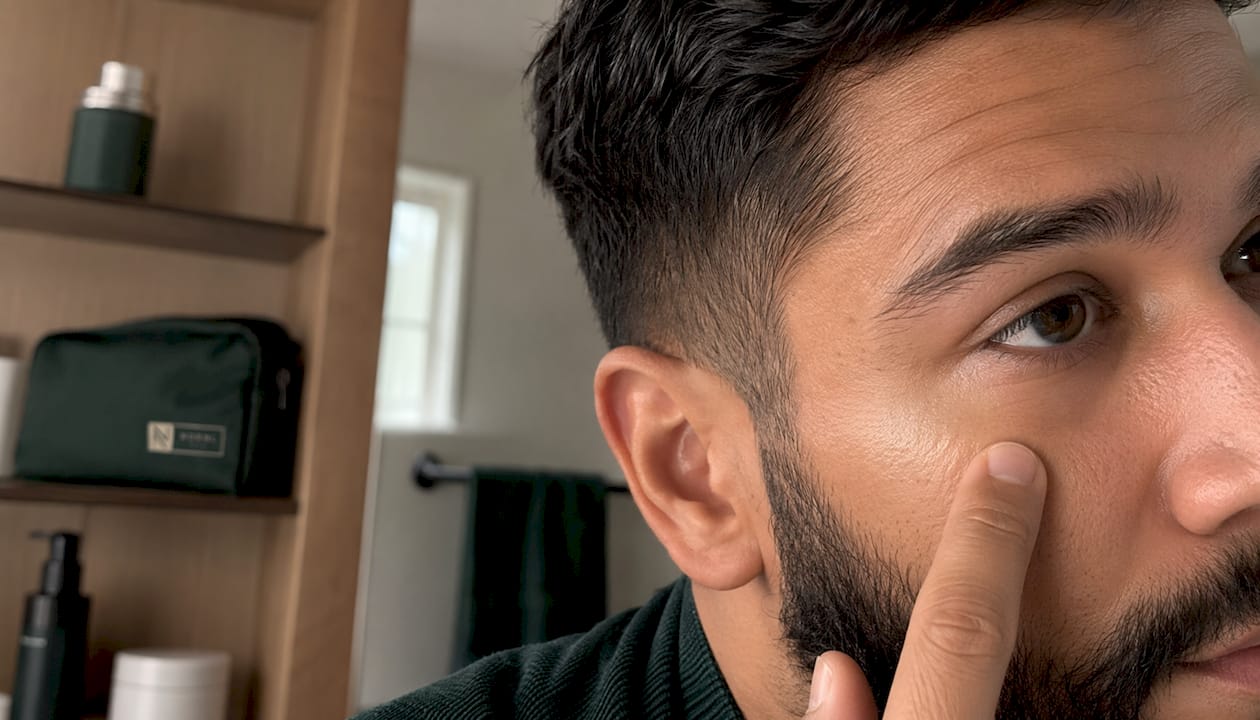
Dry skin needs a hydrating or creamy formula. Dry skin grips concealer and pulls it into flakes, so a formula with moisturizing ingredients keeps coverage smooth. Oily skin does better with a matte or oil-free liquid formula that controls shine without sliding off. Combination skin, which is the most common type for men in their 20s and 30s, works well with a lightweight liquid that balances coverage and breathability.
Getting the shade right
Going only 1–2 shades lighter under the eyes brightens the area without creating a stark, unnatural contrast. For blemishes, match your exact skin tone so the product disappears rather than highlights the spot. A common mistake is buying a shade that is too light, which creates an ashy or gray patch that draws more attention than the original blemish.
Here are the most common shade mistakes and how to avoid them:
- Too light under eyes: Creates a white cast or gray patch, especially in photos.
- Too dark on blemishes: Makes spots look shadowed and more visible.
- Wrong undertone: A pink-toned concealer on a yellow-toned complexion looks unnatural even at the right depth.
- Testing on your wrist: Your wrist is a different color than your face. Always test on your jawline or cheek.
Pro Tip: Mix a small drop of your daily moisturizer into your concealer before applying. This thins thick formulas without sacrificing coverage and is especially useful for dry skin or any formula that feels stiff straight from the tube.
How to apply concealer without it looking cakey
Application technique is where most men go wrong. Even a good formula will cake if you apply too much or use the wrong motion. The goal is thin, targeted layers that blend into your skin rather than coat it.
Follow these steps for a clean, natural finish every time:
-
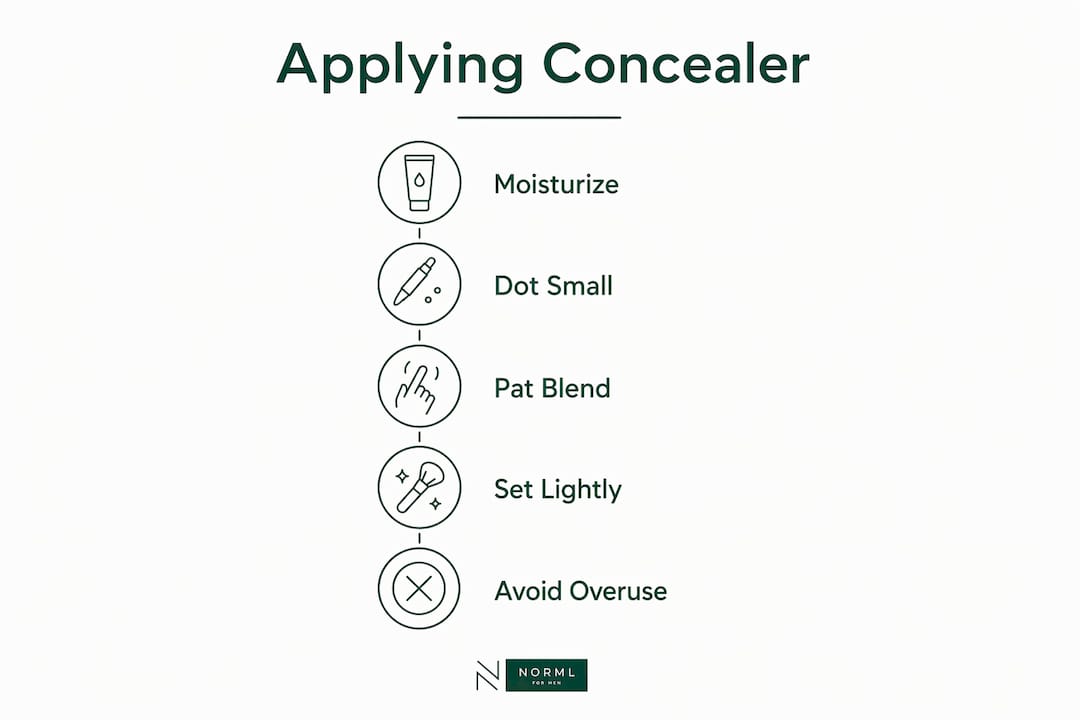
Moisturize first. Apply your regular moisturizer and wait 2–3 minutes before touching concealer. Hydrated, prepped skin is the foundation for a non-cakey finish. Skipping this step causes concealer to cling to dry patches and accentuate texture.
-
Warm the product. Dot a small amount of concealer on the back of your hand. Warming concealer on your hand before application helps the formula melt into skin rather than sit on top of it. This takes about 10 seconds and makes a real difference in blendability.
-
Apply only where needed. Use your fingertip or a small brush to place dots of product directly on blemishes, redness, or the inner corners of the eyes. Men should treat specific discoloration spots, not the entire under-eye area, to avoid heaviness and an unnatural look.
-
Pat, never rub. Pressing keeps pigment concentrated and blends the product with minimal displacement. Rubbing smears the product, thins coverage unevenly, and often removes it entirely from the center of the spot.
-
Build slowly. Apply one thin layer, check the result, and add a second only if needed. Applying too much concealer causes cakiness and creasing, especially in high-movement areas like eye creases.
-
Set lightly if needed. If you need to set the product, use a finely milled translucent powder on crease-prone spots only. Skip powder under the eyes entirely for the most natural result.
Pro Tip: If you’re new to applying concealer, check out this guide on men’s concealer application for a step-by-step visual breakdown tailored specifically for men.
Common causes of cakey concealer and how to fix them
Cakiness has a short list of causes. Knowing them makes troubleshooting fast.
| Do | Don’t |
|---|---|
| Moisturize before applying | Skip skin prep |
| Apply in thin, targeted dots | Layer thick product over dry skin |
| Pat and press to blend | Rub or drag the product |
| Use translucent powder sparingly | Bake with heavy powder layers |
| Revive with a damp sponge | Add more product over cakey areas |
The most common cause of cakiness is excess product. Men who are new to concealer often apply too much because they are trying to fully cover a spot in one pass. One thin layer that is well-blended covers more effectively than two thick layers that sit on top of each other.
The second most common cause is skipping moisturizer. Dry skin creates a rough surface that breaks up product and causes it to flake. A 30-second moisturizing step before application prevents this entirely.
Excessive setting powder, especially baking, is the third major cause. Baking involves pressing thick layers of powder onto concealer and leaving it to set. This technique is rarely needed for men’s everyday grooming and often causes creasing rather than preventing it. If your concealer is caking mid-day, the fix is a damp makeup sponge pressed gently over the area, not more product on top.
Here are the fastest fixes for common cakiness problems:
- Cakey mid-day: Press a damp sponge over the area to rehydrate and smooth the product.
- Creasing under eyes: Reduce the amount of product and skip setting powder in that area.
- Flaking on dry patches: Add a drop of moisturizer to the formula before the next application.
- Ashy finish: Check your shade. You are likely using a formula that is too light or has the wrong undertone.
What concealer finish works best for men?
Liquid concealers are the best starting point for men who want a natural, non-made-up look. Makeup artist Mai Quynh identifies liquid formulas as the best format for layering and achieving undetectable coverage. Liquids blend easily with a fingertip, dry down to a natural finish, and feel weightless on skin.
Here is how the main formats compare for men’s everyday use:
- Liquid concealer: Lightweight, blendable, and natural-looking. The best choice for most men covering blemishes or dark circles.
- Cream concealer: More coverage than liquid, but heavier. Works well for significant redness or discoloration. Requires careful blending to avoid a thick finish.
- Matte concealer: Controls shine and stays put on oily skin. Heavy matte formulas can look flat and unnatural on normal or dry skin, so use them selectively.
- Hydrating concealer: Adds moisture while covering. Ideal for dry skin types, but can look dewy or shiny on oily skin.
For men who want a natural skin-enhancing effect rather than a covering layer, a lightweight liquid with a satin or natural finish is the right choice. The goal is skin that looks like better skin, not skin that looks covered. A natural-look concealer approach focuses on targeted application and minimal product rather than full-face coverage.
Heavy matte formulas are worth avoiding for daily wear. They tend to dry down stiff, emphasize texture, and look noticeably different from the surrounding skin. Save high-coverage matte products for specific situations where you need maximum concealment, such as before a photo shoot or an important event.
Key Takeaways
Non-cakey concealer works because lightweight formulas, proper skin prep, and a patting blending technique prevent product buildup and keep coverage looking like natural skin.
| Point | Details |
|---|---|
| Formula weight matters | Lightweight liquid formulas blend into skin and avoid the thick, flaky buildup that causes cakiness. |
| Skin prep is non-negotiable | Moisturizing 2–3 minutes before application prevents concealer from clinging to dry patches. |
| Less product, better result | Thin, targeted dots blended with a patting motion cover more effectively than thick layers. |
| Shade precision prevents detection | Match blemishes exactly and go only 1–2 shades lighter under eyes to avoid an ashy or unnatural finish. |
| Powder sparingly or not at all | Skipping setting powder under the eyes yields the most natural look for men’s daily wear. |
What I’ve learned from watching men get concealer wrong
Most men who try concealer for the first time make the same mistake. They apply too much, in too wide an area, and then rub it in like sunscreen. The result looks exactly like what they were trying to avoid: obvious, heavy, and unnatural. That one bad experience convinces them concealer is not for them, when the real problem was technique, not the product.
The mindset shift that actually works is thinking of concealer as a spot treatment, not a filter. You are not trying to change your face. You are trying to quiet one or two things that are drawing attention away from the rest of you. A single dark circle or a red blemish can shift how people read your energy in a room. Covering it takes 30 seconds. The effect lasts all day.
The other thing I have noticed is that men consistently underestimate how much skin prep matters. The guys who get the cleanest results are not using expensive products. They are moisturizing first, waiting a few minutes, and applying a small amount of product with a fingertip. That routine costs nothing extra and produces results that look genuinely undetectable. If you want to understand how much this can affect your first impression, the piece on how concealer shapes first impressions makes the case clearly.
Start light. Build from there. The goal is not to look like you are wearing concealer. The goal is to look like yourself, just sharper.
— Ford
Norml4men: built for men who want to look sharp, not made-up
Norml4men is a men’s concealer designed from the ground up to deliver exactly what this article describes: lightweight, matte coverage that blends into your skin and covers blemishes, redness, and dark circles without anyone noticing you’re wearing anything.

The formula is built for men’s skin and men’s routines. No complicated steps, no heavy finish, no visible product. You apply it in seconds and get on with your day looking sharper and more even without the mask-like look that puts most men off concealer in the first place. Visit Norml4men to find the right shade for your skin and see how straightforward a clean, confident appearance can be.
FAQ
What is non-cakey concealer?
Non-cakey concealer is a lightweight formula that blends into skin without leaving visible buildup, creasing, or flaking. It delivers natural-looking coverage that stays flexible throughout the day.
How do I apply concealer without it looking cakey?
Moisturize first, apply small dots of product only on problem areas, and blend with a patting motion rather than rubbing. Thin layers applied with a warm fingertip produce the cleanest, most natural finish.
What causes concealer to look cakey?
The main causes are applying too much product, skipping moisturizer before application, and using too much setting powder. A damp sponge pressed gently over the area fixes mid-day cakiness fast.
Is liquid concealer better for men?
Liquid concealer is the best starting point for men because it blends easily, feels lightweight, and dries to a natural finish. Cream formulas offer more coverage but require careful blending to avoid a heavy look.
Do men need to set concealer with powder?
Most men do not need setting powder for everyday wear. Lightly dusting translucent powder on crease-prone spots is enough, and skipping powder under the eyes entirely yields the most natural result.


