

Non-Cakey Makeup Meaning: A Natural Look Guide for Men
TL;DR:
- Non-cakey makeup blends seamlessly into the skin for a natural, skin-like finish. Proper skin prep, thin application, and targeted powder use help men achieve a flawless look that lasts all day.
Non-cakey makeup is defined as foundation or concealer that blends into the skin so completely that it looks like your natural complexion, not a product sitting on top of it. The industry term for this result is “skin-like finish,” and it is the standard every makeup artist aims for when working with men. For guys aged 18–35 dealing with redness, dark circles, or uneven skin tone, the non-cakey makeup meaning comes down to one thing: coverage that enhances without announcing itself. Norml4men was built around exactly this idea. Get the technique right, and nobody will know you are wearing anything.
What is non-cakey makeup and why does it matter for men?
Non-cakey makeup produces a skin-like, natural finish rather than a thick, mask-like layer. The difference is visible within seconds. Cakey makeup sits on the surface of the skin, catching light in the wrong places and making texture, pores, and fine lines more obvious, not less. A natural finish does the opposite. It evens out tone while letting the skin’s real texture show through.
Men’s skin tends to be oilier and thicker than women’s, with larger pores and more active sebaceous glands. That biology changes how products behave. A formula that works perfectly on dry skin can turn greasy and patchy on oily skin within an hour. Understanding your skin type is the first filter when choosing any base product.
The benefits of non-cakey makeup go beyond aesthetics. When coverage looks natural, you carry yourself differently. There is no self-consciousness about being “caught” wearing something. That confidence shift is real, and it starts with getting the technique right.
What causes cakey makeup and how to recognize it on your skin
Cakey makeup has specific, identifiable causes. Knowing them helps you fix the problem at the source rather than just blotting and hoping.
The most common causes include:
- Too much product. Applying a full layer of foundation before the first layer has settled creates visible product buildup and patchiness. More product does not mean more coverage. It means more texture.
- Wrong formula for your skin type. Heavy matte formulas on dry skin grip dead skin cells and emphasize flakes. If your skin is dry, a matte formula will look worse by midday.
- Incompatible ingredients. Using a water-based moisturizer under a silicone-based foundation causes product separation and pilling. The layers do not bond, and the result looks chunky and uneven.
- Applying too fast. Stacking products before each layer dries creates instability. The whole system shifts and cracks.
- Bad lighting. Overhead or shadowy lighting makes it hard to see buildup. You keep adding product to fix what looks like uneven coverage, but the problem is the light, not your skin.
- Over-concealing around the eyes and mouth. These areas crease constantly. Too much product there turns into visible lines within an hour.
The visual signs are easy to spot in good light: a mask-like finish, visible flakes around the nose and chin, patchy color, and a texture that looks heavier than bare skin. If your face looks like it has a filter that went wrong, that is cakey makeup.
How to prepare your skin to prevent cakey makeup
Skin prep is where most guys lose the battle before they even open a product. The right prep takes five minutes and makes every product perform better.
- Cleanse gently. Use lukewarm water and your fingertips. Avoid scrubbing with a cloth or brush before applying makeup. Scrubbing creates micro-irritation and uneven texture that products cling to unevenly.
- Moisturize while skin is still slightly damp. Applying moisturizer to damp skin locks in hydration more effectively. Hydrated, cushioned skin requires less base product and creates a smoother surface for blending.
- Keep your routine simple. Layering multiple serums, a primer, and a heavy moisturizer before makeup creates a traffic pile-up effect that leads to pilling. Stick to cleanser, moisturizer, and SPF.
- Match your ingredients. Check whether your moisturizer and your base product use compatible formulas. Water-based products work under water-based foundations. Silicone-based products work under silicone-based formulas. Mixing them causes the separation that leads to cakiness.
- Wait before applying makeup. Give your moisturizer and SPF at least 2–3 minutes to absorb before touching any base product. Rushing this step is one of the most common mistakes.
- Check your lighting. Apply makeup in front-facing, neutral light, ideally near a window. Neutral light reveals texture accurately and prevents you from over-applying to compensate for shadows.
Pro Tip: If your skin feels tight after cleansing, your cleanser is stripping too much oil. Switch to a gentler formula before worrying about your makeup.
A simple routine beats a complicated one every time. The fewer layers between your skin and your base product, the better the final result.
How to apply makeup thinly and blend naturally without caking
Application technique separates a natural finish from a cakey one, even when the product is identical. The goal is thin, targeted coverage that builds only where you need it.
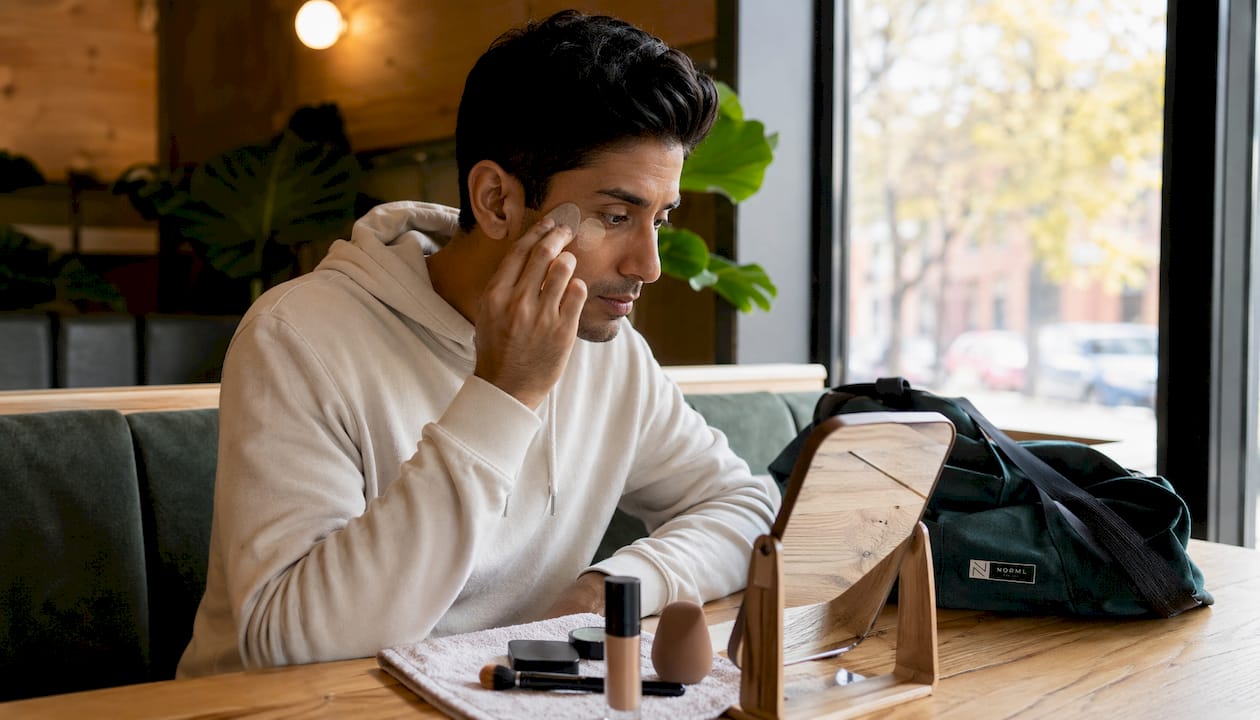
Start with less than you think you need. A pea-sized amount of concealer covers most of the face for a light-coverage look. Dot product only on the areas you want to even out: under the eyes, around the nose, on any blemishes. Do not paint a full layer across your entire face unless you have a specific reason.
Use a damp sponge with pressing motions. Pressing with a damp sponge rather than rubbing or dragging creates better adhesion and removes excess product at the same time. Rubbing pushes product into lines and pores. Pressing smooths it flat against the skin.
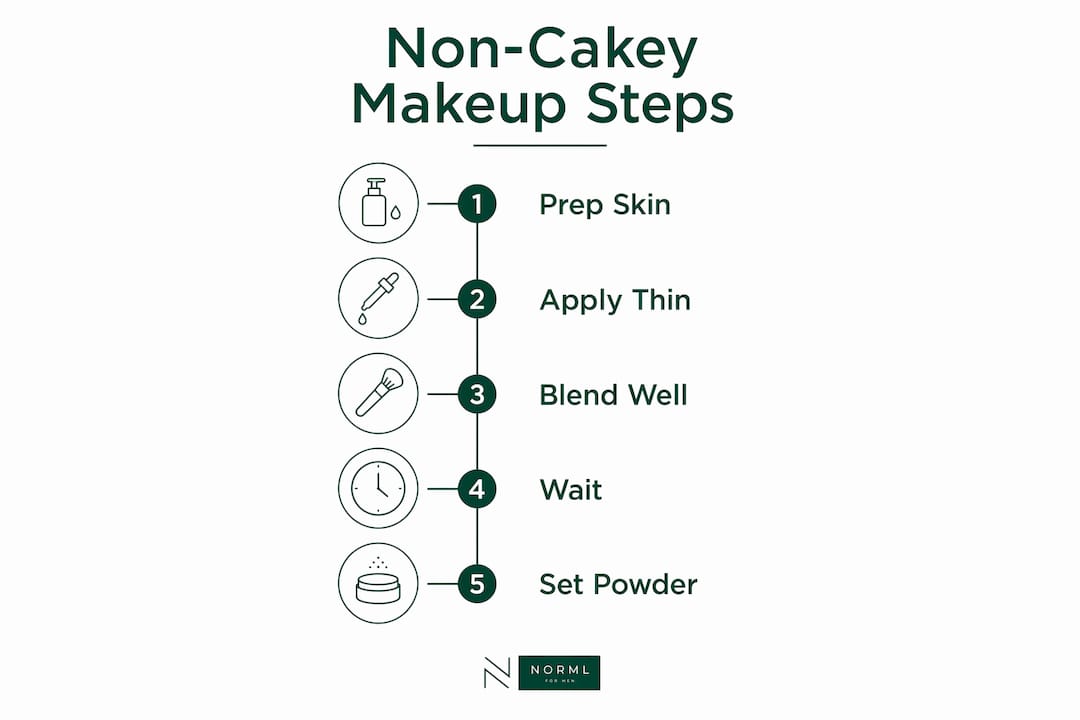
Wait between layers. If you need more coverage in a specific spot, wait 1–3 minutes after the first layer before adding more. Letting each layer settle prevents the instability that causes cracking and patchiness.
Be careful around the eyes and mouth. Over-applying concealer around these areas is the leading cause of creasing. Use the leftover product on your sponge for these zones rather than applying fresh product directly. The lighter touch prevents buildup in the creases.
Pro Tip: After blending, check your work in natural light before deciding you need more coverage. What looks uneven under bathroom lighting often looks perfectly natural outside.
The step-by-step concealer routine matters more than the product itself. A great formula applied badly still looks cakey. A basic formula applied correctly looks like skin.
Smart powder use and midday touch-ups to maintain a natural look
Powder is where many guys accidentally undo good prep and application work. The rule is simple: powder only where you need it, and never where you do not.
Where to powder and where to skip:
| Zone | Powder? | Reason |
|---|---|---|
| Center forehead | Yes | High oil production, prone to shine |
| Sides of nose | Yes | Creasing and oil buildup |
| Chin crease | Yes | Movement causes product to shift |
| Dry or textured cheeks | No | Powder emphasizes flakes and fine lines |
| Under-eye area | No | Powder settles into lines and looks aged |
| Jawline | No | Creates a visible line against the neck |
Powdering dry or textured areas is one of the fastest ways to create a cakey look. Powder clings to anything rough and makes it more visible, not less.
For midday touch-ups, always blot before adding product. Blotting oil before reapplying powder prevents the crusted, layered buildup that makes makeup look heavy by the afternoon. A blotting paper removes excess oil without disturbing the base underneath.
The most effective midday fix is a hydrating mist applied with a damp sponge. This dissolves any powder buildup and presses the makeup back into the skin for a fresh, breathable finish. You add no new product, and the result looks like you just applied everything fresh.
Natural makeup prioritizes brightening and lifting rather than full coverage. That philosophy applies to powder too. Use it as a targeted tool, not a finishing step you apply everywhere by default.
Key Takeaways
Non-cakey makeup requires thin layers, compatible ingredients, and targeted powder placement to produce a skin-like finish that holds throughout the day.
| Point | Details |
|---|---|
| Definition of non-cakey | Makeup that blends into skin completely, looking like natural complexion rather than a product layer. |
| Skin prep is the foundation | Moisturize damp skin, simplify your routine, and wait 2–3 minutes before applying any base product. |
| Apply thin and press | Use a damp sponge with pressing motions and build coverage only where you need it. |
| Powder strategically | Powder oily zones only; skip dry, textured, and under-eye areas to avoid emphasizing flakes. |
| Touch-ups without buildup | Blot oil first, then use a hydrating mist with a damp sponge to refresh without adding product. |
What I have learned about non-cakey makeup for men
Most guys who try makeup for the first time make the same mistake: they use too much, too fast, and in the wrong light. I have seen it repeatedly. The instinct is to cover everything at once, but that instinct is exactly what creates the mask-like finish you are trying to avoid.
The biggest shift happens when you stop thinking about coverage and start thinking about blending. A thin layer that disappears into your skin does more work than a thick layer that sits on top of it. Men’s skin is different enough from women’s that the standard advice does not always translate. Larger pores, more oil, and thicker texture mean you need less product and more patience, not more coverage.
Lighting is the variable most people ignore. I have watched guys apply what looks like a perfect finish under bathroom lighting, then step outside and look like they are wearing a mask. Front-facing natural light is not optional. It is the only way to see what you are actually doing.
The other thing worth saying: the goal is not perfection. A slightly uneven skin tone that looks real beats a flawless finish that looks artificial. Subtle enhancement is the point. When you get the technique right, the result is not “he’s wearing makeup.” It is “he looks good today.” That is the win.
— Ford
Norml4men: built for the finish you are going for
If you want coverage that works without the buildup, the formula matters as much as the technique.

Norml4men’s all-in-one concealer is lightweight, matte, and formulated specifically for men’s skin. It covers blemishes, redness, and dark circles without sitting on top of the skin or requiring multiple layers to work. The formula is designed to stay compatible with simple skincare routines, so you are not fighting product separation or pilling before you even start. Apply it with a damp sponge using the pressing technique, and it blends into your skin tone in seconds. For guys who want to look sharper without looking like they are wearing anything, it is the most direct path to a natural finish. Learn more about men’s cosmetic products that keep your routine simple and effective.
FAQ
What does non-cakey makeup mean?
Non-cakey makeup means a base product that blends into the skin completely, producing a natural, skin-like finish rather than a thick or mask-like layer. The result looks like your own complexion, not a product sitting on top of it.
Why does my makeup look cakey?
Cakey makeup is most often caused by too much product, incompatible skincare and makeup ingredients, or applying layers before the previous one has settled. Dry skin and heavy matte formulas also cause patchy, clinging texture.
How do I avoid cakey makeup as a man?
Prep skin with a simple routine, wait 2–3 minutes after moisturizer before applying base, use a damp sponge with pressing motions, and build coverage in thin layers only where you need it.
Should men use powder to set makeup?
Yes, but only on oily zones like the center forehead, sides of the nose, and chin crease. Powdering dry or textured areas emphasizes flakes and fine lines, which makes makeup look heavier, not lighter.
How do I fix cakey makeup during the day?
Blot excess oil with a blotting paper first, then apply a hydrating mist with a damp sponge. This refreshes the finish and presses makeup back into the skin without adding any new product.


