

How social media drives men's beauty trends in 2026
TL;DR:
- Men’s skincare routines are now normalized thanks to social media influence.
- Simple, evidence-based routines focusing on cleanse, treat, and protect are most effective.
- Diversity and inclusive messaging are transforming men’s beauty standards globally.
Men don’t care about their skin. That’s the old story, and it’s wrong. 68% of Gen Z men now use facial skincare products, up from 42% in 2022, and that shift didn’t happen by accident. Social media cracked open a conversation that used to happen only behind closed doors, and now millions of guys are openly sharing routines, reviewing products, and building real confidence through better skin. This article breaks down how those platforms reshaped beauty norms for men, what routines actually work, and how to cut through the noise to find what’s right for your skin.
Table of Contents
- How social media reshapes men’s beauty norms
- Practical skincare routines: Simple steps for real men
- Myths, viral hacks, and science: What works, what doesn’t
- Cultural nuances and inclusivity in men’s beauty online
- Why simplicity and evidence matter more than ever
- Practical next steps: Find your ideal routine
- Frequently asked questions
Key Takeaways
| Point | Details |
|---|---|
| Social media accelerates men’s beauty | Platforms like Instagram and TikTok have made skincare routines normal and boosted men’s confidence. |
| Simple routines are most effective | Focusing on cleanse, treat, and protect delivers results and is easy to stick with. |
| Science beats viral hacks | Only evidence-backed skincare tips consistently improve appearance; avoid trends with little proof. |
| Inclusivity drives progress | Cultural diversity and honest, science-based messaging help remove stigma and broaden acceptance. |
How social media reshapes men’s beauty norms
Five years ago, a guy posting a skincare routine on TikTok risked ridicule. Today, that same video might get a million views and a comment section full of other men asking which cleanser to buy. That’s not a small cultural shift. It’s a fundamental change in what masculinity looks like online.
Platforms like Instagram, YouTube, and TikTok gave men a space to watch, learn, and experiment without judgment. Tutorials went viral. Product reviews became trusted content. Skincare challenges pulled in audiences who never would have searched for “moisturizer” on their own. The algorithm did the rest, surfacing beauty content to men who hadn’t even realized they were interested.
Attitude shift: pre-social media vs. now
| Factor | Pre-social media | Now |
|---|---|---|
| Talking about skincare | Taboo for most men | Normalized and shared openly |
| Product discovery | Word of mouth or ads | Tutorials, reviews, viral challenges |
| Role models | Athletes, action heroes | Diverse creators and influencers |
| Stigma around routines | High | Declining steadily |
| Access to education | Limited | Instant and global |
39% of UK men aged 18 to 34 now use beauty products to enhance their appearance, and the numbers are climbing across every major market. The positive sentiment for beauty normalization sits at 70% among men engaging with this content, though some pushback around stigma and misinformation still exists.
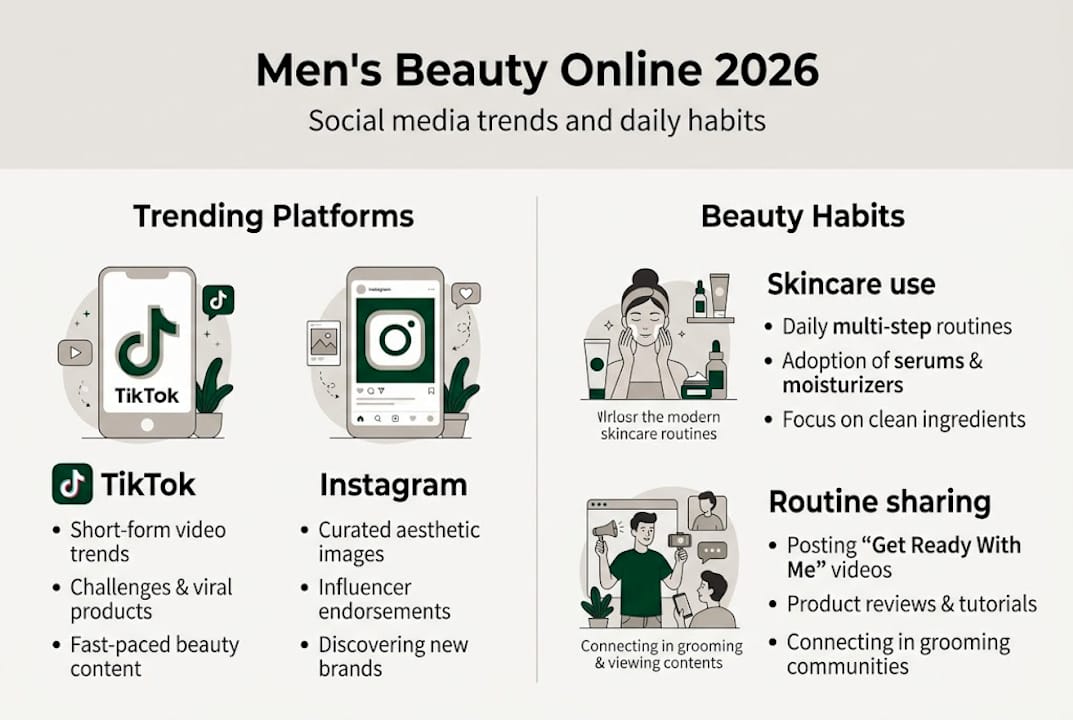
Cultural diversity has played a huge role too. Muslim beauty influencers are building massive audiences by combining halal product recommendations with honest, relatable storytelling. The manosphere, for all its contradictions, has also pushed grooming as a form of self-improvement. These overlapping communities have made it nearly impossible to argue that skincare is “not for men.”
Here’s the type of content men engage with most:
- Skincare tutorials showing step-by-step routines for specific skin types
- Product reviews comparing drugstore vs. premium options
- Before and after content demonstrating real results
- Myth-busting videos calling out bad advice
- Challenges like “30-day glow up” that make routines feel achievable
Understanding skincare vs. makeup confidence is a big part of why men are engaging more. And the role of skincare in grooming has shifted from optional to expected for men who care about how they present themselves.
Practical skincare routines: Simple steps for real men
Social media sets new norms, but it can also make skincare feel overwhelming. Fifteen-step routines. Serums you’ve never heard of. Ingredients that sound like chemistry homework. The truth? Most men need three things: cleanse, treat, and protect.
Here’s a numbered daily routine that actually works:
- Morning cleanse with a gentle, sulfate-free face wash
- Apply treatment (benzoyl peroxide for acne, niacinamide for oiliness)
- Moisturize with an oil-free formula suited to your skin type
- Apply SPF 30 or higher every single morning, rain or shine
- Evening cleanse to remove sweat, oil, and environmental buildup
- Exfoliate 2 to 3 times per week with a salicylic acid product
- Night treatment with adapalene if you’re dealing with persistent breakouts
Evidence-backed guidance recommends cleansing twice daily, using an oil-free moisturizer, applying daily SPF, and treating acne with benzoyl peroxide plus adapalene for best results.

Common skin concerns and recommended solutions
| Skin concern | Recommended product type | Key active ingredient |
|---|---|---|
| Acne and breakouts | Spot treatment or gel | Benzoyl peroxide, salicylic acid |
| Oily skin | Lightweight moisturizer | Niacinamide |
| Dryness | Hydrating cream | Hyaluronic acid, ceramides |
| Dark spots | Brightening serum | Vitamin C, alpha arbutin |
| Redness | Soothing moisturizer | Centella asiatica, azelaic acid |
Pro Tip: Start with three to five products max. Adding too many at once makes it impossible to know what’s working and what’s irritating your skin. Build the habit first, then layer in extras.
You can find skincare best practices that are built around real men’s schedules, not lab conditions. If you want a full breakdown, check out this everyday skincare routine designed for 2026. And if you’re still on the fence about investing time, why simple skincare matters makes the case clearly. The simple skincare pillars of cleanse, treat, and protect are the foundation everything else builds on.
Myths, viral hacks, and science: What works, what doesn’t
Not everything trending on social media belongs on your face. That’s the uncomfortable reality. For every solid routine shared by a credentialed creator, there are ten videos pushing gimmicks that range from useless to actively harmful.
Here’s a breakdown of popular hacks and their actual credibility:
- Ice dunking: Temporarily tightens pores and reduces puffiness. Minor benefit, nothing lasting.
- Banana peel for acne: No clinical evidence. Completely unproven compared to salicylic acid or benzoyl peroxide.
- Toothpaste on spots: Can cause irritation and chemical burns. Skip it.
- Jade rollers: Better than nothing for lymphatic drainage, but not a replacement for active ingredients.
- Vitamin C serum: Backed by strong science. Brightens skin and fights oxidative damage.
- Sunscreen daily: Non-negotiable. The single most evidence-backed step in any routine.
Some viral hacks offer minor benefits while others are completely unproven when compared to ingredients with decades of clinical research behind them.
“The ingredients that consistently deliver results are the ones with peer-reviewed research backing them. Retinoids, vitamin C, niacinamide, SPF. Everything else is noise until proven otherwise.” — Expert consensus from dermatology-focused grooming media
The problem with viral content is that it rewards novelty, not effectiveness. A weird hack gets clicks. A basic cleanser does not. That incentive structure means men are constantly exposed to the flashy and unproven while the boring stuff that actually works gets buried.
Your skincare checklist for 2026 should be built around proven actives, not trending challenges. And your routine workflow for natural skin should prioritize consistency over complexity. The expert view on viral hacks consistently points back to the same conclusion: science wins.
Cultural nuances and inclusivity in men’s beauty online
Skincare isn’t a monolith, and neither are the men using it. One of social media’s most underrated contributions to men’s beauty is how it’s amplified voices from communities that mainstream advertising ignored for decades.
Muslim influencers are normalizing skincare through halal-certified products and routines that align with religious values, reaching audiences brands never considered. That representation matters. When a man sees someone who looks like him, practices his faith, and still prioritizes his skin, the stigma dissolves fast.
At the same time, brands are moving away from macho rhetoric and toward science-based, educational messaging. The old “for men” branding that just slapped a dark label on a moisturizer is losing ground to brands that explain why an ingredient works and who it works for.
Here are examples of inclusive messaging that’s actually resonating:
- Diverse skin tone representation in before and after content
- Routine guides for different skin types rather than one-size-fits-all advice
- Halal and vegan certified product lines marketed without compromising on effectiveness
- Mental health framing that connects self-care to confidence, not vanity
- Non-binary and gender-neutral product positioning that removes the “this is for women” stigma
Pro Tip: Choose products based on your actual skin type and concerns, not the gender on the label. A hyaluronic acid serum works the same whether it’s marketed to men or women. Focus on ingredients, not packaging.
For men who want to understand this space better, demystifying men’s cosmetics is a good starting point. And understanding skincare’s impact on appearance helps connect the daily habit to the real-world results you’re after.
Why simplicity and evidence matter more than ever
Here’s what most articles won’t tell you: social media has made men’s beauty better and worse at the same time. Better because the stigma is fading and access to real information has never been easier. Worse because the volume of content makes it genuinely hard to know what to trust.
The men who see the best results aren’t the ones chasing every new trend. They’re the ones who picked three to five evidence-backed products, built a consistent routine, and stopped overthinking it. That’s the contrarian truth in a space obsessed with “what’s new.”
Most skin problems respond to boring solutions applied consistently. Cleanser. SPF. A targeted treatment. Done. The noise around exotic ingredients and 12-step routines serves brands and content creators more than it serves your skin.
Simple skincare matters not because complexity is bad, but because consistency is what drives results. Ignore the macho marketing. Ignore the gimmicks. Find what works for your skin and stick with it.
Practical next steps: Find your ideal routine
You now have a clear picture of what works, what doesn’t, and why the basics beat the trends every time. The next step is putting it into practice with tools built specifically for men.
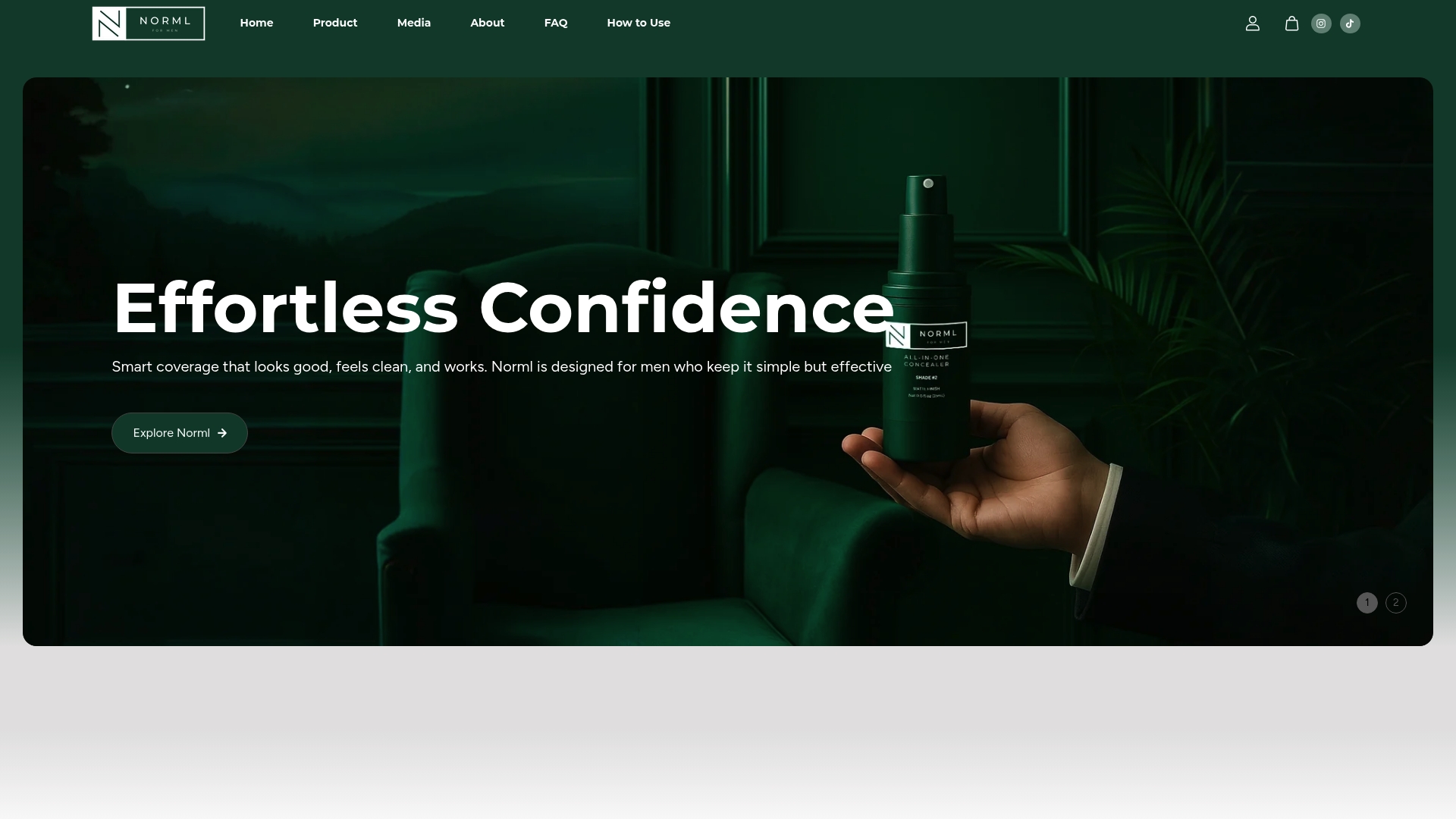
If you want to look sharper fast while your skincare routine does its long-term work, Norml’s all-in-one concealer covers blemishes, redness, and dark circles instantly without looking like you’re wearing anything. It’s lightweight, matte, and built for real men. Check out how to use Norml for a quick, no-fuss guide. And if you’re ready to explore the full range of solutions, Norml’s full lineup has everything you need to look your best, every day.
Frequently asked questions
What are the most effective skincare steps for men starting out?
A simple daily routine of cleansing, treating for acne or oiliness, and protecting with SPF is proven to deliver results for most men. Start with three to five products and build consistency before adding anything else.
Does social media really help men feel more confident about appearance?
Yes. 70% positive sentiment exists among men engaging with normalized beauty content on social media, and many report real gains in confidence from building a consistent routine.
Are viral skincare hacks safe or effective for men?
Some are harmless but most lack scientific backing. Evidence-backed ingredients like salicylic acid, benzoyl peroxide, and vitamin C are far more reliable than trending hacks like banana peel or ice dunking.
How has cultural diversity affected men’s beauty on social media?
Muslim influencers normalizing skincare with halal products and diverse creators from all backgrounds have made men’s beauty more inclusive and accessible than ever before.


