

Discreet Makeup Application: Look Natural in 10 Minutes
Discreet makeup application, often called “no-makeup makeup,” means enhancing what’s already there rather than covering it up. The goal is an even, natural-looking skin tone with subtle definition where no single product is detectable on its own. According to The New York Times, the philosophy is the antithesis of treating your face as a series of problems to solve. You’re working with your skin, not against it.
Here’s what a complete discreet routine covers:
- Hydrate and prime skin for a smooth, natural base
- Spot conceal only where needed, then feather edges with a fingertip
- Fill brows with light, hair-like strokes and set with clear gel
- Tightline the upper lash line for subtle eye definition
- Apply one coat of brown or clear mascara
- Dust a cream blush low on the cheeks for a natural flush
- Finish lips with a tinted balm or sheer gloss
- Set lightly with a blotting paper or minimal translucent powder
That’s the whole routine. Everything below shows you exactly how to do each step.
Key Takeaways
Discreet makeup application works because spot concealing, feathered blending, and shade-matched products leave no visible trace while evening out skin tone and adding subtle definition.
| Point | Details |
|---|---|
| Spot conceal, don’t cover everything | Apply concealer only where needed and feather edges with a fingertip for an undetectable finish. |
| Shade match is non-negotiable | Test concealer and base products on your jaw in natural light before committing to a shade. |
| Layer thin, check often | Build color in sheer passes and check in natural light after each layer to avoid over-application. |
| Keep a minimal touch-up kit | Blotting papers, a mini concealer, and a spoolie handle most mid-day fixes without adding visible layers. |
| Norml4men for men’s coverage | The NORML all-in-one concealer applies with fingertips in seconds and is available in three skin-matching shades. |
Table of Contents
- How do you apply discreet makeup step by step?
- Which products actually deliver an undetectable finish?
- What subtle techniques make the biggest difference?
- What mistakes make subtle makeup look obvious?
- When should you adjust the look for different occasions?
- What should you carry for on-the-go touch-ups?
- What do pro makeup artists say about the no-makeup philosophy?
- A quick note on daily use
- NORML all-in-one concealer fits the discreet routine perfectly
- Sources
How do you apply discreet makeup step by step?
This invisible makeup tutorial from Wendy Rowe breaks the process into skin prep, light coverage, and blending as the three main differentiators. The full routine takes a few minutes once you know the steps.
-
Hydrate (1 minute). Apply a lightweight moisturizer and let it absorb for 60 seconds. Dry skin catches product and creates texture, so this step directly affects how natural everything else looks. If you’re oily, a water-gel formula works without adding shine.
-
Prime where it counts (30 seconds). A pore-blurring primer on the nose and forehead helps coverage last without extra powder later. Skip primer on areas that don’t need it.
-
Spot conceal, don’t cover everything (2 minutes). Apply concealer only on blemishes, redness, or dark circles. Targeted coverage is far less detectable than a full-face foundation pass. Tap a small amount with your ring finger, then feather the edges outward with light pressure. The goal is a seamless fade, not a sharp edge.
-
Fill brows with hair-like strokes (1 minute). Use a fine brow pencil in a shade one level lighter than your natural brow color. Draw individual strokes in the direction of hair growth, then comb through with a spoolie. Finish with a clear brow gel to hold without stiffness.
-
Tightline the upper lash line (30 seconds). Press a dark brown or black pencil into the gap between your lashes and the upper waterline. This thickens the lash line without any visible liner stripe. More on this technique in the section below.
-
Apply one coat of mascara (30 seconds). Brown or clear mascara keeps lashes defined without the stark contrast of black. One coat is enough. Two coats start to look like mascara.
-
Blush low and light (1 minute). Tap a cream blush onto the apples of your cheeks and across the bridge of your nose. Lower placement mimics a natural flush better than high cheekbone application, which reads more like contouring.
-
Tinted lip balm (15 seconds). A sheer, skin-toned or slightly rosy balm adds color without the obvious line of a lipstick. Press it in with your finger rather than applying straight from the tube.
-
Set with blotting paper, not powder (30 seconds). Press a blotting paper on any shiny areas. Powder can dull the skin and settle into texture. Use it sparingly, if at all.
Which products actually deliver an undetectable finish?
The formula matters as much as the technique. Vogue’s minimalist makeup guide recommends skin tints, cream blushes, and soft transitions over heavy coverage products. Here’s how to choose by skin type and coverage need.
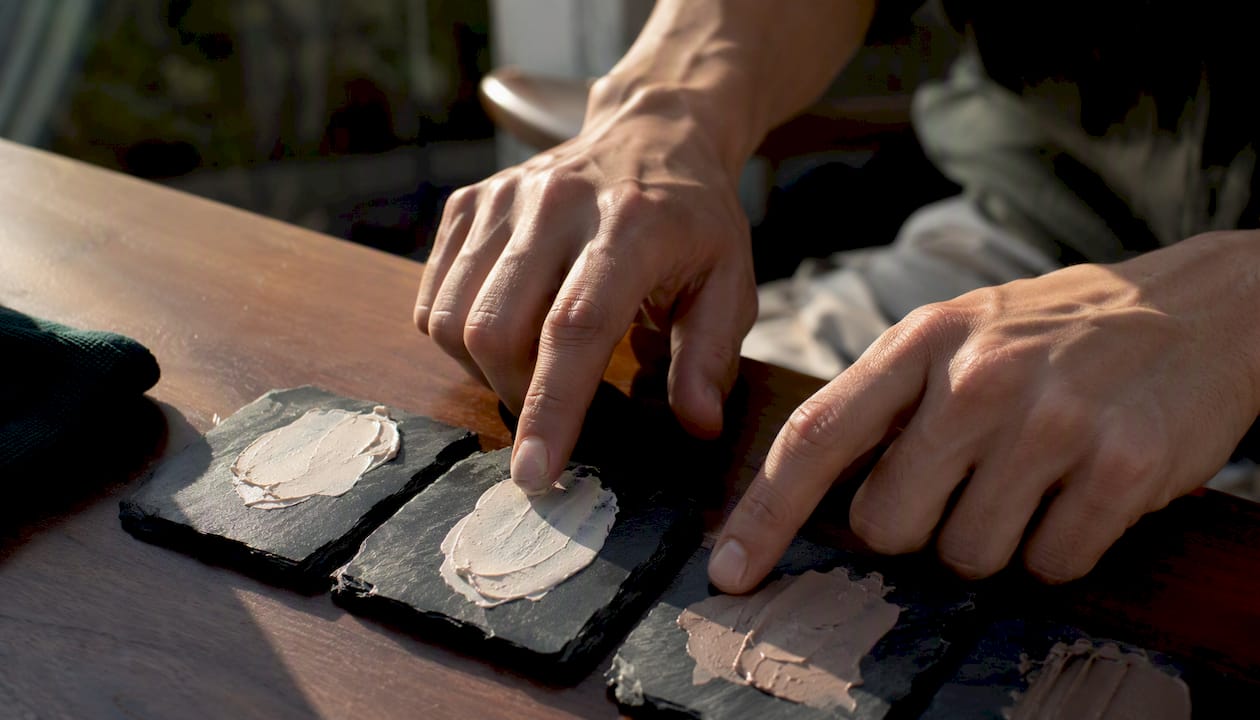
Shade guidance matters more than most people realize. A concealer that’s even half a shade too light reads as a mask under natural light. Test shades on your jaw in daylight, not under store lighting. For brow products and any liner, cool browns and taupes blend into most skin tones without the harshness of black. For natural-looking concealer coverage, the shade should disappear into the skin, not sit on top of it.
A few quick formula rules:
- Dry skin: Cream or balm concealers blend more easily and don’t crack. Avoid powder-heavy products.
- Oily skin: A thin serum foundation or skin tint with a blurring primer underneath lasts longer without going shiny.
- Normal skin: You have the most flexibility. Skin tints and light cream products both work.
- Combination skin: Use a cream formula on dry patches, and a light powder or blotting paper on the T-zone only.
For a deeper look at lightweight makeup formulas and why they outperform heavier alternatives for everyday wear, the logic comes down to one thing: less product means fewer edges to blend and less chance of detection.
What subtle techniques make the biggest difference?
The gap between “barely there” and “obviously wearing makeup” usually comes down to a few specific habits, not the products themselves.
-
Tightlining adds definition without visible liner. Press a pencil or thin liner brush into the upper waterline, right at the lash roots. This technique thickens the lash line and adds shadow without a visible stripe. Use a dark brown pencil for the most natural result. Black works on deeper skin tones.
-
Spot concealing with feathered edges. Apply the smallest amount of concealer you think you need, then halve it. Tap the product with your ring finger and use a circular, feathering motion to blend the edges into surrounding skin. No hard lines.
-
Brow strokes go with the hair, not across it. Draw in the direction of growth. Short, light strokes read as hair. Long, filled-in strokes read as pencil.
-
Blush placement changes everything. Applying blush lower on the cheek and across the nose bridge mimics the way skin actually flushes from sun or warmth. High placement on the cheekbones looks more sculpted than natural.
-
Layer in thin passes, not one heavy application. Think of each layer as a watercolor wash. One pass of a sheer product, check in natural light, add a second pass only if needed. This is how pros build color without it becoming visible.
Pro Tip: Use the pad of your ring finger for all blending. It applies the least pressure of any finger, which means less product displacement and a more natural finish.
What mistakes make subtle makeup look obvious?
Most discreet makeup fails come from one of five predictable errors. Each has a fast fix.
-
Wrong shade concealer. A concealer that’s too light creates a pale patch, especially under the eyes. Fix: blend a tiny amount of the concealer with a drop of moisturizer to sheer it out, or swap to a shade that matches your skin tone exactly.
-
Over-coverage. Applying product to the whole face when only one or two spots need attention. Fix: remove excess with a damp makeup sponge using a pressing motion, not a rubbing one.
-
Too much powder. Powder dulls skin and settles into fine lines, making the face look flat and obviously made up. Fix: blotting papers handle shine without adding product. If you use powder, one light press on the T-zone is enough.
-
Harsh, filled-in brows. Brows that are too dark or too uniform draw attention immediately. Fix: comb through with a clean spoolie to break up the color, then use a cotton swab to soften any sharp edges.
-
Visible concealer edges. A concealer patch with a clear border is one of the most common tells. Fix: blend the edges with a fingertip using small circular motions until the transition disappears. Check in a phone camera on selfie mode, which often catches edges that a mirror misses.
A smartphone camera in natural light is your best quality check. If you can see a product on camera, other people can see it in person.
When should you adjust the look for different occasions?
The baseline discreet routine works for most everyday situations. A few small adjustments shift it for specific contexts without crossing into obvious makeup territory.
-
Work or school (everyday baseline). Stick to the core routine: spot conceal, light brows, tightlining, one coat of mascara, cream blush, tinted balm. Nothing more is needed.
-
Photos or video calls. Cameras flatten skin and wash out color. Add a touch more concealer under the eyes for brightness, deepen the blush slightly, and use a soft blurring powder to reduce shine. Soft definition sits between invisible and full glam and photographs well without looking heavy in person.
-
Evening or social events. You can intensify slightly: a second coat of mascara, a slightly deeper lip color, and a more defined brow. Keep the base the same. The skin should still look like skin.
-
Outdoor daylight. Natural light is unforgiving. Use less product than you think you need, and check your work outside before leaving. What looks balanced indoors can look heavy in direct sun.
For more natural makeup looks for men across different occasions, the principle stays consistent: adjust color intensity, not coverage weight.
What should you carry for on-the-go touch-ups?
A minimal kit handles most mid-day issues without adding visible layers.
- Mini concealer stick or pot. For spot touch-ups on blemishes or redness that reappear. Apply with a fingertip, not a brush, to avoid over-application.
- Blotting papers. The fastest fix for shine. Press, don’t rub.
- Small spoolie. Fixes smudged or flattened brows in seconds. Also useful for separating mascara clumps.
- Tinted lip balm. Replaces lip color that fades after eating or drinking.
- Travel sponge. Useful for blending if you need to reapply concealer mid-day.
The NORML how-to guide recommends this kind of compact kit specifically for men: a small concealer, blotting papers, and a spoolie cover the vast majority of touch-up situations. When reapplying concealer over existing product, use less than you applied in the morning and blend immediately. Layering on top of dried product creates texture.
What do pro makeup artists say about the no-makeup philosophy?
The principles behind discreet makeup come from working artists who have spent years figuring out what actually reads as natural.
That framing changes how you approach the whole routine. You’re not hiding anything. You’re making what’s already there look slightly better.
A few principles that pro artists return to consistently:
- Spot conceal, then check in natural light. Fiona Stiles and other working artists treat natural light as the final judge. If a product is visible there, it’s visible everywhere.
- Build color in thin layers. Amber Dreadon describes the approach as watercolor-like: sheer passes that build gradually rather than one opaque application.
- Shade choice is the foundation of everything. Jason Hoffman’s work consistently shows that a product in the wrong shade is detectable no matter how well it’s blended. Match to the skin, not to a trend.
- Selective coverage beats full coverage. Covering only what needs covering preserves skin texture and reads as natural. Full-face foundation, even a light one, flattens the skin in a way that reads as product.
Vogue’s minimalist makeup coverage reinforces all of these: the no-makeup look often involves more products than people expect, but each one is applied in such a light, blended layer that none of them register individually.
A quick note on daily use
The routine described here takes under 10 minutes once it becomes habit. What makes it work day-to-day isn’t the products, it’s the prep: a moisturizer, 60 seconds of wait time, and fingertip application throughout. Those three habits do more for an undetectable result than any specific product.
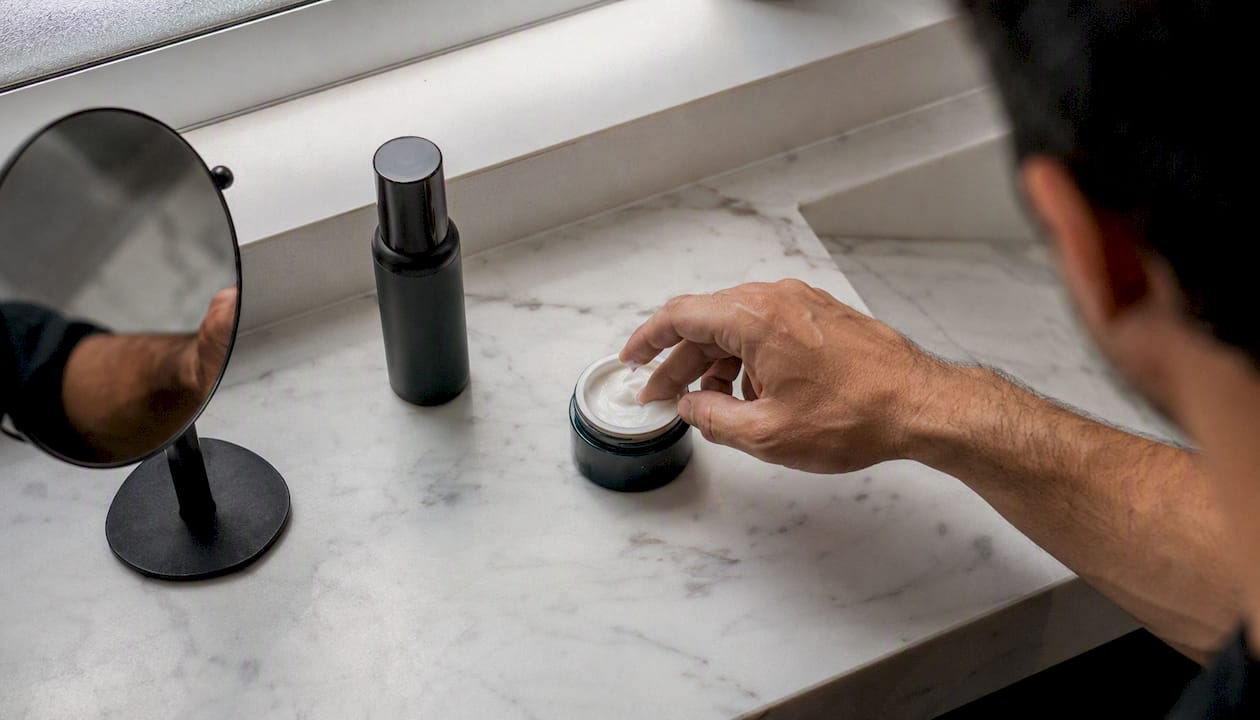
For men specifically, discreet makeup works best when the goal is simple: even out the skin, cover one or two spots, and leave. The NORML concealer fits that model because it’s designed for fingertip application with no brushes or tools required. A dab, a blend, done.
Hydration and sunscreen in the morning also extend how long everything lasts. Dry skin breaks down product faster. A simple moisturizer with SPF handles both.
NORML all-in-one concealer fits the discreet routine perfectly

The NORML all-in-one concealer from Norml4men was built for this kind of routine: quick, fingertip-applied, and undetectable. It covers blemishes, redness, and dark circles with a lightweight, matte formula that blends into skin rather than sitting on top of it. Three flexible shades mean you can match your skin tone without mixing products or guessing.
No brushes, no multiple products, no learning curve. Apply with a fingertip, blend for five seconds, and you’re done. For men who want the benefits of discreet coverage without a complicated routine, it’s a practical starting point. See the full application guide on the Norml4men site to get the most out of it from day one.
Sources
- No-Makeup Makeup: How to Get the Look - The New York Times
- Fresh, Sun-Kissed, and Blurred—Minimalist Makeup Has a New Look | Vogue
- Video: Invisible Makeup How-To - Wendy Rowe
- Soft Makeup: How to Look Polished Without Full Glam


