

How to Look Confident: A Practical Guide for Men
TL;DR:
- Confident presentation relies on specific body language, grooming, and mindset habits that can be practiced daily.
- Practicing natural gestures, maintaining good grooming, and challenging negative beliefs improve outer confidence and internal self-image.
Looking confident is a skill built from specific physical cues and mental habits that signal assurance before you say a single word. Body language, grooming, and mindset each play a distinct role in how others read you. The good news: none of these require a personality transplant. You can practice them today and see results fast. This guide covers every layer of confident self-presentation, from posture mechanics to skincare, so you walk into any room and own it.
How to look confident through body language
Body language is the fastest route to appearing confident. Practicing nonverbal behaviors like standing straight, keeping shoulders back, and using open body positions can increase both how you feel and how others perceive you, even before you feel confident internally. That means the behavior comes first. The feeling follows.
Posture and stance
Stand tall with your chest open and your weight evenly distributed across both feet. Avoid crossing your arms or hunching forward. These closed postures signal defensiveness, and people read them instantly. Confident nonverbal cues like a chin-up head orientation and upright spine signal authority in first meetings and social interactions. Think of your posture as your opening statement.

Eye contact and gaze
Eye contact is not about staring. Eye contact confidence depends on managing natural gaze shifts tailored to the social context, not forcing prolonged eye lock. A relaxed gaze that shows more of the whites of your eyes actually rates higher in trustworthiness and perceived social rank. Let your eyes move naturally during conversation. Hold contact when you are making a point, then shift briefly before returning.
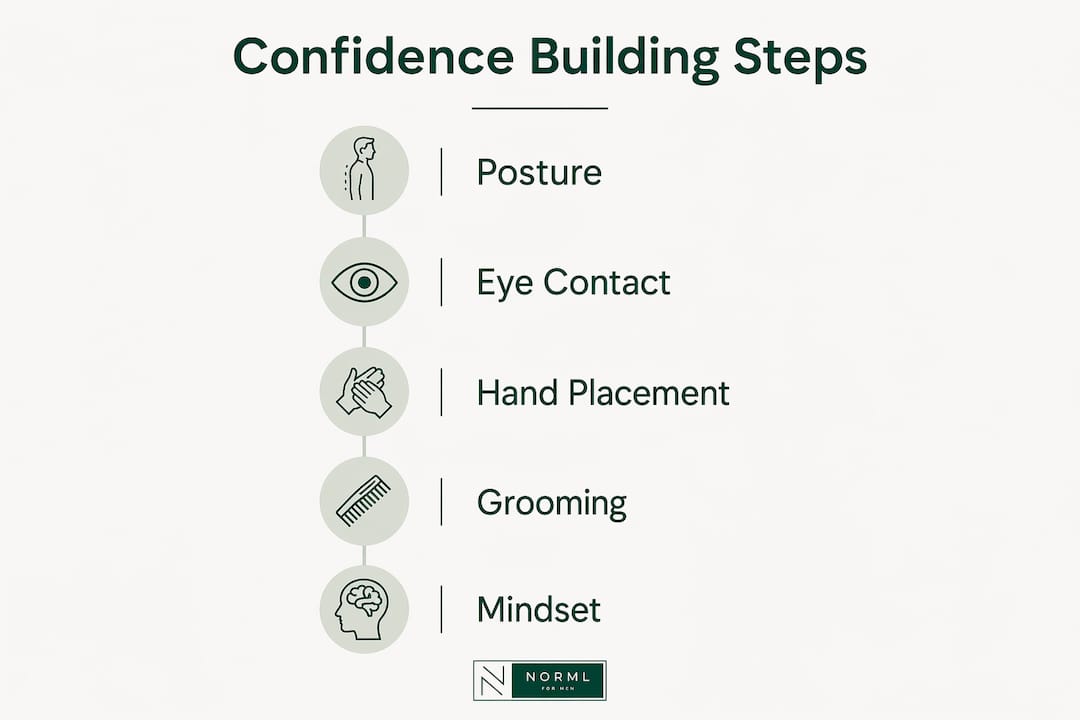
Hand placement and movement
Keep your hands out of your pockets. Hands in pockets signal withdrawal. Fidgeting with your face, phone, or clothing reads as anxiety. Rest your hands at your sides or use them deliberately when you speak. Controlled hand gestures reinforce what you are saying and project calm authority.
Pro Tip: In the first 30–60 seconds of any interaction, lock three channels: upright posture, quiet hands, and deliberate eye contact. This combination projects competence before you speak a word.
What grooming habits enhance your confident appearance?
Grooming is not vanity. It is a direct investment in how you present yourself and how you feel about that presentation. Men who maintain consistent daily grooming routines report stronger self-image and more positive social interactions. The connection between appearance and confidence is well documented, and the habits that drive it are simpler than most men think.
The core grooming stack for young men looks like this:
- Skincare: Cleanse and moisturize daily. Redness, blemishes, and uneven skin tone are visible distractions that pull focus away from what you are saying.
- Hair: Keep it clean and styled consistently. A haircut that fits your face shape signals that you take care of yourself.
- Attire: Wear clothes that fit. Ill-fitting clothes undermine every other effort you make.
- Hygiene: Deodorant, fresh breath, and clean nails are non-negotiable. These details are noticed when they are missing.
Skin issues like redness, dark circles, or breakouts can shake your confidence right before a job interview or a first date. Norml4men’s all-in-one concealer covers blemishes, redness, and dark circles instantly. It is lightweight, matte, and blends into skin so no one knows you are wearing anything. It is a fast fix that removes a visible source of self-consciousness.
| Grooming habit | Confidence impact |
|---|---|
| Daily skincare routine | Reduces visible blemishes and redness that distract from presence |
| Consistent haircut | Signals self-care and intentionality |
| Well-fitted clothing | Frames your body and projects effort |
| Norml4men concealer | Covers skin imperfections instantly without looking like makeup |
Pro Tip: Noting two physical features you genuinely like about yourself each morning shifts your self-talk from threat scanning to appreciation. Pair this with your grooming routine for a compounding effect on self-image.
How can mindset and self-talk strengthen your confidence projection?
Confident body language without a supporting mindset is a performance that cracks under pressure. Changing underlying beliefs through evidence-based self-talk is as important as acting confident externally. A complete confidence routine incorporates mindset work, not just posture drills.
Here is a practical process to build that foundation:
- Write down your negative beliefs. Identify the specific thoughts that undermine you. “I’m bad at talking to people.” “I look awkward.” Name them clearly.
- Challenge each belief with evidence. For every negative belief, find a real example that contradicts it. One is enough to start.
- Build a strengths list. Building a list of at least 5 positive things about yourself and reviewing it regularly reduces confidence drag. Update it as you grow.
- Observe confident people you respect. Study how they carry themselves, how they speak, and how they handle silence. Then borrow specific behaviors, not their entire personality.
- Set small, visible goals. Confidence grows from evidence. Each small win, whether it is holding eye contact for a full conversation or speaking up in a meeting, builds the internal case that you are capable.
Assertive communication is a skill, not a personality trait. You can practice it the same way you practice a sport. For additional mental strategies, self-talk techniques used in interview coaching apply directly to everyday social situations.
How does your walking style affect perceived confidence?
The way you walk communicates dominance and confidence before anyone sees your face. Research on kinematic cues in men’s gait shows that perceived physical dominance relates not just to body size and strength but also to dynamic movement markers like lateral torso sway and shoulder abduction. Smaller men can convey similar dominance as larger men by adjusting these movement mechanics.
| Movement cue | What it signals | How to practice it |
|---|---|---|
| Shoulder abduction | Physical dominance and size | Walk with arms slightly away from your body |
| Lateral torso sway | Purposeful, controlled movement | Allow a natural side-to-side shift in your stride |
| Step length | Confidence and unhurried pace | Take full, deliberate steps rather than short, quick ones |
| Head position | Status and alertness | Keep chin level, not tilted down |
Subtle movement mechanics like gait sway and shoulder positioning significantly influence how dominance and confidence are perceived, beyond static appearance. This means you do not need to change how you look. You need to change how you move. Practice walking with purpose in low-stakes environments, like a parking lot or a hallway, until it becomes automatic.
What common mistakes undermine a confident appearance?
Most confidence errors are not about what you do. They are about what you do too much of, or not enough of.
- Overcorrecting eye contact into staring. Forced, unblinking eye contact reads as aggression or anxiety, not confidence. Relaxed gaze that shows more sclera improves social judgments far more than duration of stare.
- Fidgeting with your hands or face. Touching your face, cracking your knuckles, or checking your phone signals nervousness. Still hands project control.
- Slouching or closed-off posture. Crossed arms and rounded shoulders communicate defensiveness. Open posture takes up space and signals security.
- Neglecting grooming consistency. A single bad skin day or a wrinkled shirt can knock your confidence before you walk through the door. Consistent habits remove that variable.
- Negative self-talk before social situations. Telling yourself you will embarrass yourself is a self-fulfilling setup. Replace the script before you enter the room.
- Rushing movements and responses. Slowing your movement tempo and allowing your body to settle under social stress maintains a confident appearance even when you feel uneasy. Speed signals panic. Stillness signals control.
Key takeaways
Projecting confidence requires consistent practice across body language, grooming, and mindset, and each layer reinforces the others.
| Point | Details |
|---|---|
| Body language comes first | Lock posture, quiet hands, and deliberate eye contact in the first 30–60 seconds of any interaction. |
| Grooming removes self-consciousness | Consistent skincare, hair care, and attire reduce visible distractions and strengthen self-image. |
| Mindset work is non-negotiable | Writing down strengths and challenging negative beliefs builds the internal foundation for confident behavior. |
| Gait mechanics signal dominance | Walking with shoulder abduction and lateral sway projects confidence independent of body size. |
| Stillness beats speed under pressure | Slowing your movements during awkward or stressful moments maintains a confident presence. |
What I’ve learned about confidence that most guides get wrong
Most confidence advice treats confidence as a feeling you need to generate before you act. That is backwards. Confidence is a behavior you practice until the feeling catches up.
I have worked with young men who had every reason to feel confident on paper, good-looking, educated, capable, and yet they walked into rooms like they were apologizing for being there. The fix was never a mindset retreat. It was repetition. They practiced the posture, the gaze, the walk, and the grooming routine until those behaviors stopped feeling foreign. The internal shift followed the external one, not the other way around.
The grooming piece gets underestimated. A guy can have perfect posture and still lose confidence the moment he catches his reflection and sees a breakout or dark circles under his eyes. Removing that variable matters. Products like Norml4men’s concealer exist precisely for this reason. They are not about vanity. They are about removing a distraction so you can focus on showing up fully.
The other thing most guides miss: confidence is contextual. You can be confident in a gym and fall apart in a boardroom. That is normal. Build the habits in the contexts where you feel weakest, not just where you already feel strong. That is where the real growth happens.
— Ford
Norml4men and the grooming foundation your confidence needs
A consistent grooming routine is one of the fastest ways to remove the mental friction that holds confidence back.
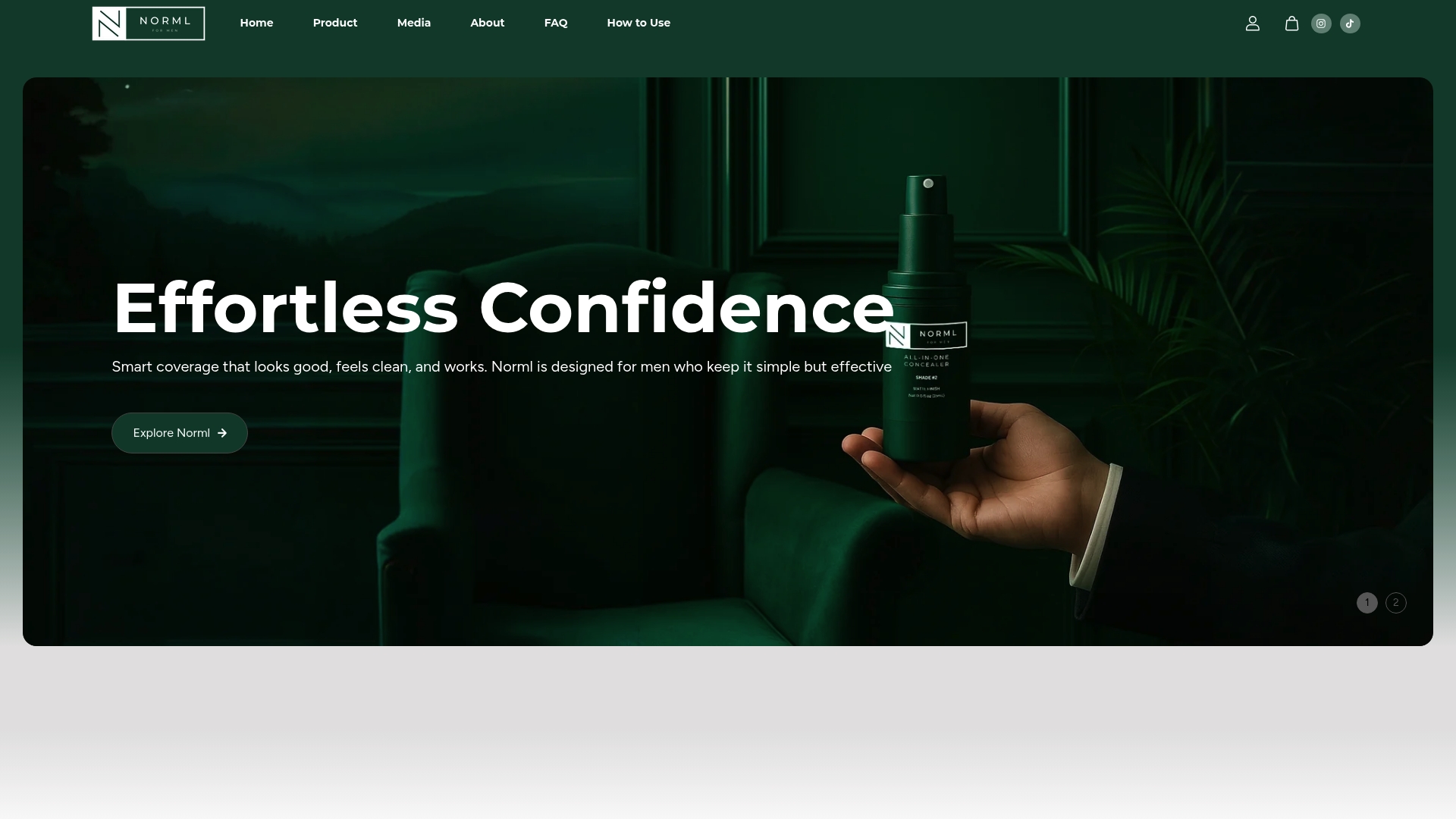
Norml4men’s all-in-one concealer covers blemishes, redness, and dark circles in seconds. It is matte, lightweight, and built specifically for men’s skin so it blends in without anyone noticing. Pair it with the appearance upgrades covered in the Norml4men blog and you have a complete foundation for looking and feeling sharper every day. Confidence starts with removing the things that make you second-guess yourself before you even open your mouth.
FAQ
What is the fastest way to appear more confident?
Locking upright posture, quiet hands, and deliberate eye contact in the first 30–60 seconds of an interaction is the fastest way to project confidence. These three nonverbal cues signal competence before you say anything.
Does grooming actually affect how confident you feel?
Yes. Consistent grooming habits reduce visible distractions like blemishes and uneven skin tone, which directly lowers self-consciousness and strengthens self-image in social and professional settings.
How do I make eye contact without staring?
Use natural gaze shifts rather than fixed staring. Relaxed eye contact that shows more of the whites of your eyes reads as confident and trustworthy, while prolonged staring reads as aggressive or anxious.
Can the way I walk make me look more confident?
Yes. Walking with shoulder abduction and lateral torso sway signals dominance and confidence regardless of body size. Deliberate, unhurried steps reinforce the effect.
What should I do when I feel awkward in a social situation?
Slow down your movements and resist the urge to fidget or rush your responses. Stillness under social stress maintains a confident appearance even when you feel uneasy internally.


