

How to Pick Concealer Shade for Men: a Clear Guide
TL;DR:
- Matching your skin’s undertone is essential to achieving natural-looking concealer coverage and avoiding ashy or muddy effects.
- Using an exact shade for blemishes and a slightly lighter one with a matching undertone for dark circles provides optimal results.
If you’ve ever bought a concealer and ended up looking ashy, patchy, or like you’re wearing a mask, you’re not alone. Knowing how to pick concealer shade correctly is the single most important step between coverage that looks natural and coverage that makes things worse. This guide breaks down skin undertones, shade matching techniques, and the difference between covering a blemish versus brightening under your eyes. No guesswork, no complicated rules. Just a straight path to finding the shade that works for your skin.
Table of Contents
- Key takeaways
- How to pick concealer shade: start with your skin tone
- Matching the shade to what you’re covering
- Testing and applying concealer so it actually blends
- Fixing common shade mismatches
- My honest take on what most men get wrong
- Find a concealer built for your skin from day one
- FAQ
Key takeaways
| Point | Details |
|---|---|
| Undertone is everything | Matching your skin’s undertone prevents ashy, orange, or muddy-looking coverage. |
| Purpose changes the shade | Use an exact match for blemishes and go one to two shades lighter for dark circles. |
| Test in natural light | Store lighting distorts color. Always check your swatch outside or near a window. |
| Wait for oxidation | Concealers can shift warmer after application. Wait 20 minutes before judging the match. |
| Color correctors go first | For redness or dark circles, apply a color corrector before concealer for cleaner results. |
How to pick concealer shade: start with your skin tone
Before you grab any product, you need to understand what your skin is actually doing. Skin has two layers to consider: your overall tone (how light or dark your skin is) and your undertone (the background color running beneath the surface).
Skin tones are usually grouped into five categories: fair, light, medium, tan, and deep. That part is simple enough. The part most men miss is the undertone, and it’s the real reason a concealer can look wrong even when the shade number seems right. Undertones are a permanent background color; ignoring them is the single biggest cause of concealer that looks “off.”
There are three undertone categories:
- Warm: Yellow, golden, or peachy tones in the skin. Gold jewelry tends to look natural on you.
- Cool: Pink, red, or blue tones. Silver jewelry tends to complement your complexion better.
- Neutral: A mix of both. Most jewelry shades work well, and your skin doesn’t lean strongly either way.
How to check your undertone at home. Look at the veins on your inner wrist in natural light. Green-tinted veins generally indicate warm undertones. Blue or purple veins point to cool undertones. A mix of both suggests neutral. This is called the vein test, and while it’s not perfect, it gets you close enough to narrow down your concealer options fast.
Pro Tip: The jewelry test is a useful second check. Warm undertones look better with gold. Cool undertones look better with silver. If both look fine, you’re neutral.
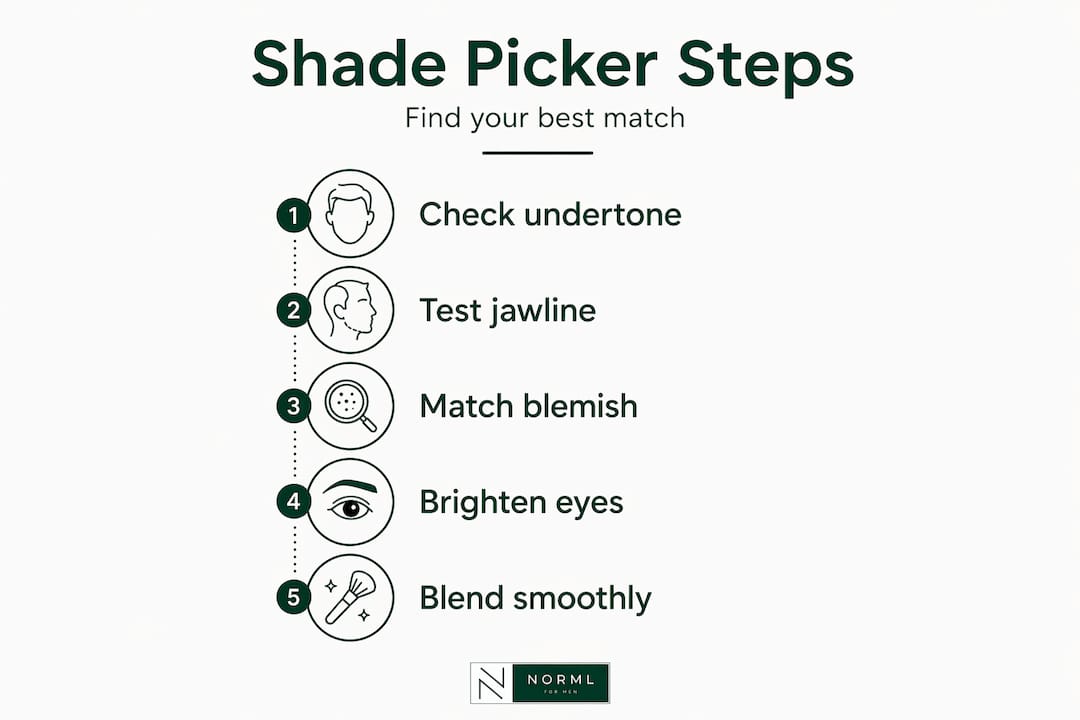
When testing concealer at the store, avoid your hand or wrist. Swatching on the jawline or lower cheek gives a far more accurate read because that skin better reflects your face and neck tones together. Understanding undertone and natural skin tones is foundational before you buy anything.
Matching the shade to what you’re covering
Here’s where a lot of men treat concealer as a one-size-fits-all tool. It’s not. The shade you need depends entirely on what you’re trying to fix.
Covering blemishes and redness
For spot concealing, an exact match to your skin tone is what you want. Nothing lighter, nothing darker. If your concealer is even slightly lighter than your skin, it creates a halo effect around the blemish that draws more attention to it. Spot concealing needs an exact tone match to disappear effectively.
If you’re dealing with active redness, a green color corrector applied before your concealer will cancel the red tones. This is a small but effective step. Celebrity makeup artists treat color correctors as essential before concealer. Use the smallest amount you need on the red area only, then blend your skin-matched concealer on top.
You can learn more about covering blemishes fast with specific concealer techniques built for men.
Brightening under the eyes
Under-eye coverage works differently. Here, going one to two shades lighter than your skin tone adds brightness that reduces the shadowed look. But, and this is critical, the undertone still has to match. A lighter shade with the wrong undertone will look gray and sickly instead of refreshed.
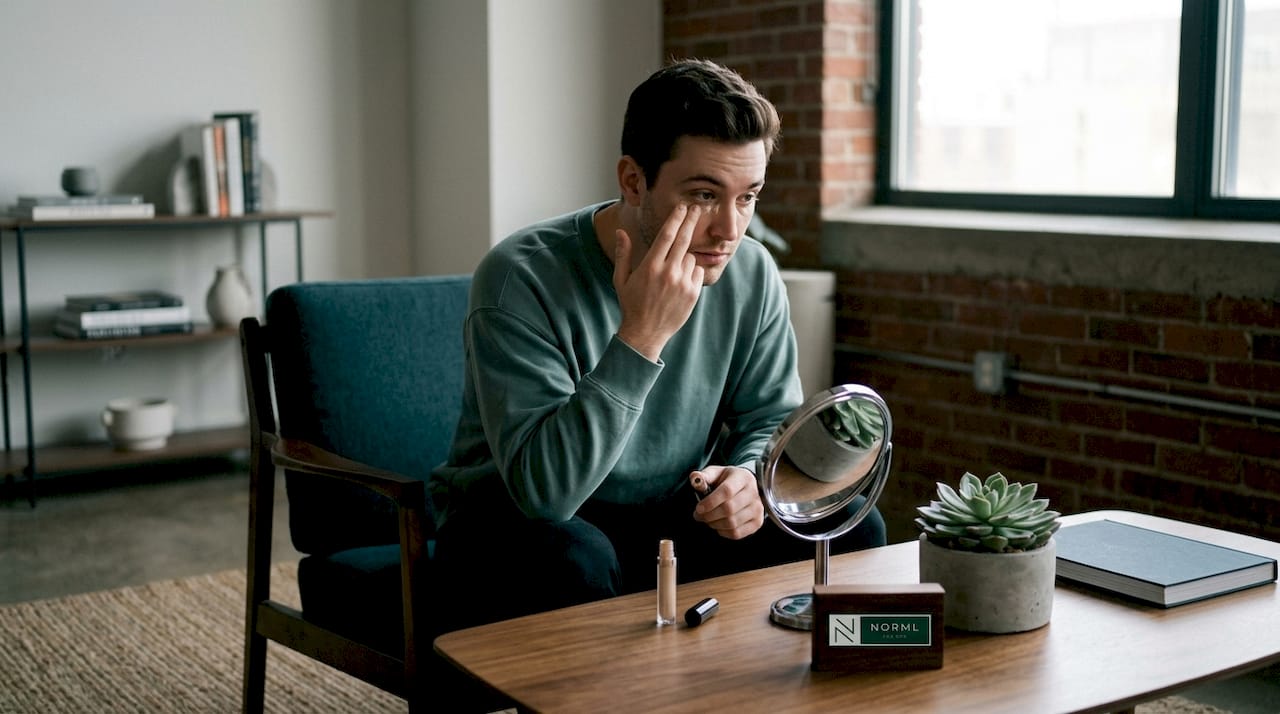
For dark circles with a blue or purple tint, a peach or orange color corrector neutralizes those hues before you apply concealer. Men with deeper skin tones typically need an orange corrector. Lighter skin tones get better results with peach.
Here’s a quick comparison of shade needs based on the goal:
| Goal | Shade vs. skin tone | Recommended undertone |
|---|---|---|
| Cover a blemish | Exact match | Same as your skin undertone |
| Reduce redness | Exact match | Neutral or warm, plus green corrector |
| Brighten dark circles | 1-2 shades lighter | Same as skin, peach/orange corrector first |
| Highlight or contour | 1-2 shades lighter | Warm or neutral |
Pro Tip: If you’re dealing with both blemishes and dark circles, keep two concealers on hand. One exact match for blemishes and one slightly lighter for under your eyes.
Testing and applying concealer so it actually blends
Getting the shade right on paper means nothing if you test it wrong or apply it poorly. These steps will save you from most common mistakes.
-
Test in natural light. Store lighting, especially fluorescent, distorts color in ways that can make a mismatched shade look fine in the aisle and wrong in real life. Step outside or stand near a window when checking a swatch.
-
Swatch on your jawline, not your hand. The skin on your face differs from the skin on your hand in tone, texture, and oil content. A jawline swatch reflects what the product will actually do on your face.
-
Wait for oxidation. Concealers can shift to warmer tones within 20 to 60 minutes after you apply them. If you buy based on the first 30 seconds of a swatch, you might get home and find the shade has changed on your skin. Give it time before you commit.
-
Apply in thin layers. A thick application goes cakey fast. Start with a small amount, build up only where you need it, and blend the edges outward so there’s no visible line.
-
Blend with a fingertip or a small brush. Body heat from your fingertip helps work concealer into the skin naturally. A flat brush gives more precise coverage on a specific spot.
-
Avoid the full triangle technique under your eyes. Applying a bright triangle under the eyes in a shade much lighter than your skin looks unnatural and cakey on most men. Keep the lighter shade close to the inner corner of the eye where shadow is deepest.
Pro Tip: If your concealer looks dry or cakey after blending, lightly press (don’t rub) a damp fingertip over it. That small amount of moisture reactivates the formula and softens the finish.
Also worth knowing: some brands’ concealers run lighter than their foundations even at the same shade number. Never assume your foundation shade number transfers directly to concealer. Always test independently.
Fixing common shade mismatches
Even after all the right steps, sometimes the concealer still looks wrong. Here’s how to diagnose what went wrong and correct it.
-
Looks ashy or gray: Your concealer is either too light or has a cool undertone that doesn’t match your skin. Switch to a shade with more warmth or go one shade darker. This is especially common on men with medium to deep skin tones who grab a shade labeled “natural” without checking the undertone.
-
Looks orange or muddy: The concealer is too warm for your undertone. This happens when someone with a cool undertone picks a formula heavy in yellow or peach. Try a shade with a neutral or pink base instead.
-
Creates a halo or ring around a blemish: The shade is too light. Go back to an exact skin-tone match. Any brightness reads as a spotlight on the exact area you’re trying to hide.
-
Blotchy or uneven after blending: You may have applied too much product or skipped the color corrector step when covering discoloration. Start thinner, use a corrector if the undertone of the discoloration is very different from your skin, and blend wider around the edges.
-
Looks fine fresh but wrong after an hour: Oxidation is shifting the color. Next time, swatch early in your shopping trip and come back to check it 20 to 30 minutes later. Virtual shade finder tools can also help you narrow down options before you set foot in a store.
If you’ve tried multiple shades and still can’t get it right, getting in-store help from a trained associate is faster than burning through products. Bring a clear photo of yourself in natural daylight, describe your concerns, and ask them to help you identify your undertone.
My honest take on what most men get wrong
I’ve seen the same pattern play out over and over. Men pick a concealer based on a number on the box, apply it once, decide it looks weird, and write the whole thing off. The problem was never concealer. It was always the shade selection.
In my experience, undertone is the single most overlooked factor. Most men assume skin tone is the whole picture, so they grab something that looks close in the store and expect it to work. When the coverage looks gray or orange, they assume they just “can’t wear concealer.” That’s almost never true. The shade just didn’t respect their undertone.
What I’ve found actually works is treating the process like a fit check. You wouldn’t buy a shirt without checking the size. You shouldn’t buy concealer without checking the undertone. A step-by-step concealer routine makes it obvious where shade selection fits in the bigger picture.
I also want to push back on the idea that using two shades is complicated. It takes 30 extra seconds and makes a significant visual difference between covering dark circles and covering a blemish. Once you build the habit, it becomes automatic.
Don’t be afraid to experiment. The men who get good results with concealer are not the ones who figured it out on the first try. They’re the ones who tested, adjusted, and got comfortable enough to iterate.
— Ford
Find a concealer built for your skin from day one

Knowing how to pick the right concealer shade is one thing. Having a product designed to make that process simple is another. Norml4men created an all-in-one concealer specifically for men, with a shade range and a lightweight matte formula that blends into male skin without looking like you’re wearing anything at all. No cakey finish, no obvious coverage, and no steep learning curve. Whether you’re targeting a blemish before work or reducing under-eye shadow before a meeting, the Norml All-In-One Concealer gives you a clean, natural result fast. If you’re new to concealer and want to understand the basics before picking a product, the Norml4men blog has straightforward guides to get you started quickly.
FAQ
What’s the easiest way to find your concealer shade?
Swatch the concealer on your jawline in natural light and wait 20 to 30 minutes to check for oxidation. Matching your skin’s undertone, whether warm, cool, or neutral, is as important as matching the depth of your skin tone.
Should concealer be lighter or darker than your skin tone?
For covering blemishes, use an exact match. For brightening dark circles, go one to two shades lighter while keeping the same undertone to avoid a gray or washed-out look.
Why does my concealer look orange or ashy?
An orange result usually means the shade is too warm for your undertone. An ashy result means the shade is too cool or too light. Identifying your undertone first through the vein test or jewelry test will solve both problems.
Do men need a separate concealer for blemishes and dark circles?
Not always, but using two shades gives better results. An exact skin-tone match covers blemishes effectively, while a slightly lighter shade brightens under-eye areas without creating a halo effect on spots.
How do color correctors fit into the process of choosing concealer shade?
Color correctors go on before concealer to neutralize specific discolorations: green cancels redness, peach or orange cancels dark blue or purple under-eye circles. Once the discoloration is neutralized, a skin-matched concealer goes on top for natural coverage.


