

Skin tone matching explained: natural concealer tips
Most men think matching concealer is just picking a shade that looks close to their face. That’s why so many end up with visible lines, orange tones, or a mask-like finish. The secret isn’t just matching your surface color, it’s understanding your undertone and using it to guide your choice. This guide walks you through identifying your skin tone and undertone, then shows you how to apply concealer so naturally that no one will know you’re wearing it.
Table of Contents
- Understanding Skin Tone And Undertone Basics
- How To Identify Your Skin Tone And Undertone Easily
- The Science Of Concealer Color Matching
- Common Misconceptions And Mistakes In Skin Tone Matching
- Choosing And Applying Concealer For A Seamless, Natural Look
- Enhance Your Look With Norml All-In-One Concealer
Key takeaways
| Point | Details |
|---|---|
| Skin tone vs. undertone | Your surface color is what you see, but undertone is the subtle hue beneath that determines how concealer blends. |
| Simple identification tests | Wrist vein color and natural light checks reveal your undertone quickly at home. |
| Undertone impacts blending | Mismatched undertones create visible edges and unnatural tones on your skin. |
| Lighting and texture matter | Natural daylight shows true colors, and men’s oilier skin needs matte formulas for seamless coverage. |
| Proper application prevents detection | Feathering and tapping techniques ensure concealer disappears into your skin instead of sitting on top. |
Understanding skin tone and undertone basics
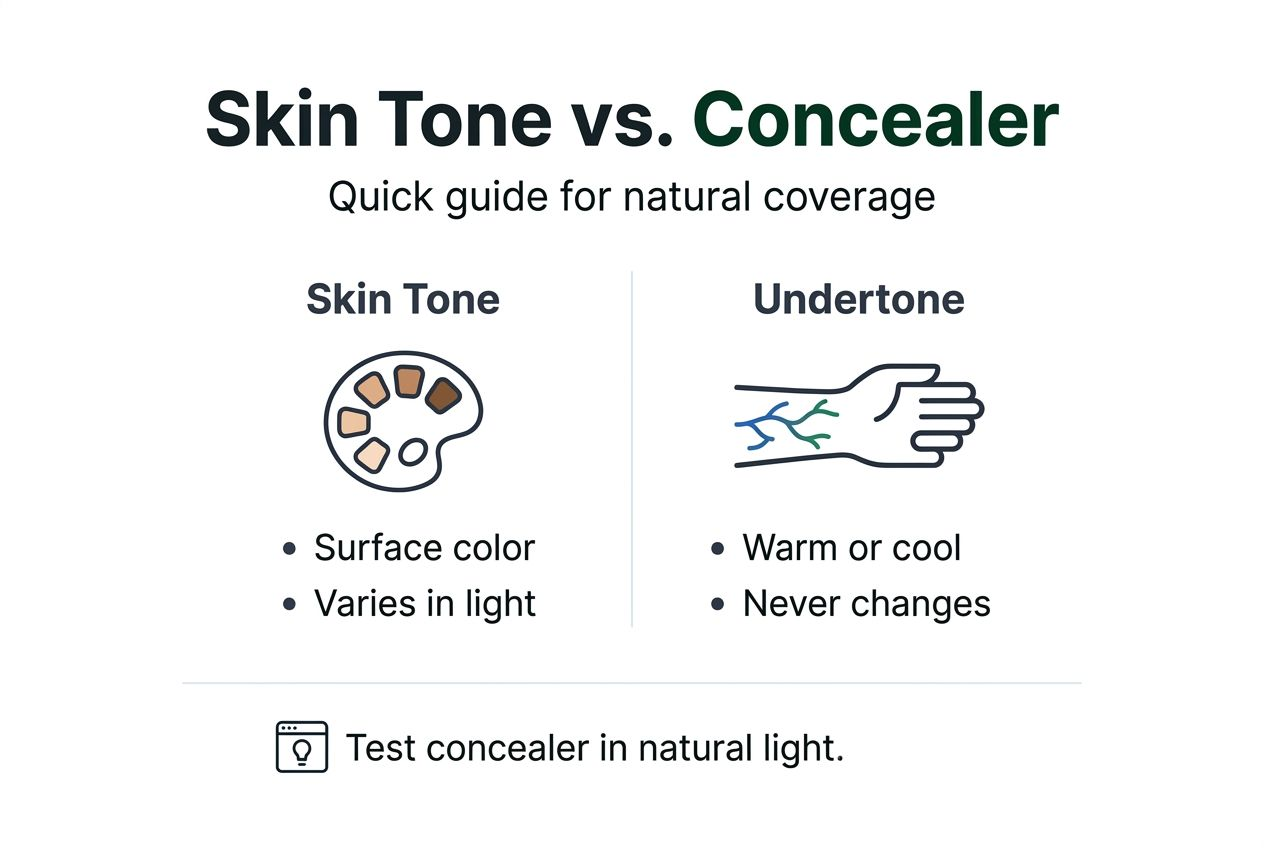
Skin tone is your visible skin color, the shade you see when you look in the mirror. Undertone is the subtle color beneath the surface that influences how products like concealer appear on your face. Skin undertones fall mainly into cool, warm, or neutral categories affecting concealer matching, and understanding this distinction is the first step toward a natural look.
Cool undertones lean pink, red, or blue. Warm undertones have yellow, peach, or golden hues. Neutral undertones are a balanced mix of both. These categories are genetically determined and remain constant, even when your surface tone darkens from sun exposure or lightens in winter.
Recognizing your undertone is critical because concealer that matches your surface tone but clashes with your undertone will always look off. You might notice an orange cast, ashy patches, or visible lines where the product meets bare skin. The key is to match both your surface tone and undertone for seamless blending.
Here’s what to look for in each undertone category:
- Cool undertones: Skin appears slightly pink or rosy, veins look blue or purple, silver jewelry tends to complement better than gold
- Warm undertones: Skin has golden, peachy, or yellow hues, veins appear greenish, gold jewelry often looks more flattering
- Neutral undertones: Skin shows a balanced mix without strong pink or yellow leanings, both silver and gold jewelry work equally well
Understanding these basics helps you move beyond trial and error. Instead of guessing, you can identify your undertone and select concealer shades that work with your natural coloring. This foundation makes everything else in this guide actionable.
How to identify your skin tone and undertone easily
You don’t need a professional consultation or expensive tools to figure out your undertone. A few simple at-home tests give you reliable results in minutes. The wrist vein test is the fastest method: flip your wrist over and look at the veins on the underside in natural light. Blue or purple veins indicate cool undertones, greenish veins point to warm undertones, and a mix of both suggests neutral undertones.
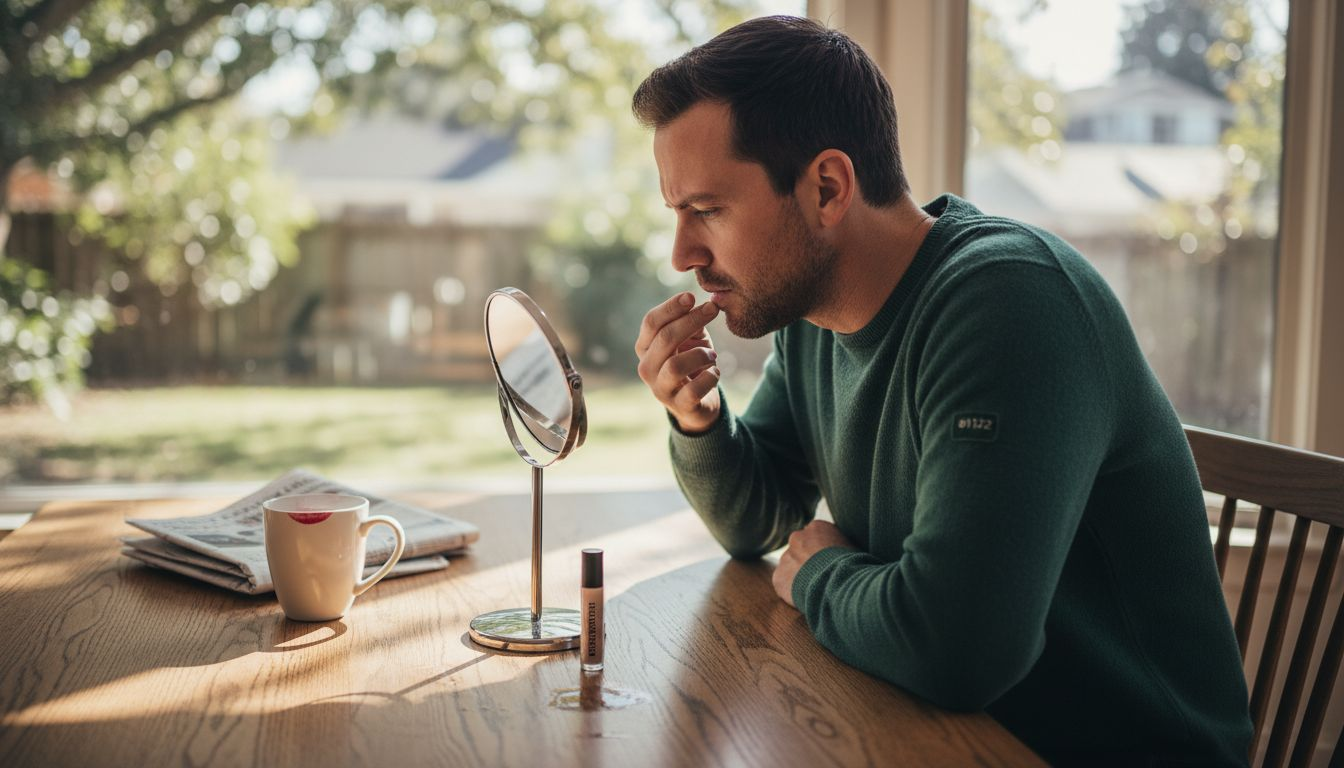
Testing concealer shade under natural daylight avoids color matching errors caused by artificial lighting. Warm indoor bulbs make everything look more yellow or orange, while fluorescent lights add a bluish cast. Both distort your true skin color. Stand near a window during daylight hours when testing your undertone or trying new concealer shades.
Another effective method is the jewelry test. Hold silver and gold jewelry near your face and see which metal makes your skin look brighter and healthier. If silver flatters you, you likely have cool undertones. If gold looks better, you’re probably warm. If both work equally well, you’re neutral.
Follow these steps for accurate identification:
- Check your wrist veins in natural daylight to get your initial undertone read.
- Compare how silver and gold jewelry look against your skin to confirm your result.
- Test multiple spots, including your jawline and inner wrist, since undertones can vary slightly across your body.
- Look at the skin on your neck and chest, not just your face, because these areas often show your true undertone more clearly.
Pro Tip: Take photos of your face in natural light and review them later. Your camera captures your skin tone without the bias your eyes might have. This can reveal undertones you didn’t notice in the mirror.
Avoid testing indoors under warm lighting or in front of bathroom mirrors with overhead bulbs. These conditions throw off your perception and lead to mismatches when you apply concealer to common skin concerns later. Once you’ve identified your undertone, you’re ready to choose concealer shades that blend naturally.
The science of concealer color matching
How concealer appears on your skin depends on more than just the shade in the tube. Your undertone, skin texture, and natural oiliness all influence blending and finish. Matte concealers reduce shine by 60% compared to dewy types, improving blendability on oily men’s skin. Men’s skin is typically thicker and produces more oil than women’s, which means products with a matte finish perform better by absorbing excess shine and creating a more natural look.
Undertone mismatches are the main reason concealer looks fake. When you use a concealer with the wrong undertone, it creates visible edges where the product meets bare skin. You might see orange patches if the concealer is too warm for your cool undertone, or ashy gray spots if it’s too cool for your warm undertone. Proper undertone matching ensures the concealer disappears into your skin instead of sitting on top like a mask.
Light reflectance also plays a role. Matte finishes absorb light, making skin appear smoother and reducing the appearance of texture. Dewy finishes reflect more light, which can highlight pores, blemishes, or uneven areas. For men seeking an invisible look, matte formulas are almost always the better choice.
Here’s a quick comparison of finishes:
| Finish Type | Light Reflectance | Best For | Downsides |
|---|---|---|---|
| Matte | Absorbs light | Oily skin, natural look, controlling shine | Can look flat on very dry skin |
| Dewy | Reflects light | Dry skin, adding glow | Highlights texture, increases shine |
| Satin | Balanced reflection | Normal to combination skin | May not control oil enough |
Skin texture also affects concealer performance. Thicker skin with larger pores needs lightweight formulas that don’t settle into texture or emphasize imperfections. Heavy concealers can cake and create a layered look that draws attention instead of hiding concerns.
Pro Tip: Test concealer on your jawline, not your hand. Your hand has different undertones and texture than your face, so a shade that looks perfect there might not match your actual skin.
Choosing a concealer that aligns with your undertone and skin texture ensures seamless blending. A well-matched concealer should be nearly invisible once blended, enhancing your appearance without announcing itself. Following a proper concealer routine for men maximizes these benefits.
Common misconceptions and mistakes in skin tone matching
Many men assume that matching concealer is straightforward: pick a shade that looks like your face and you’re done. This oversimplification leads to unnatural results. 57% of men focus only on surface skin color when choosing concealer, leading to poor matches. The truth is more nuanced. You need to account for undertone, lighting, and how the product interacts with your skin’s natural oil production.
Another widespread myth is that concealer should exactly match your face color. In reality, concealer often needs to be slightly lighter or warmer than your overall skin tone to brighten dark circles or neutralize redness effectively. Going too dark makes blemishes look muddy, while going too light creates a reverse shadow that highlights imperfections.
Ignoring lighting conditions is a costly mistake. Selecting concealer under fluorescent bathroom lights or warm indoor bulbs distorts how shades appear. What looks like a perfect match indoors can turn orange or ashy in natural daylight. Always test products near a window or outdoors during the day.
Men also frequently overlook texture differences. Women’s concealers are often formulated for thinner, drier skin. When men use these products, they can experience caking, patchiness, or excessive shine because their skin produces more oil and has a different texture. Formulas designed for men, like natural concealer options for men, account for these differences.
Key mistakes to avoid:
- Matching concealer by face color alone without checking undertone compatibility
- Testing shades on your hand instead of your jawline or cheek
- Applying concealer in poor lighting and expecting it to look natural outdoors
- Using heavy formulas that emphasize skin texture instead of lightweight, matte options
- Assuming one shade works for all areas of your face when undertones vary
Pro Tip: If you’re between two shades, choose the lighter one. It’s easier to build coverage gradually than to correct a too-dark concealer that looks muddy.
Correcting these concealer matching misconceptions saves time, money, and frustration. Once you understand what actually matters in shade selection, you can make smarter choices that deliver natural results.
Choosing and applying concealer for a seamless, natural look
Selecting the right concealer starts with matching your undertone first, then fine tuning for your surface tone. A clinical study found 85% success in natural look when matching undertone and skin tone properly. This two-step approach ensures the product blends invisibly instead of creating visible lines or color mismatches.
For oily or thicker skin, matte formulations are ideal. They control shine and prevent the greasy look that dewy finishes can create. Lightweight formulas also perform better because they don’t settle into pores or emphasize texture. Look for concealers specifically formulated for men’s skin if possible, as these account for higher oil production and different texture needs.
Application technique matters as much as product choice. Dots and dabs won’t cut it if you want an invisible finish. Blending is where most men go wrong, either rubbing too hard and removing coverage or not blending enough and leaving visible edges.
Follow these steps for seamless application:
- Apply a small amount of concealer directly to the blemish, dark circle, or red spot you want to cover.
- Use your ring finger or a small brush to gently tap the product into your skin, don’t rub or swipe.
- Feather the edges outward using light tapping motions to blend the concealer into surrounding skin without a visible line.
- Build coverage gradually if needed by adding tiny amounts and blending again, rather than applying too much at once.
- Check your work in natural light to ensure no edges or color mismatches are visible.
Pro Tip: Blend concealer in a tapping motion, not a rubbing motion. Tapping presses the product into your skin for better coverage and a more natural finish.
Less is more with concealer. You can always add another layer if needed, but removing excess product or fixing a cakey look is much harder. Start with a rice-grain-sized amount and build from there.
Once you’ve mastered the basics, you’ll find that concealer becomes a quick, confidence-boosting step in your routine. Choosing the best concealer for men and following proven concealer application techniques makes all the difference between looking made up and looking naturally sharp.
Enhance your look with Norml all-in-one concealer
Now that you understand how to match your skin tone and undertone, it’s time to put that knowledge into action. Norml all-in-one concealer is designed specifically for men’s skin, with a lightweight, matte formula that blends seamlessly without looking like makeup. It covers blemishes, redness, and dark circles in seconds, giving you a sharper, more even appearance that boosts your confidence.

Norml’s formula accounts for men’s thicker, oilier skin, ensuring the product doesn’t cake, settle into texture, or create unwanted shine. Whether you’re new to concealer or looking for a better solution, Norml simplifies your routine with an all-in-one approach that just works. Pair it with our concealer routine guide for men and facial enhancement guide to master every step and look your best every day.
FAQ
What is the difference between skin tone and undertone?
Skin tone is the visible color of your skin that you see in the mirror, while undertone is the subtle hue beneath the surface that stays consistent regardless of sun exposure or seasonal changes. Matching your undertone is essential for natural cosmetic blending because it determines how concealer interacts with your skin. A mismatch creates visible edges and unnatural tones.
How can I easily find my skin undertone at home?
Look at the veins on the underside of your wrist in natural light: blue or purple veins suggest cool undertones, while greenish veins indicate warm undertones. You can also compare how silver and gold jewelry look against your skin, with silver flattering cool tones and gold complementing warm tones. Always check your skin tone and undertone identification in daylight for the most accurate results.
Why does lighting affect concealer color matching?
Artificial lighting distorts color perception by adding warm yellow, orange, or cool blue casts that make shades appear different than they really are. Natural daylight reveals the true colors of both your skin and concealer, allowing for accurate matching. Testing under fluorescent or warm indoor bulbs often leads to mismatches that only become obvious when you step outside.
What type of concealer finish works best for men’s skin?
Matte finishes control oil and shine significantly better on men’s skin than dewy formulas, making them ideal for a natural, seamless appearance. Men’s skin produces more oil and has a thicker texture, so matte concealers absorb excess shine and blend more invisibly. Learn more about concealer finishes for men to choose the right formula for your needs.


