

Social Media Ready Skin Tips for Men in 2026
TL;DR:
- Consistent skincare focusing on even tone, hydration, and skin barrier health prepares your skin well ahead of camera appearances.
- A 12 to 16-week routine timeline and gentle, stable products yield better results than quick fixes or aggressive experimentation.
- Rely on dermatologist-backed advice rather than social media trends to build a simple routine that enhances your natural skin.
You don’t need filters or a makeup bag to look good on camera. The real work happens in your skincare routine, days and weeks before you hit record. These social media ready skin tips cut through the noise and focus on what actually moves the needle: even tone, solid hydration, and a skin barrier that doesn’t blow up under studio lighting or afternoon sun. Whether you’re posting daily content or just tired of looking washed out in photos, this guide gives you a practical framework built for real skin, not Instagram fiction.
Key Takeaways
| Point | Details |
|---|---|
| Start early, not last-minute | A 12 to 16 week timeline builds calm, photo-ready skin far better than any overnight fix. |
| Sunscreen is non-negotiable | Daily SPF 30+ protects your skin and directly improves how it looks on camera over time. |
| Simple beats complex | One new product at a time prevents irritation cycles that photograph worse than the original problem. |
| Quick fixes exist but are limited | Hydration, blotting papers, and a matte concealer handle same-day needs without replacing a real routine. |
| Confidence reads on camera | Calm, consistent skin tells a better story than perfectly filtered skin with no substance behind it. |
1. Social media ready skin starts with these four qualities
Before you build a routine, you need to understand what the camera actually picks up. Most guys think flawless skin for photos means zero blemishes. That’s not the whole picture.
There are four qualities that matter most on camera:
- Even skin tone. Uneven tone creates harsh contrast that lighting amplifies. Redness, dark spots, and hyperpigmentation all read worse in photos than in the mirror.
- Smooth texture. Bumpy or flaky skin catches shadows. Under ring lights or natural daylight, texture becomes the first thing people notice.
- Adequate hydration. Dry skin creates patchy, dull areas that flatten your features on camera. Hydrated skin reflects light evenly and looks alive.
- A stable skin barrier. A compromised barrier means redness, sensitivity, and breakouts that show up just when you need them least.
A simple men’s skincare routine targeting all four of these qualities consistently outperforms any single product targeting one problem. Address the system, not just the symptom.
Pro Tip: If your skin looks rough in natural light near a window, it’ll look rough on camera. Use that as your quality check before you post.
2. Start your skincare timeline 12 to 16 weeks out
This is the tip most guys skip because it requires patience. A structured 12 to 16 week timeline builds predictable, calm skin that photographs well. If you only prep for a week before a shoot or event, you’re managing damage rather than building a foundation.
Think of it in phases. The first month is about cleaning up your baseline: gentle cleansing, introducing hydration, cutting harsh products. The middle weeks are when you layer in targeted treatments like retinoids or niacinamide. The final two weeks before any major shoot or post are a stability window. No new products, no aggressive treatments.
Why does this matter so much? Because retinoids take roughly 12 weeks before delivering visible acne clearing. If you start them the week before a shoot, you’re in the purge phase. You’ll look worse before you look better. Timing is everything.
3. Keep your routine gentle and consistent
Here’s something counterintuitive: the more aggressive your skincare, the worse your skin often looks on camera. Over-exfoliating strips your barrier. Stacking multiple actives creates irritation cycles that show up as redness, flaking, and sensitivity. Those photograph terribly.
Dermatologists consistently recommend adjusting one variable at a time and keeping your routine stable leading up to any content creation. That means if you’re trying a new vitamin C serum, you don’t also introduce a new exfoliant in the same week.
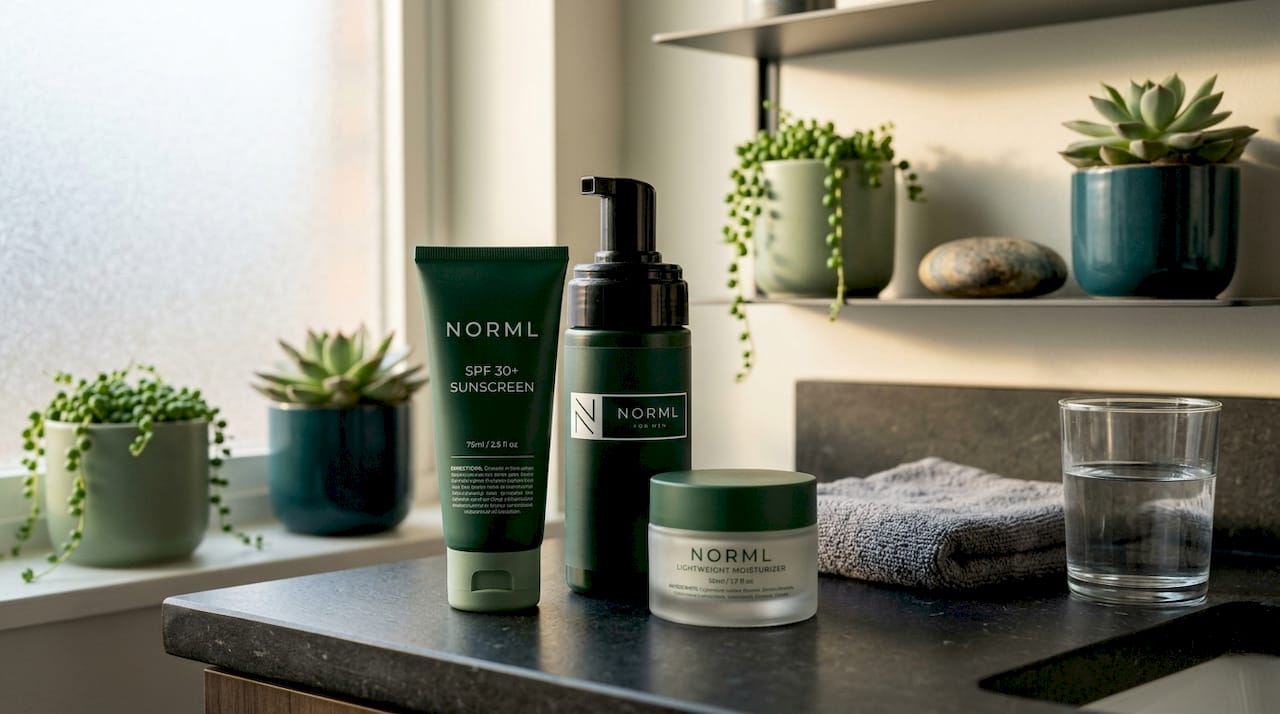
Gentle consistency beats aggressive experimentation every single time. A cleanser, moisturizer, and SPF done daily for three months will do more for your skin than rotating through ten trending products in the same period.
4. Wear SPF 30+ every single day
Sunscreen is the most evidence-backed tool in men’s skincare and the most commonly skipped. The AAD recommends broad-spectrum SPF 30+ as the daily standard for protecting skin from UV damage. That damage is exactly what creates the uneven tone, dark spots, and rough texture that kills photos.
The research also makes a practical point: the best sunscreen is the one you’ll actually wear. If a thick, greasy formula keeps you skipping it, switch to a lightweight or gel-based SPF that you’ll put on without thinking.
Pro Tip: If you’re shooting outdoors, reapply SPF every two hours. A shine-prone face is fixable with blotting papers. A sunburn on camera is not.
5. Hydrate your skin from the inside and outside
Dehydration is the most underrated issue for young men’s skin on camera. It shows up as a dull, flat complexion, pronounced fine lines, and patchy texture that even good lighting can’t fully fix.
External hydration means using a moisturizer suited to your skin type every morning and evening. You don’t need something heavy. A gel moisturizer works for oily skin. A cream formula handles dry or combination skin. The goal is a protective layer that keeps water in your skin throughout the day.
Internal hydration matters just as much. Alcohol, late nights, and not drinking enough water all show up on your face. On a day you plan to shoot content, aim for at least two liters of water and avoid heavy sodium intake, which causes puffiness.
6. Learn the difference between quick fixes and long-term results
A lot of skincare for social media advice online blurs this line. Some things work within an hour. Others take months. Mixing them up is how guys end up disappointed.
Here’s a straightforward breakdown:
| Approach | What it does | Timeline |
|---|---|---|
| Blotting papers | Absorbs excess oil instantly | Immediate |
| Matte primer | Controls shine, smooths texture | 5 to 10 minutes |
| Hydrating face mask | Boosts surface glow temporarily | 20 minutes |
| Moisturizer + SPF daily | Improves tone and hydration | 4 to 8 weeks |
| Niacinamide serum | Reduces redness and pore appearance | 8 to 12 weeks |
| Retinoid treatment | Clears acne, smooths texture | 12 to 16 weeks |
Use quick fixes for same-day needs. Use long-term treatments to change the baseline. Don’t expect retinoids to pull off same-day miracles, and don’t expect blotting papers to fix chronic breakouts.
7. Ignore most skincare advice from social media influencers
This one might sting, but 80% of skincare advice from young influencers is incorrect. The most common failures: missing sunscreen entirely and encouraging risky multi-product layering that causes real skin reactions.
The social media influence on men’s beauty trends has created a culture of overcomplication. Seven-step routines, double cleansing, three different acids. For most guys in their 20s and 30s, that’s overkill and often counterproductive. The more you chase trends, the further you get from the basics that actually work.
Stick to dermatologist-backed advice. If a product requires a 10-slide explanation to justify why it belongs in your routine, that’s a red flag.
8. Build a simple morning and evening routine
You don’t need elaborate rituals. You need a repeatable structure. Here’s what works:
Morning:
- Gentle cleanser or just a water rinse if your skin isn’t excessively oily
- Lightweight moisturizer if your skin feels dry or tight
- SPF 30+ sunscreen as the last step before leaving the house
Evening:
- Cleanser to remove sunscreen, oil, and environmental debris
- Moisturizer to support barrier repair overnight
- Targeted actives like retinoid or niacinamide, added one at a time as tolerated
Pre-shoot additions:
- A hydrating sheet mask 30 to 60 minutes before content creation boosts surface glow quickly
- Avoid heavy, pore-clogging creams on shoot days since they can look thick under strong lighting
- Skip any new products in the 48 hours before you plan to post
A daily routine for men built on this structure covers the basics without overcomplicating your morning. Consistency over two to three months creates the foundation that makes quick skin glow tips actually work.
9. Use makeup tips for selfies that look like skin
The goal isn’t to look made up. It’s to look like your skin, but better. For men, the best skincare routine for influencers typically ends with a light touch of product rather than a full face of coverage.
A matte primer applied before photos controls shine and fills surface texture. Lightweight, non-heavy formulas outperform thick products under warm lighting or on active shoot days. If you need to cover a specific blemish or dark circle, a targeted concealer does the job without broadcasting that you’re wearing anything.
The goal is a natural finish. If someone watching your content can tell you’re wearing a product, the product is doing too much.
My take on the real challenge with skin prep
I’ve spent enough time around skincare routines and camera-ready prep to say this directly: most guys fail at this not because of the wrong products, but because of impatience.
They find a solid routine, stick with it for two weeks, see no dramatic change, and pivot to something else. Then they’re starting over again with a skin barrier that’s slightly more irritated than before. I’ve seen this pattern repeat endlessly.
The uncomfortable truth is that calm skin beats “aggressive glow” on camera every single time. Your skin doesn’t need to be perfect. It needs to be consistent and stable. A face with minor texture but no active irritation looks better in a photo than a face that’s mid-purge from a new treatment you introduced three days ago.
My advice: pick three products, commit to them for two full months, and judge the results then. Not at day 12. Build a natural look with confidence and let the camera capture that instead of chasing someone else’s filtered result. The guys who look consistently good on social media aren’t the ones with the most complex routines. They’re the ones who figured out what works for their skin and never deviated from it.
— Ford
How Norml4men fits into your camera-ready routine
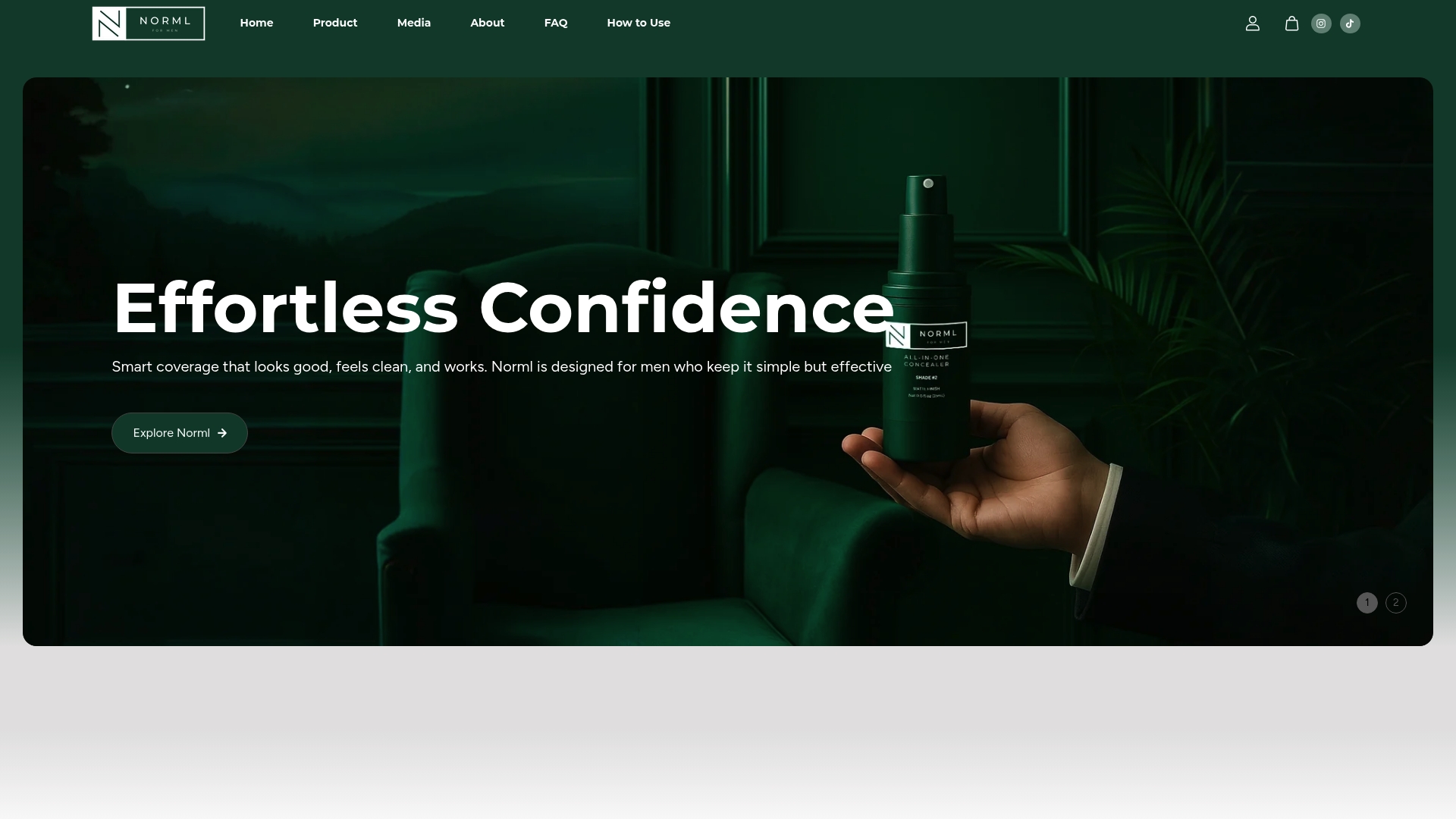
Once your skincare foundation is solid, Norml4men is the finishing touch that handles what routine alone can’t fix in the moment. Before a shoot, a red spot, a dark circle, or a patch of redness can throw off your whole frame. The Norml all-in-one concealer covers blemishes, redness, and dark circles in seconds with a lightweight, matte formula that blends into skin so naturally that no one suspects you’re wearing anything. It was built specifically for men who want to look sharper and more even without looking like they tried too hard. Quick to apply, easy to carry, and impossible to detect on camera.
FAQ
What are the most effective social media ready skin tips for men?
The most effective approach combines daily SPF, consistent hydration, and a gentle cleanser. Add targeted treatments like niacinamide or retinoids only after your baseline routine is stable.
How long before a photo shoot should I prep my skin?
Start at least 12 to 16 weeks out for meaningful improvement. The final 48 hours should be a stability window with no new products or treatments.
Can I use concealer as a guy without it looking obvious?
Yes. A lightweight, matte formula designed for men blends into skin tone without any visible coverage. Apply with a fingertip and blend outward from the blemish for a natural finish.
Why does my skin look worse on camera than in the mirror?
Camera lighting flattens depth and amplifies texture, redness, and uneven tone. What looks minor in a mirror can read as significant under ring light or natural light.
Is most skincare advice on social media safe to follow?
No. Studies show the majority of skincare advice from influencers is incorrect and often promotes risky multi-product use while skipping fundamentals like sunscreen.


