

Ways to Reduce Redness for Men: What Actually Works
TL;DR:
- Facial redness in men often stems from skin barrier issues, shaving irritation, sun exposure, or underlying conditions like rosacea.
- Consistent use of barrier-repair ingredients such as niacinamide, ceramides, and anti-inflammatory actives can reduce redness over time.
- A simplified routine combined with lifestyle changes and instant coverage with men’s concealers offers effective long-term and immediate solutions.
Facial redness hits different when you’re a guy. You’re not just dealing with a cosmetic annoyance. You’re walking into meetings, job interviews, and first dates looking flushed for no obvious reason. The ways to reduce redness for men are more accessible than most guys realize, but the internet is packed with advice designed for women’s skin, fragrance-heavy products that make things worse, and routines so complicated they fall apart by day three. This article cuts through that. You’ll get concrete, male-specific strategies covering ingredients, shaving habits, lifestyle triggers, and products that genuinely work.
Table of Contents
- Key takeaways
- 1. Understand what actually causes your redness
- 2. Choose the right criteria for your redness solutions
- 3. Build your routine around proven redness-fighting ingredients
- 4. Fix your shaving routine to stop triggering redness
- 5. Identify and avoid your personal redness triggers
- 6. Compare your options: topical treatments, lifestyle changes, and concealers
- 7. Build a daily men’s skincare routine for redness
- 8. Use a men’s concealer to bridge the gap
- My honest take on managing facial redness
- Instant coverage while your skincare does its job
- FAQ
Key takeaways
| Point | Details |
|---|---|
| Fix the skin barrier first | Ingredients like niacinamide and ceramides repair damage before targeting visible redness. |
| Shaving is a major trigger | Post-shave barrier repair with fragrance-free moisturizer reduces redness caused by friction. |
| Lifestyle changes matter as much as products | Avoiding sun, alcohol, and spicy foods significantly reduces flare-up frequency. |
| Simpler routines outperform complex ones | Fragrance-free, alcohol-free products with fewer ingredients are more effective for sensitive skin. |
| Concealers are a legitimate tool | A well-formulated men’s concealer covers redness instantly while long-term treatments take effect. |
1. Understand what actually causes your redness
Before you buy anything, understand why your face is red in the first place. Redness in men typically comes from one of four sources: inflammation from a compromised skin barrier, physical irritation from shaving, sun-driven vascular flushing, or an underlying condition like rosacea.
Treating redness requires attention to two overlapping issues, inflammation and barrier compromise. Products that just mask the color without addressing either root cause give you temporary results at best. If your redness comes with itching, burning, or eye irritation, that warrants a dermatologist visit. Persistent or worsening redness with eye symptoms especially requires professional assessment before you experiment further.
2. Choose the right criteria for your redness solutions
When picking products or habits to reduce skin irritation for men, five criteria separate what works from what wastes your money.
- Barrier repair: Look for ingredients that rebuild the skin’s protective layer, not just soothe the surface.
- Anti-inflammatory actives: Niacinamide, azelaic acid, and colloidal oatmeal are dermatologist-recommended ingredients with solid clinical backing.
- No irritants: Fragrance, alcohol, and harsh scrubs disrupt the barrier and cause the exact inflammation you’re trying to fix.
- Sun protection: Daily SPF 30 or higher mineral sunscreen is non-negotiable when redness is a concern.
- Routine simplicity: Fewer products mean fewer potential triggers and clearer feedback on what’s helping.
Pro Tip: A minimal, fragrance-free routine consistently outperforms a complicated 10-step one for sensitive and redness-prone skin. Pick three solid products and stick with them.
3. Build your routine around proven redness-fighting ingredients
The men’s skincare for redness conversation always comes back to a short list of ingredients that genuinely perform. Here’s what to look for and why each one matters.
- Niacinamide: Reduces inflammation, minimizes the appearance of redness, and strengthens the skin barrier simultaneously. It works at concentrations as low as 2%, making it easy to find in affordable products.
- Ceramides: Lipids that naturally exist in your skin and get depleted by shaving, sun, and harsh cleansers. Ceramide and niacinamide moisturizers promote barrier repair without adding unnecessary actives.
- Azelaic acid: Targets both redness and acne-like bumps, making it ideal for men dealing with shaving irritation that looks like breakouts. It also calms the kind of vascular redness associated with rosacea.
- Colloidal oatmeal: A natural remedy for redness that creates a physical soothing barrier on the skin. It’s especially useful in cleansers and moisturizers for men with easily triggered skin.
- Centella asiatica: Less talked about but backed by solid research. It calms redness by reducing inflammatory cytokines. Look for it in toners or serums labeled “CICA.”
The goal is ingredients that calm inflammation, strengthen the skin barrier, and support the microbiome together, not just cover redness in the short term. Check out common men’s skin issues to understand which combination fits your specific skin type.
4. Fix your shaving routine to stop triggering redness
Shaving is the most overlooked cause of chronic facial redness in men. Razor friction disrupts the skin barrier directly. Do it daily without proper care, and you’re essentially re-injuring your skin every morning.
- Prep with warm water. Soften the hair for 30 seconds before any blade contacts your face. This alone reduces friction significantly.
- Use a fragrance-free shaving gel or cream. Fragranced products introduce unnecessary irritants right when your barrier is most vulnerable.
- Shave with the grain. Going against the grain gets a closer shave but dramatically increases irritation, ingrown hairs, and redness.
- Rinse with cool water. Cold water after shaving constricts blood vessels and reduces immediate flushing. Skip the hot rinse.
- Apply a barrier-repair moisturizer immediately. Shaving friction disrupts the skin barrier, so applying a ceramide and niacinamide moisturizer right after you shave is the single highest-return habit you can build.
- Replace your blade more often than you think you should. A dull blade drags. A sharp blade glides. If you’re shaving three times a week, replace cartridges every two weeks minimum.
Pro Tip: Skip the alcohol-based aftershave splash. It stings because it’s damaging your freshly exposed skin. Use an alcohol-free toner with witch hazel or niacinamide instead.
5. Identify and avoid your personal redness triggers
Lifestyle and environmental factors drive redness flare-ups just as much as product choices. Stress, spicy foods, alcohol, heat, and environmental factors are among the most common triggers for facial redness in men.
- Sun exposure: This is the top trigger for vascular flushing in most men. Daily broad-spectrum mineral sunscreen SPF 30 or higher, plus shade avoidance during peak hours, is foundational.
- Alcohol: Dilates blood vessels and causes the classic flushed look. Red wine is especially problematic.
- Spicy food: Capsaicin triggers histamine release and temporary but visible flushing for most redness-prone men.
- Heat and steam: Hot showers, saunas, and hot yoga sessions all vasodilate. Keep shower temperature warm, not hot.
- Wind and dry air: These strip the skin barrier, especially in winter. A humidifier at home and a heavier moisturizer in cold months can make a noticeable difference.
- Stress: Cortisol promotes inflammation system-wide, including your skin. Even basic stress management like getting seven to eight hours of sleep improves skin noticeably.
Applying photoprotection before sun exposure, and avoiding outdoor activities during peak UV hours, also prevents unnecessary flare-ups that would otherwise make your skincare products seem ineffective.
6. Compare your options: topical treatments, lifestyle changes, and concealers
Not every approach works the same way or fits every lifestyle. Here’s how the main methods stack up.
| Method | How it works | Time to results | Cost | Best for |
|---|---|---|---|---|
| Barrier-repair moisturizer | Rebuilds skin barrier with ceramides and niacinamide | 2 to 4 weeks | Low | Daily use, shaving redness |
| Azelaic acid serum | Reduces inflammation and vascular redness | 4 to 8 weeks | Low to medium | Rosacea-like redness and bumps |
| Mineral sunscreen (SPF 30+) | Blocks UV-triggered vascular flushing | Immediate prevention | Low | Daily outdoor use |
| Lifestyle adjustments | Removes triggers like alcohol, heat, and poor sleep | 1 to 3 weeks | Free | Moderate to severe redness |
| Men’s concealer | Covers redness visually with zero wait | Instant | Low to medium | Immediate coverage, events |
| Prescription treatments | Targets redness at vascular or bacterial level | 4 to 12 weeks | High | Persistent redness after OTC fails |
Natural remedies for redness like colloidal oatmeal and green tea extract are worth trying, especially in moisturizer form. But when OTC approaches fail, medical treatments including prescription creams or laser therapies become relevant. You don’t have to hit that point before seeing results though. Most men see meaningful improvement within a month of consistent barrier repair and trigger avoidance.
For natural moisturizers with barrier-supporting ingredients, there are solid options that skip synthetic additives without sacrificing performance.
7. Build a daily men’s skincare routine for redness
A three-step daily routine beats any complicated system you won’t actually follow. Here’s what a solid day looks like for men managing redness.
Morning: Rinse face with cool water or use a gentle, fragrance-free cleanser. Apply a niacinamide serum or moisturizer with ceramides. Finish with a mineral SPF 30 or higher.
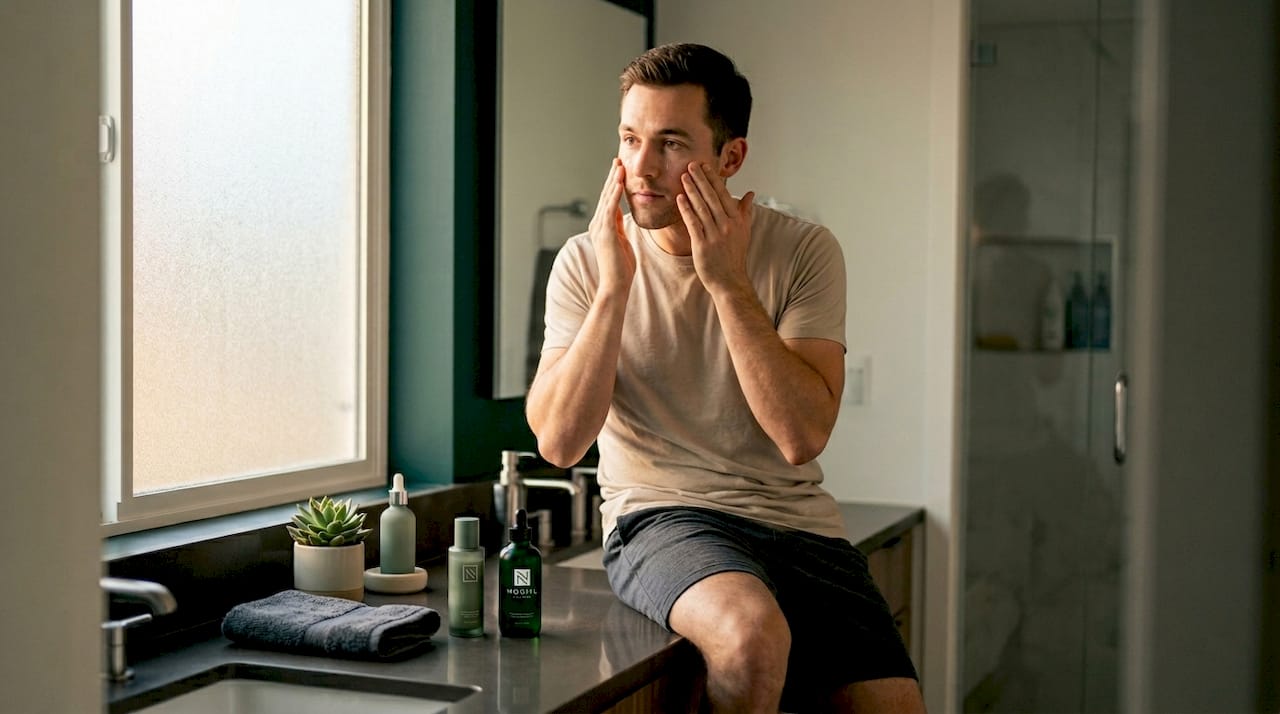
Evening: Cleanse to remove sunscreen and environmental buildup. Apply your niacinamide moisturizer again. If you’re using azelaic acid, this is when it goes on.
If you’re looking for a structured checklist, this skincare guide for men lays it out step by step. The point is consistency. A simple routine done every day beats a complex one done twice a week.
8. Use a men’s concealer to bridge the gap
Long-term skincare takes weeks. You still have to show up tomorrow. That’s where a well-formulated concealer designed for men fills a real gap in your toolkit.
The key is a product that blends naturally, doesn’t look like makeup, and works with your skin’s texture rather than sitting on top of it. You can find detailed real solutions for redness coverage that break down how concealers work as part of a broader skincare plan, not as a replacement for one.
My honest take on managing facial redness
I’ve talked to a lot of guys who went through the same cycle I see constantly. They notice redness, panic-buy five products with active ingredients, stack them all in one routine, and make everything dramatically worse within two weeks. Then they conclude that “skincare doesn’t work for them.”
What I’ve learned is that the first move should almost always be subtraction, not addition. Strip your routine down to a cleanser, a ceramide moisturizer, and sunscreen. Stay there for four weeks. You’ll be shocked how much redness fades when you stop constantly re-injuring your skin.
The uncomfortable truth is that most men who struggle with redness aren’t dealing with a product deficiency. They’re dealing with shaving habits, late nights, daily alcohol, and skipped SPF. Change two lifestyle factors and your skin changes faster than any serum will manage.
Concealers get unfairly dismissed by guys who haven’t tried a good one. I think of them the way I think of a fresh haircut. They don’t fix anything permanently, but they make you look and feel sharper today. And that confidence has real value while you’re playing the long game with skincare.
If your redness is severe, persistent, or comes with burning and sensitivity, see a dermatologist before buying more products. Some conditions need medical intervention, not another niacinamide serum.
— Ford
Instant coverage while your skincare does its job
You’re doing the routine. You’re avoiding triggers. You’re being patient. But you’ve got somewhere to be today.

That’s exactly where Norml All-In-One Concealer earns its place. Norml4men built this specifically for men dealing with redness, dark circles, and blemishes who want coverage that looks like nothing is there. It’s lightweight, matte, and blends into your skin without leaving a trace. No cakey finish. No obvious makeup look. Just an even, natural complexion in seconds. Use it on top of your moisturizer after your morning routine and no one will know the difference. It’s a practical daily tool, not a shortcut away from skincare.
FAQ
What causes facial redness in men?
Facial redness in men is most commonly caused by shaving irritation, sun exposure, compromised skin barrier, and lifestyle triggers like alcohol, heat, and stress. Conditions like rosacea can also be a factor if redness is persistent or worsening.
How long does it take to reduce redness with skincare?
Barrier-repair products with niacinamide and ceramides typically show results within two to four weeks of consistent daily use. Ingredients like azelaic acid targeting vascular redness may take four to eight weeks.
Are natural remedies effective for men’s facial redness?
Yes, natural remedies like colloidal oatmeal, centella asiatica, and calendula and chamomile have real anti-inflammatory properties. They work best as part of a consistent routine, not as standalone fixes.
Can men use concealer for redness without it looking obvious?
A matte, skin-toned concealer formulated for men blends naturally and provides immediate coverage that does not look like makeup. Products like Norml4men’s concealer are designed specifically to avoid that obvious, cosmetic look.
When should I see a doctor about facial redness?
See a dermatologist if your redness is persistent, worsening, accompanied by burning or itching, or affecting your eyes. Persistent redness with sensitivity warrants professional evaluation before experimenting further with skincare products.


