

Common skin concerns in men: effective solutions without makeup
TL;DR:
- Men aged 18 to 35 commonly experience acne, oiliness, shaving irritation, and dark circles.
- Understanding skin biology helps men choose discreet, effective skincare solutions suited for their needs.
- Consistent, targeted routines with simple products can significantly improve men’s skin over time.
Skincare isn’t just a women’s thing. Men aged 18 to 35 deal with acne, oiliness, shaving irritation, and dark circles every single day, yet most guys either ignore the problem or assume the only fix involves products they’d never touch. The truth is, up to 85% of young adults experience acne, and plenty of those are men staring at the mirror before work wondering what to do. The good news: discreet, effective solutions exist that don’t require a 10-step routine or anything that looks remotely like makeup. This guide breaks down what’s actually going on with your skin and how to fix it.
Table of Contents
- Understanding the most common skin concerns for men
- Why male skin behaves differently: Hormones, hair, and habits
- Discreet solutions: Effective ways to address skin concerns without traditional makeup
- Edge cases and advanced options: What if nothing is working?
- Why most men approach skin issues the wrong way (and how to do better)
- Try discreet solutions for confident skin, made for men
- Frequently asked questions
Key Takeaways
| Point | Details |
|---|---|
| Acne is most prevalent | Most men aged 18–35 struggle with acne due to oil, hormones, and lifestyle. |
| Shaving issues are common | Regular shaving can cause irritation, razor bumps, and ingrown hairs, especially for men with coarse or curly hair. |
| Discreet solutions available | Men can improve skin with products like pimple patches, tinted SPF, and oil-free moisturizers—no makeup needed. |
| Consistency matters | Sticking to a daily routine often brings visible improvements in 6–12 weeks. |
| Advanced help is available | Persistent or severe concerns may require dermatologist evaluation for prescription options. |
Understanding the most common skin concerns for men
Let’s break down what men are actually experiencing and why. The role skincare plays in men’s daily lives is bigger than most guys realize, and it starts with knowing which concerns are actually most common.
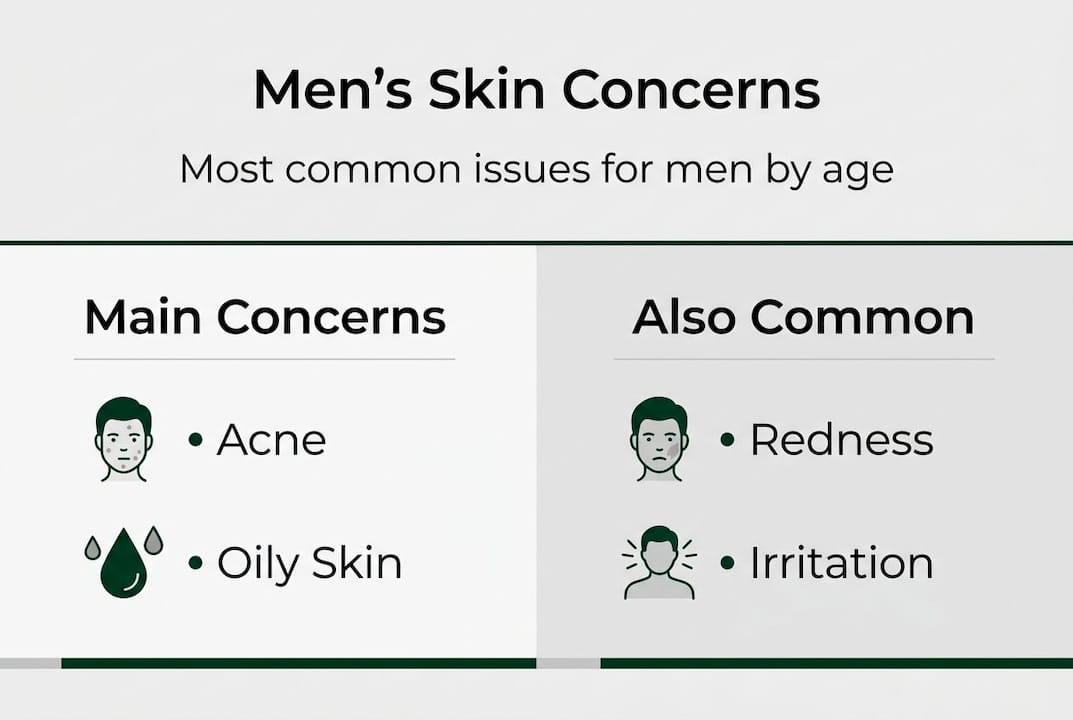
Acne tops the list. 85% of 12 to 24-year-olds experience it, and between 15 and 27% carry it into adulthood. That means a lot of grown men are still dealing with breakouts long after high school. Oiliness runs close behind, especially for men with naturally higher sebum production. Then there’s shaving irritation, ingrown hairs, and dry or flaky skin from harsh products.
| Skin concern | Prevalence in men | Primary cause |
|---|---|---|
| Acne | Up to 85% (teens), 15-27% (adults) | Hormones, bacteria, clogged pores |
| Oily skin | Very common | Androgen-driven sebum production |
| Shaving irritation | Up to 60% (varies by skin type) | Blade friction, improper technique |
| Ingrown hairs | Common in curly hair types | Hair curling back into follicle |
| Dry or sensitive skin | Moderate | Harsh cleansers, weather, over-washing |
Shaving irritation deserves special attention. Razor bumps affect up to 60% of African American men, making it one of the most significant concerns tied to grooming habits. Curly or coarse hair is far more likely to curl back into the skin after shaving, causing inflammation and visible bumps.
Here’s what’s driving most of these issues:
- Hormones: Androgens (male sex hormones) trigger excess oil, clogged pores, and acne
- Shaving: Repeated blade contact causes micro-trauma, irritation, and ingrown hairs
- Product choices: Alcohol-heavy aftershaves and harsh soaps strip the skin barrier
- Neglect: Skipping moisturizer leads to dryness and reactive oil overproduction
“Most men don’t realize their shaving routine is actively working against their skin. A few small changes in technique and product choice can make a dramatic difference.”
For a broader look at solutions for common male skin issues, the pattern is clear: most problems are manageable once you understand what’s causing them.
Why male skin behaves differently: Hormones, hair, and habits
Now that we know what these skin concerns are, let’s look at why they affect men differently. It’s not just genetics. It’s biology, behavior, and the daily ritual of shaving that adds a layer of complexity most skincare advice completely ignores.
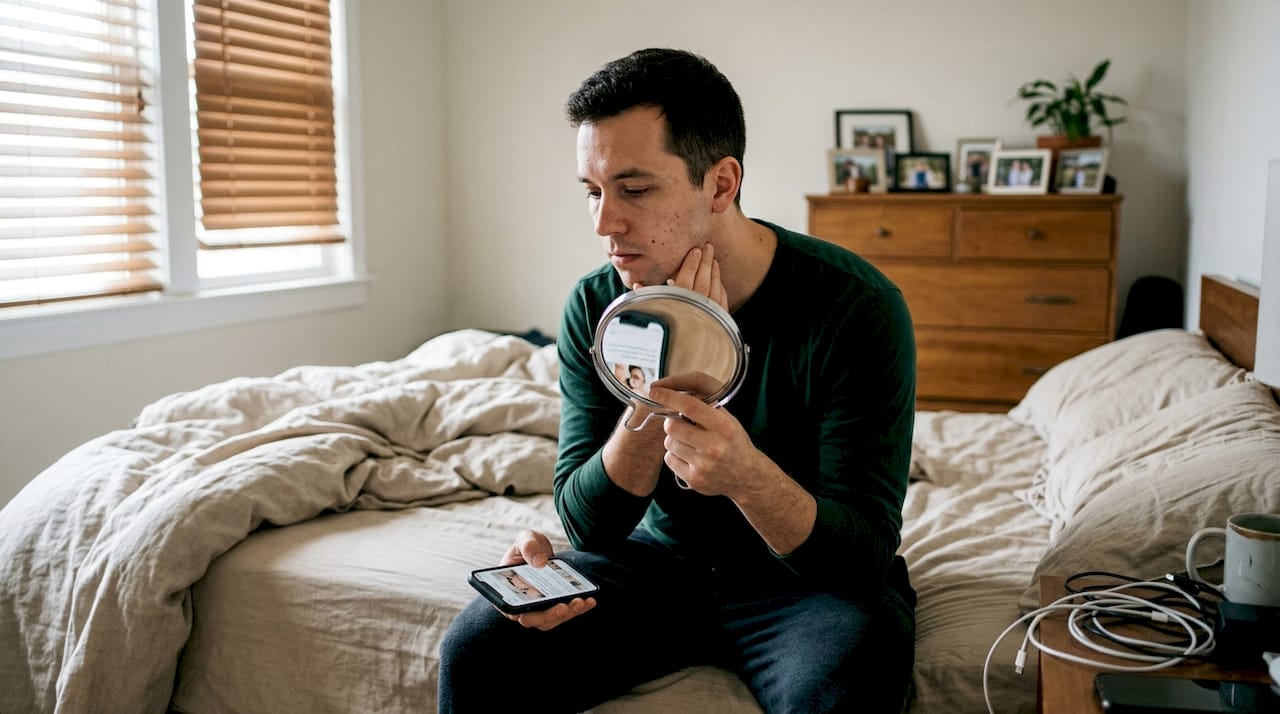
Male skin is oilier due to androgens, which drive higher sebum production and lead to larger, more visible pores. This is why men tend to get shinier skin throughout the day and why breakouts cluster around the forehead, nose, and chin. Androgens also make the skin thicker on average, which sounds like an advantage but can actually trap more debris inside pores.
| Feature | Male skin | Female skin |
|---|---|---|
| Sebum production | Higher | Lower |
| Pore size | Generally larger | Generally smaller |
| Skin thickness | Thicker | Thinner |
| Collagen density | Higher (but decreases faster with age) | Lower |
| Sensitivity to shaving | High (daily trauma) | Low |
Shaving adds a whole other layer of concern. Every pass of a razor removes a thin layer of skin cells along with the hair. Done daily without proper prep, this causes chronic low-grade irritation, redness, and a weakened skin barrier. Men with coarse or curly hair face an even higher risk of ingrown hairs and pseudofolliculitis barbae (razor bumps).
Common mistakes that make things worse:
- Using bar soap or body wash on the face (too harsh, disrupts pH)
- Skipping moisturizer because skin feels oily
- Using dull razors or shaving dry
- Applying alcohol-based products directly after shaving
Pro Tip: If your skin feels tight after washing, your cleanser is too harsh. Switch to a gentle, pH-balanced face wash and your oil production may actually decrease over time, not increase.
Understanding skincare’s role in grooming isn’t about vanity. It’s about working with your skin’s biology instead of against it. When you know why your skin behaves the way it does, the right moves become obvious.
Discreet solutions: Effective ways to address skin concerns without traditional makeup
Understanding the problem is half the battle. Here’s how you can take action without anyone knowing.
A solid daily routine doesn’t need to be complicated. Topical retinoids and benzoyl peroxide are the gold standard for acne, while glycolic acid handles ingrown hairs, and oil-free moisturizers keep skin balanced without adding shine. Pimple patches and tinted SPF round out the toolkit for discreet, on-the-spot coverage.
Here’s a practical order of operations:
- Gentle cleanser (morning and night): Removes oil and debris without stripping the skin barrier
- Targeted treatment: Benzoyl peroxide for active breakouts, retinoid at night for long-term cell turnover
- Oil-free moisturizer: Keeps skin hydrated without clogging pores
- SPF (tinted if preferred): Protects against UV damage and evens out skin tone subtly
- Pimple patch: Covers and treats individual blemishes overnight or under clothing
For shaving, the prep matters as much as the razor. Soften the beard with warm water, use a sharp blade, shave with the grain first, and follow up with a fragrance-free, alcohol-free aftershave balm. Glycolic acid used a few times a week helps prevent ingrown hairs before they start.
Pro Tip: Pimple patches are one of the most underrated tools in men’s skincare. They reduce inflammation overnight and create a physical barrier that stops you from picking at blemishes. No one can tell you’re wearing one.
Consistency is the real secret. Most guys expect results in a week and quit too early. Real improvement takes 6 to 12 weeks of steady effort. If you want to understand concealing blemishes discreetly while your routine kicks in, there are options that look completely natural. Explore best complexion products for men to find what fits your skin type. And if you want the full picture on how skincare reduces acne over time, the evidence is solid.
Edge cases and advanced options: What if nothing is working?
Not all issues will respond to basics. Here’s what to consider if your skin isn’t improving.
Most men see meaningful improvement within a few months of consistent care. But some don’t. If you’ve been diligent for 12 or more weeks and your skin is still breaking out severely, developing scars, or causing real distress, it’s time to think beyond the drugstore shelf.
Persistent adult acne may require prescription-strength topicals, oral antibiotics, hormonal treatments, or isotretinoin (commonly known as Accutane) for severe or scarring cases. These are clinical decisions that need a dermatologist’s input, not guesswork.
Signs it’s time to see a professional:
- Acne is leaving dark spots or raised scars
- Breakouts are painful, deep, or cystic (not surface-level)
- Over-the-counter products have shown zero improvement after 3 months
- Skin conditions like eczema or rosacea are complicating your routine
- The emotional impact is affecting your confidence or daily life
Statistic to know: Studies show that acne has a measurable psychosocial impact, contributing to anxiety, reduced self-esteem, and social withdrawal in a significant portion of men who experience it. Treating the skin is treating the whole person.
One caution worth flagging: retinoids, while effective, can worsen eczema or severely dry skin if used incorrectly. Start slow, every other night, and always follow with a moisturizer. If irritation persists, a dermatologist can recommend alternatives.
For a deeper look at skincare best practices that work even for sensitive or reactive skin, the fundamentals still apply. Gentle, consistent, and targeted beats aggressive every time.
Why most men approach skin issues the wrong way (and how to do better)
Here’s an uncomfortable truth: most skincare advice aimed at men either talks down to them or overcorrects by pushing a 12-step routine that no one will actually stick to. Both extremes miss the point.
The real formula isn’t complicated. It’s practical, discreet, and built around habits that fit into a real morning. You don’t need a vanity full of serums. You need to understand why your skin does what it does, pick two or three targeted products, and stay consistent. That’s it.
What actually changes the game is demystifying men’s cosmetics and realizing that using a concealer or a tinted SPF isn’t a statement. It’s a tool. The same way you’d use a good razor or a quality hair product, a discreet skin solution is just part of showing up at your best. Men who understand the “why” behind their routine stick with it. And sticking with it is what actually produces results.
Try discreet solutions for confident skin, made for men
If you’ve been putting up with breakouts, redness, or uneven skin tone because you assumed the only fix was something that would look obvious, that assumption is worth dropping.

Norml’s all-in-one concealer for men is built specifically for this. It covers blemishes, dark circles, and redness instantly, blends into the skin without a trace, and stays matte throughout the day. No one will know you’re wearing anything. It’s not makeup in the traditional sense. It’s a confidence tool. Check out how to use discreet solutions to get the most out of it from day one, and build a routine that actually fits your life.
Frequently asked questions
What is the most common skin concern for men aged 18 to 35?
Acne is the most prevalent skin issue in this age group, driven by hormonal activity, excess oil production, and environmental exposure that affects the majority of men at some point.
How can men reduce shaving irritation and razor bumps?
Using a sharp razor, prepping skin with warm water, and applying glycolic acid for ingrowns a few times a week significantly reduces irritation and bump formation.
Are there effective skin solutions for men that don’t look like makeup?
Yes. Tinted SPF and pimple patches provide coverage and treatment without any visible product on the skin, making them ideal for men who want results without a made-up appearance.
How long does it take to see results from a new skincare routine?
Most men see meaningful improvement within 6 to 12 weeks of consistent use, so patience and daily follow-through matter more than switching products frequently.
When should a man consider seeing a dermatologist for skin concerns?
If severe or persistent cases like scarring, cystic acne, or zero improvement after several months of over-the-counter treatment occur, a dermatologist can offer prescription-level solutions.


