

Cosmetics and Self-Esteem: a Confidence Guide for Men
TL;DR:
- Cosmetics can immediately boost self-confidence by reinforcing positive self-identity through symbolic meaning.
- Subtle, aligned product use enhances social perceptions of competence and approachability without stigma.
Cosmetics play a direct role in self-esteem by changing both how you see yourself and how others read you, and that shift can be immediate. For young men aged 18 to 35, the psychology of cosmetics is no longer a fringe conversation. Platforms like TikTok and retailers like Ulta and Sephora have normalized men’s makeup at a speed that outpaced most cultural predictions. The science behind this is real, the stigma is shrinking, and the practical entry point has never been lower. This guide breaks down exactly how cosmetics influence confidence, what the research says, and how to use them strategically without overthinking it.
How do cosmetics affect self-confidence from a psychological perspective?
The most useful framework here is enclothed cognition, a theory developed by researchers Hajo Adam and Adam Galinsky. It holds that wearing symbolic attire influences your psychological state and performance, but only when you attach personal meaning to what you are wearing. In their landmark study, participants who wore a coat they believed belonged to a doctor showed significantly higher selective attention than those who wore the same coat labeled as a painter’s coat. The physical item was identical. The meaning was not.
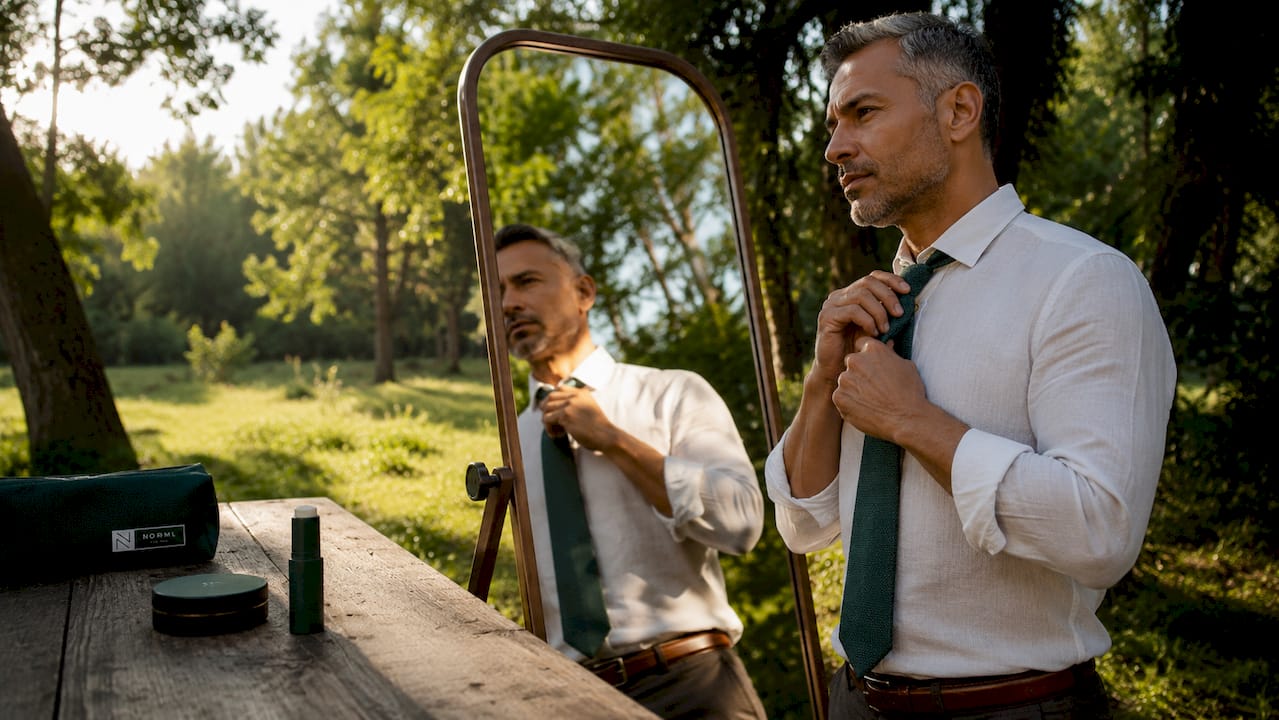
Apply that to cosmetics. When you put on a concealer before a job interview because you want to look sharp and in control, you are not just covering a blemish. You are signaling something to yourself about who you are in that moment. Confidence gains from cosmetics are strongest when users identify with the symbolic meaning of the product. That is the mechanism. The product is the trigger; the identity cue is the engine.
Grooming routines reinforce this further. Behavioral activation theory explains that grooming as daily micro-promises to yourself build self-efficacy and break low-mood cycles through immediate sensory rewards. A consistent morning routine that includes skin care or a quick concealer application is not vanity. It is a small act of accountability that compounds over time into a stronger sense of self-respect.
Here is what this looks like in practice:
- Applying a tinted moisturizer before a presentation creates a physical cue that you have prepared and you are ready.
- Using a brow gel to define your features takes 30 seconds and produces a measurable shift in how put-together you look and feel.
- A concealer over redness or dark circles removes a distraction you would otherwise fixate on during a conversation.
Pro Tip: Choose products that align with how you already see yourself. If you think of yourself as low-maintenance and sharp, pick a matte, skin-tone concealer. The product should reinforce your identity, not contradict it. That alignment is what activates the confidence response.
What social perceptions do cosmetics influence?
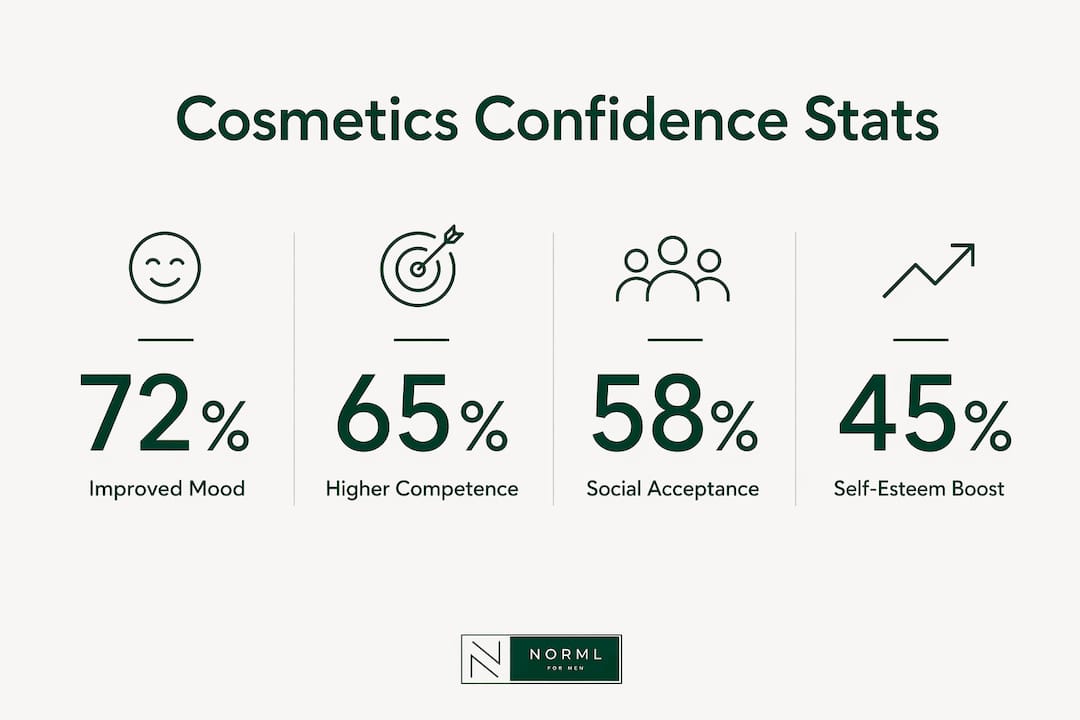
The makeup impact on self-esteem does not operate in a vacuum. Other people’s reactions feed directly back into how you feel about yourself, and the research on this is specific. A 2016 study on subtle makeup found that light professional makeup enhances perceptions of competence, sociability, and dominance compared to bare skin. That is a meaningful trifecta for anyone navigating a workplace or social setting where first impressions carry weight.
The contrast with heavier makeup is equally instructive. The same research showed that heavier application produced mixed perceptions, particularly in professional contexts where it was associated with lower suitability for leadership roles. The subtlety threshold is not arbitrary. It reflects how impression management actually works: intentional low-contrast makeup avoids the negative signals that come with anything that reads as costume rather than grooming.
| Makeup approach | Social perception outcome |
|---|---|
| Light, skin-matching coverage | Higher perceived competence and sociability |
| Heavy or high-contrast application | Mixed signals; reduced leadership suitability |
| No cosmetics with visible blemishes | Neutral to slightly lower first impressions |
| Subtle brow definition or tinted moisturizer | Polished, groomed, and approachable |
Cultural shifts are also reducing the social cost of men using cosmetics at all. Men’s makeup going mainstream on TikTok and in gender-neutral retail displays at Ulta and Sephora has dissolved much of the stigma that once made this conversation awkward. Gen Z men in particular treat concealer and brow gel as maintenance tools, not statements. That normalization matters because makeup stigma and confidence are directly linked. When the social risk drops, the confidence benefit rises.
Pro Tip: If you are new to cosmetics in a professional setting, start with products that match your skin tone exactly. The goal is for colleagues to notice you look well-rested, not to notice you are wearing anything. That invisibility is the point.
How to use cosmetics strategically to boost confidence
Practical application matters as much as the psychology. The following approach is built for men who want results without a learning curve.
- Start with one product. A skin-tone concealer covers the highest-impact concerns: blemishes, redness, and dark circles. Norml4men’s all-in-one concealer is built exactly for this. It is matte, lightweight, and formulated to blend without looking like makeup.
- Match your shade before you commit. Test the product on your jawline in natural light. A shade that is too light or too dark defeats the purpose. Most discreet men’s cosmetic solutions now come in ranges built for male skin tones.
- Apply after moisturizer, before anything else. Hydrated skin holds product better and prevents patchiness. Use a small amount and blend outward from the problem area with a fingertip.
- Build a routine, not a ritual. The goal is two minutes, not twenty. Consistency matters more than perfection. A daily application that takes less time than brushing your teeth is sustainable.
- Practice in low-stakes settings first. Wear it on a weekend errand run before a job interview. Familiarity with how the product feels and looks on you removes the self-consciousness that undermines the confidence benefit.
Subtle makeup for men works best when it becomes invisible to you too. The moment you stop thinking about whether you are wearing something is the moment it starts doing its job.
Pro Tip: Less product applied twice beats more product applied once. Build coverage in thin layers. You will get a more natural finish and avoid the cakey look that draws attention.
What are the psychological risks of relying on cosmetics for self-esteem?
Cosmetics and confidence have a genuinely productive relationship, but the relationship has limits worth understanding. Social appearance anxiety negatively correlates with life satisfaction, and data from 284 participants shows that appearance concerns can co-vary with self-esteem in complex ways. The takeaway is not that cosmetics cause anxiety. It is that if appearance anxiety is already present, cosmetics can become a crutch rather than a tool.
The distinction between self-presentation and emotional insurance is the key variable here. Using a concealer because you want to look sharp is self-presentation. Refusing to leave the house without it because you feel unacceptable without it is emotional insurance. The first is healthy. The second creates conditional confidence that collapses the moment the product is unavailable.
Watch for these patterns:
- Feeling significantly worse about yourself on days you skip the product.
- Avoiding social situations without cosmetics that you would otherwise attend.
- Spending disproportionate mental energy on whether your coverage is visible.
Cosmetics are one tool in a larger confidence toolkit. Exercise, sleep, preparation, and social connection all build self-esteem independently. Cosmetics work best as an amplifier of existing confidence, not a substitute for it.
Makeup-related confidence boosts are context-dependent and modest. Understanding cosmetics as flexible self-presentation tools is healthier than expecting them to change your personality or resolve deeper confidence issues.
Key takeaways
Cosmetics boost self-esteem most effectively when used subtly, intentionally, and as one part of a broader confidence practice rather than a standalone fix.
| Point | Details |
|---|---|
| Enclothed cognition drives the effect | Cosmetics boost confidence only when you attach personal meaning to wearing them. |
| Subtlety is the professional standard | Light, skin-matching coverage improves perceived competence; heavy application can undermine it. |
| Stigma is declining fast | TikTok, Ulta, and Sephora have normalized men’s cosmetics, lowering the social cost of adoption. |
| Routine builds self-efficacy | A consistent two-minute grooming habit compounds into measurable self-respect over time. |
| Avoid conditional confidence | Use cosmetics as self-presentation tools, not emotional insurance, to keep self-esteem stable. |
Why I think the stigma conversation is the wrong starting point
Most articles about men and cosmetics spend half their word count reassuring you that it is okay to try makeup. I find that framing counterproductive. It centers the stigma instead of the outcome.
The men I have seen benefit most from cosmetics are not the ones who overcame some internal debate about masculinity. They are the ones who had a specific problem, a breakout before a presentation, chronic redness in photos, dark circles from poor sleep, and found a product that solved it in two minutes. The confidence gain was practical, not philosophical.
What I have observed is that the psychological benefit is real but modest and context-specific. A concealer will not fix a deep confidence deficit. It will, however, remove a specific distraction that was costing you mental bandwidth. That is worth something. The cosmetic use and body image research supports this: the effect on observers is often stronger than the effect on the wearer. Other people notice you look sharper before you fully register it yourself.
My honest recommendation is to skip the identity debate entirely and treat cosmetics the way you treat a good haircut or a well-fitted shirt. You do not agonize over whether a haircut is masculine. You get one because you look better with it. The same logic applies here. Start with one product, use it for two weeks, and judge the result by how you feel in the situations that matter to you.
— Ford
Try Norml4men for a no-fuss confidence upgrade
If the practical approach described in this article resonates with you, Norml4men is the logical starting point.
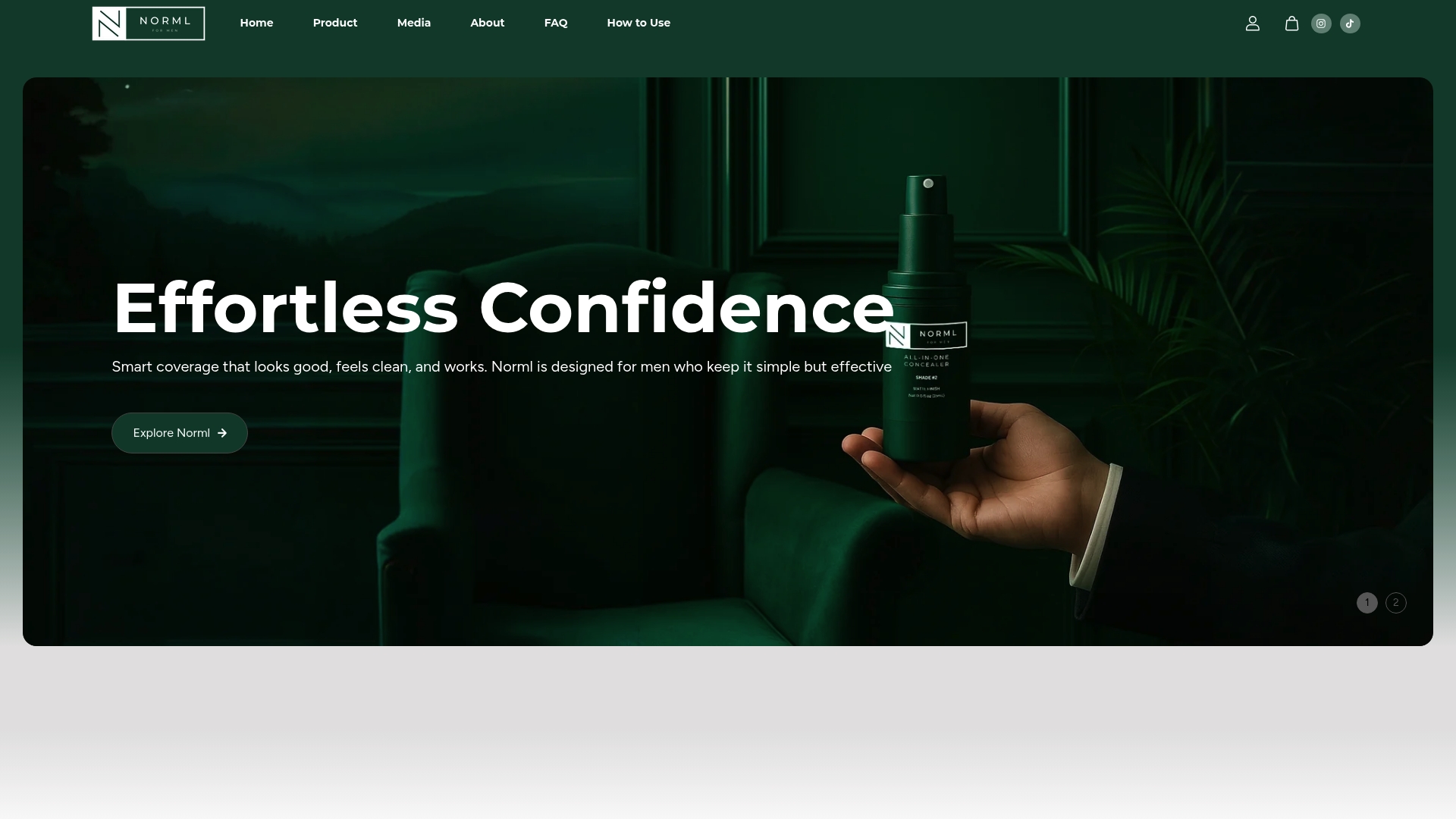
The Norml All-In-One Concealer is built specifically for men who want to cover blemishes, redness, and dark circles without anyone knowing they are wearing anything. It is matte, lightweight, and formulated to blend into male skin tones in seconds. No brushes, no learning curve, no visible product. It fits the subtlety threshold the research recommends and takes less time than checking your phone. If you want to see what a two-minute confidence upgrade actually feels like, this is where to start.
FAQ
Does wearing makeup actually improve self-esteem?
Research confirms that light makeup improves perceived competence and sociability, and enclothed cognition theory explains why wearing it can shift your own psychological state. The effect is real but modest and works best when the product aligns with your personal identity.
Is men’s makeup socially acceptable in professional settings?
Yes, particularly when the application is subtle and skin-matching. Gender-neutral cosmetic displays at major retailers and mainstream TikTok adoption signal that the cultural norm has shifted significantly, especially among Gen Z and millennial professionals.
What is the best cosmetic product for men starting out?
A skin-tone concealer is the highest-impact, lowest-effort entry point. It addresses the most visible concerns, blemishes, redness, and dark circles, in one step. Products like Norml4men’s all-in-one concealer are formulated specifically for male skin and designed to be undetectable.
Can cosmetics create unhealthy dependence?
They can, if used as emotional insurance rather than self-presentation. Social appearance anxiety data shows that appearance concerns can reduce life satisfaction when they become compulsive. Use cosmetics as one tool among many, not as a prerequisite for leaving the house.
How long does it take to see a confidence benefit from cosmetics?
The psychological shift from enclothed cognition can be immediate when you attach personal meaning to the product. The social perception benefits, how others read you, are visible from the first application. A consistent two-week routine is enough to assess whether the habit is working for you.


