

What Is Blemish Coverage? A Practical Guide for Men
TL;DR:
- Blemish coverage involves using targeted, oil-free cosmetics to conceal skin imperfections while maintaining a natural look. Proper technique and matching the right shade ensure a long-lasting, undetectable appearance, especially with products containing ingredients that support skin health. Men increasingly adopt blemish coverage to improve their appearance quickly and discreetly, with effective products readily available.
Blemish coverage is the targeted use of concealment cosmetics to hide skin imperfections like pimples, redness, and dark spots while keeping your appearance natural. The industry term for this practice is spot concealing, and it covers everything from tinted corrector sticks to full-coverage concealers. Brands like La Rosée and L’Oréal have built entire product lines around it. Done right, blemish coverage reduces visible redness, evens out skin texture, and leaves no trace that you’re wearing anything at all. This guide covers the benefits, the best products for men, and the exact techniques that make coverage last all day.
What is blemish coverage and why do men use it?
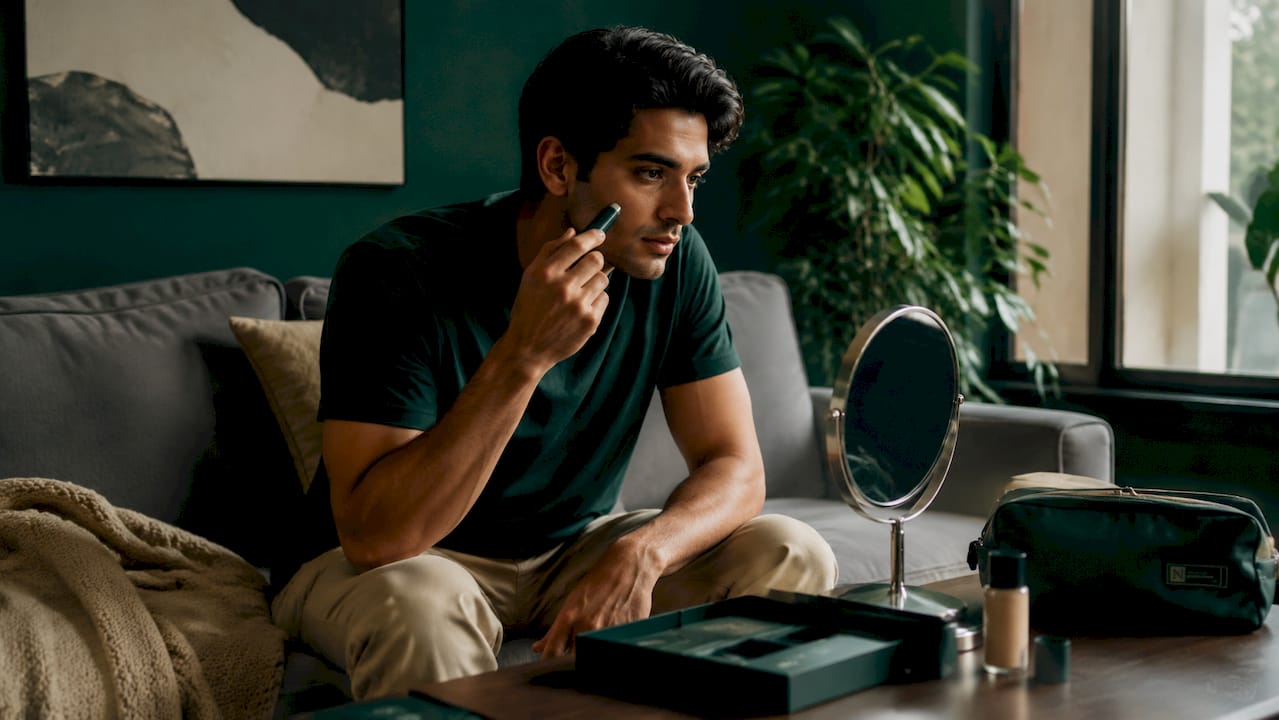
Blemish coverage is defined as the application of targeted cosmetic products to conceal localized skin imperfections without altering the overall complexion. For men, that means covering a red pimple before a job interview, neutralizing post-acne marks before a date, or evening out skin tone for a sharper everyday look. The goal is not to look like you’re wearing makeup. The goal is to look like you have great skin.
Men aged 18–35 deal with acne, redness, and uneven texture at higher rates than most grooming guides acknowledge. Testosterone drives excess sebum production, which means breakouts are common well into your late twenties. Blemish coverage fills the gap between a skincare routine and clear skin, giving you a polished appearance on the days your skin isn’t cooperating.
The products used range from lightweight tinted sticks to buildable concealers. The technique matters as much as the product. Understanding both is what separates coverage that looks natural from coverage that looks obvious.
What are the benefits of blemish coverage for men?
The primary benefit of blemish coverage is immediate appearance improvement with zero recovery time. You apply it, you look better, and you get on with your day. That directness is exactly why more men are adding it to their routines.
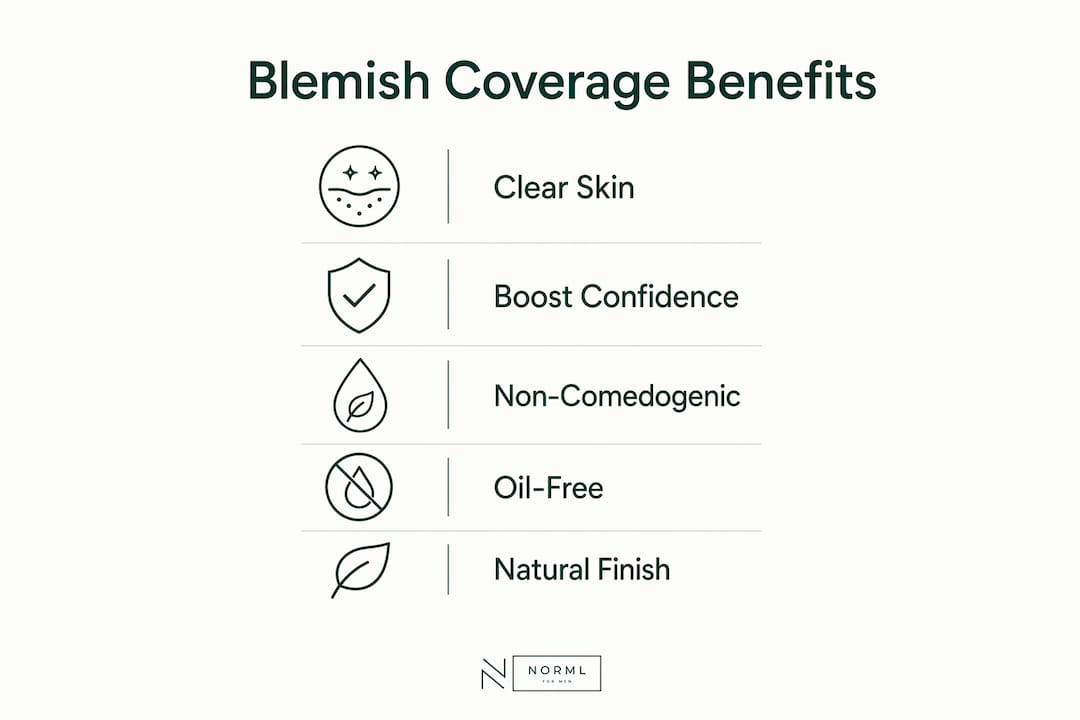
The specific benefits include:
- Redness reduction. High-efficacy formulas can reduce red pimples by 64% within 7 days while providing a mattifying effect that lasts up to 8 hours. That is a measurable result from a single product.
- Texture neutralization. Coverage products smooth the visual appearance of raised or textured skin without requiring any medical treatment.
- Confidence. Knowing a breakout is covered lets you focus on the conversation, the presentation, or the room, not your skin.
- Skin support. Formulas containing salicylic acid or zinc actively treat blemishes while covering them. You are not just masking the problem.
Pro Tip: Look for products labeled non-comedogenic. Non-comedogenic formulas are specifically designed to avoid clogging pores, which means covering a pimple will not create three more.
Choosing oil-free coverage is equally important for men with acne-prone skin. Oil-based products sit on top of the skin and break down faster, leading to patchy coverage and potential breakouts. The right formula works with your skin, not against it.
What are the best blemish coverage products for men?
The best blemish coverage products for men share four characteristics: oil-free formulation, non-comedogenic ingredients, a matte finish, and buildable coverage. Here is how the main product types compare:
| Product type | Coverage level | Best for | Finish |
|---|---|---|---|
| Tinted corrector stick | Light to medium | Everyday redness, minor spots | Matte |
| Spot concealer | Medium to full | Active pimples, post-acne marks | Matte or satin |
| Tinted primer | Sheer | Overall redness, skin tone evening | Natural |
| Full-coverage foundation | Full | Multiple blemishes, uneven texture | Matte or dewy |
For most men, a tinted corrector stick or spot concealer covers 90% of situations. La Rosée’s rechargeable tinted corrector stick is built specifically for blemish-prone skin and delivers a soft matte finish that reads as natural on men’s skin. Full foundations are worth considering when you have multiple spots across a wider area.
Key ingredients to look for
The formula inside the product matters as much as the coverage it provides.
- Salicylic acid penetrates pores and actively reduces acne while the product sits on your skin.
- Zinc controls oil production and has mild anti-inflammatory properties that calm redness.
- Licorice root extract fades post-acne dark marks over time with consistent use.
- Kaolin clay absorbs excess sebum and extends how long the matte finish holds.
Pro Tip: Avoid products with heavy silicones or mineral oil as primary ingredients. They fill in pores visually but trap bacteria underneath, which worsens breakouts over time.
For men looking at discreet coverage solutions, the product category has expanded significantly. You no longer have to choose between effective coverage and skin health.
How to apply blemish coverage for long-lasting, natural results
Application technique determines whether your coverage looks natural or obvious. Follow these steps in order.
- Cleanse and moisturize first. Start with clean, hydrated skin. Dry or flaky patches cause coverage to cling unevenly and look patchy by midday.
- Wait 5–10 minutes after skincare. Allowing skincare and primer to absorb for 5–10 minutes before applying any coverage product prevents patchiness that develops later in the day. Do not rush this step.
- Apply foundation before spot concealer. Foundation applied first handles overall redness and evens out the base. Spot concealer then targets only the remaining visible blemishes. This layering approach uses less product and looks more natural.
- Apply color corrector if needed. For red, active pimples, press a small amount of green corrector directly onto the spot before concealer. Green neutralizes red on the color spectrum, which means less concealer is needed on top.
- Pat concealer on with a small brush or fingertip. Gently patting concealer onto a blemish builds coverage without wiping away what you just applied. Never drag or rub. Pat and press until the coverage builds to the level you want.
- Set with translucent powder. Skipping this step is the single biggest reason coverage fails. Without setting powder, concealer typically breaks down within 2 hours on active spots. Press translucent powder over the covered area and let it sit for 5–10 minutes before brushing off the excess.
- Avoid heavy layering. More product does not mean better coverage. Thin, built-up layers look more natural and last longer than one thick application.
Pro Tip: If you are covering a raised pimple, apply a tiny amount of green corrector, let it set for 60 seconds, then apply concealer on top. The color neutralization does most of the work, so you need far less concealer to finish the job.
For a full walkthrough of the process, the guide on applying men’s concealer naturally covers each step with product-specific advice.
How to choose the right shade for blemish coverage
Shade matching is where most men go wrong. The wrong shade makes coverage visible from across the room. The right shade disappears into your skin.
The rules are straightforward:
- Match your skin tone exactly for blemishes. Unlike under-eye coverage, where one or two shades lighter brightens the area, blemish coverage works best when the concealer matches your natural skin tone precisely. A shade that is too light creates a pale patch that draws more attention than the original blemish.
- Test on your jawline, not your wrist. Your wrist is a different tone than your face. Always test concealer on your jaw or neck in natural light.
- Warm undertones need yellow-based shades. Cool undertones need pink or neutral-based shades. Getting the undertone wrong is what creates that gray or orange cast that looks unnatural.
- Use green corrector only under concealer, not alone. Green corrector is a color theory tool that neutralizes redness before concealer goes on top. It is not a standalone product. Always cover it with a skin-tone-matched concealer.
- Adjust for lighting. Indoor lighting and natural daylight read differently. If you apply coverage indoors, check it near a window before leaving the house.
Getting the shade right reduces the amount of product you need and produces a finish that looks like skin, not makeup. That is the entire goal of blemish coverage for men.
Key Takeaways
Blemish coverage works best when you combine the right non-comedogenic formula, correct shade matching, and a layered application technique that ends with translucent powder to lock coverage in place.
| Point | Details |
|---|---|
| Definition | Blemish coverage is targeted spot concealing using oil-free, non-comedogenic cosmetics. |
| Application order | Apply foundation first, then spot concealer, then set with translucent powder. |
| Setting is non-negotiable | Skipping setting powder causes coverage to fail within 2 hours on active blemishes. |
| Shade matching | Match concealer exactly to your skin tone; use green corrector under red pimples first. |
| Formula matters | Look for salicylic acid, zinc, or kaolin clay to cover blemishes and support skin health. |
Why I think men are still overthinking this
I have watched the men’s grooming space shift over the past decade, and the biggest obstacle is still not product quality. It is the mental block around the word “makeup.” Men will spend $80 on a moisturizer and balk at a $25 concealer because one feels like skincare and the other feels like something else entirely.
Here is what I have found: the men who try blemish coverage once and do it correctly almost never go back. The technique is simple. The results are immediate. And nobody notices you are wearing anything, which is the whole point.
The mistake most men make is buying the wrong product. They grab something designed for women’s skin, apply too much, skip the setting step, and end up with obvious coverage that confirms every fear they had going in. That is a technique problem, not a product problem.
The other mistake is treating coverage as a substitute for skincare. It is not. A good skincare routine reduces how often you need coverage. Coverage handles the days your skin does not cooperate. Both have a role. Neither replaces the other.
The stigma around men using concealer is fading fast. Athletes, executives, and on-camera professionals have been using it quietly for years. The only thing that changed is that the products designed specifically for men’s skin are now widely available and genuinely good.
— Ford
Look sharp every day with Norml4men
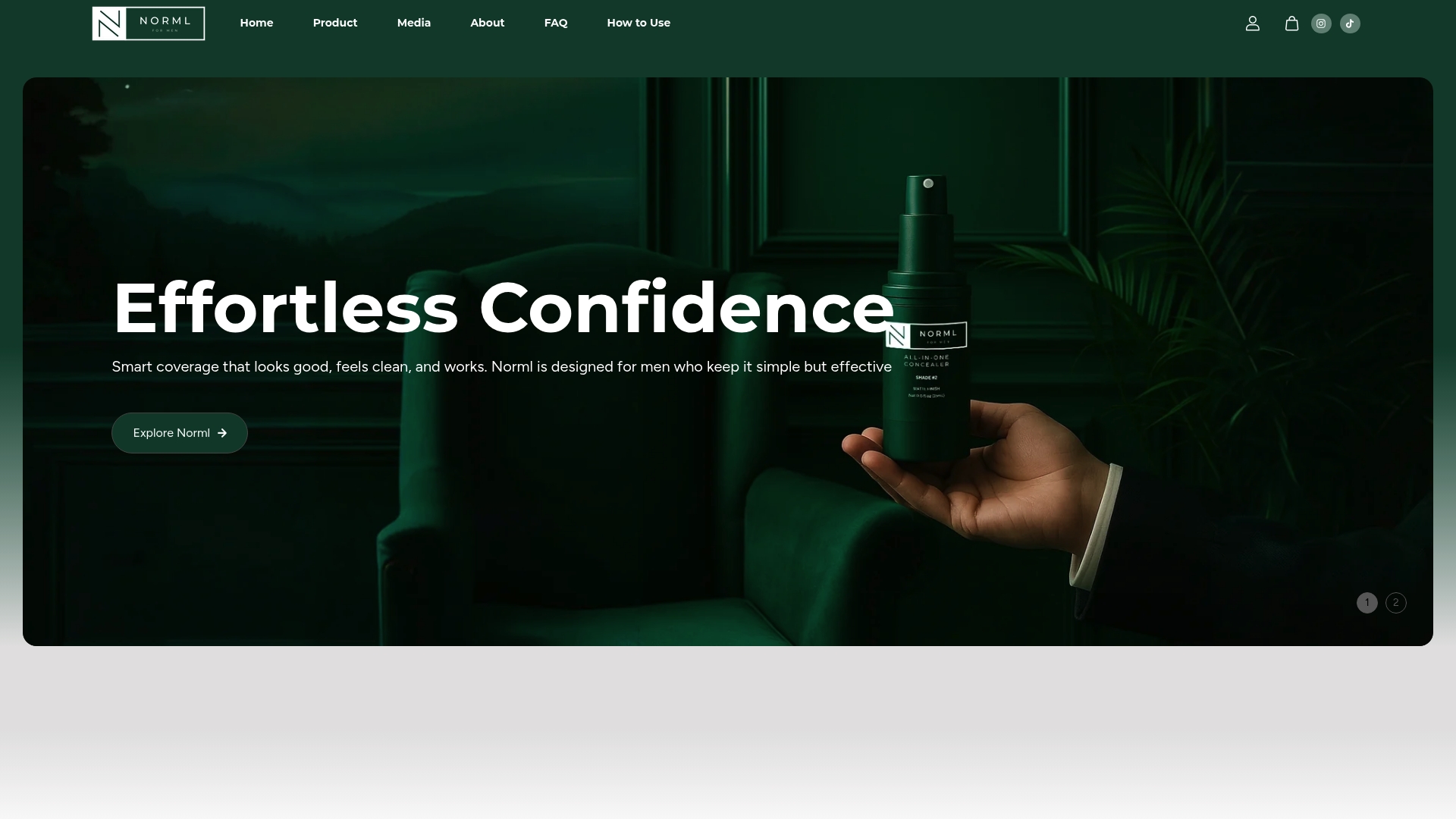
Norml4men built its all-in-one concealer specifically for men who want effective blemish coverage without the learning curve. The formula is non-comedogenic, oil-free, and delivers a matte finish that blends into skin without looking like anything is there. Coverage is buildable, so you control how much you use. Application takes seconds. The result is a sharper, more even complexion that holds up through a full day. If you have been looking for a product that covers blemishes, redness, and dark circles without the risk of worsening your skin, the Norml All-In-One Concealer is the place to start.
FAQ
What is blemish coverage in simple terms?
Blemish coverage is the use of targeted cosmetic products to conceal pimples, redness, and skin marks while maintaining a natural appearance. It combines spot concealers, color correctors, and setting products to hide imperfections without looking like makeup.
Is blemish coverage effective for acne-prone skin?
Yes, when you use non-comedogenic, oil-free formulas. Dermatologists recommend these formulations because they cover active blemishes without clogging pores or triggering new breakouts.
How is blemish coverage different from regular concealer?
Blemish coverage is a technique and product category focused on concealing active skin imperfections, while standard concealer is a broader product used for dark circles, discoloration, and general coverage. The best blemish coverage products include skin-supporting ingredients like salicylic acid or zinc that treat the blemish while hiding it.
How long does blemish coverage last?
Coverage lasts up to 8 hours when set correctly with translucent powder. Without the setting step, most concealers break down on active blemishes within 2 hours.
Can men with sensitive skin use blemish coverage products?
Yes. Men with sensitive skin should choose fragrance-free, non-comedogenic formulas and avoid products with alcohol as a primary ingredient. Patch testing on the jawline before full application reduces the risk of irritation.


